
Believe It or Not: Sugar Is Raising Your Blood Pressure… Not Just Salt!
High blood pressure, the silent killer: its causes, its link to insulin, and how to protect your arteries

Ever wondered why modern medicine calls it "the silent killer"? If not, let me tell you the real reason: it creeps quietly into your arteries and the tissues of your vital organs and damages them step by step, without a single twinge of pain, until the problem is well advanced.
High blood pressure doesn't start out as some lonely, orphaned disease with no family tree. In reality it is a direct reflection of a metabolic dysfunction inside your body and of ongoing inflammation in the lining of your blood vessels.
In this article we'll untangle the mystery calmly and without medical jargon: we'll break down the numbers, explain how insulin resistance is tightly linked to high blood pressure, and put together a complete plan to bring flexibility and life back to your arteries… and to protect that poor little heart of yours, which really can't take much more.
What is blood pressure, and what do the numbers mean?
Every time your heart goes ba-boom, it pumps blood through a complex network of blood vessels. So write this down in biiig bold letters: blood pressure is the force of the blood pushing against the walls of your arteries as it flows. In short, it's how hard the walls are pushing back against the stream.
The pressure created at the very moment your heart pumps is called the systolic blood pressure. Got it? Simply put, it's the big number, the one on top. Remember its name: systolic.
Once the heart has pushed its blood out, it needs to relax and rest so it can fill up again. That's where the diastolic blood pressure comes in. And no, "diastolic" has nothing to do with being ecstatic: it means relaxing and expanding, the heart's little rest between one beat and the next. During this pause we measure the pressure inside the arteries while the heart refills and then does it all over again: ba-boom… ba-boom… ba-boom… ba-boom. Easy, right?
How do we know whether blood pressure is normal or starting to flash warning lights?
| Category | Systolic | Diastolic | What does it mean? | |
|---|---|---|---|---|
| Normal and ideal | below 120 | and | below 80 | Flexible blood vessels and a heart working completely at ease |
| Elevated: the early-warning stage | 120–129 | and | below 80 | Vessels are starting to stiffen: time to change your lifestyle right away |
| Stage 1 hypertension | 130–139 | or | 80–89 | This is now a diagnosis; your doctor decides based on your other risk factors |
| Stage 2 hypertension | 140 or higher | or | 90 or higher | Needs regular medical follow-up and often medication |
All values in millimetres of mercury (mmHg).
🚨 Red-flag warning signs (an emergency)
If your monitor shows a reading above 180/120 mmHg together with a sudden, severe headache, blurred vision, shortness of breath, chest pain, weakness in an arm or leg, or difficulty speaking, this is not the moment to start tweaking your diet. It is a medical emergency (a hypertensive emergency) and you need to go to the nearest hospital or call an ambulance immediately.
The silent killer has a secret accomplice… meet it before it meets you 😉
This is the most important point of today's topic, and the one people most often miss. High blood pressure, but you hardly touch the salt? Look for the sugar! Most people believe blood pressure goes up only because of too much salt. But, my friends, the truth runs much deeper, and the real culprit isn't who you think it is. Let's put all the cards on the table: sugar drives up insulin, and insulin is the hidden lead character of this story. So let's let insulin spill the beans:
1. Sodium retention in the kidneys
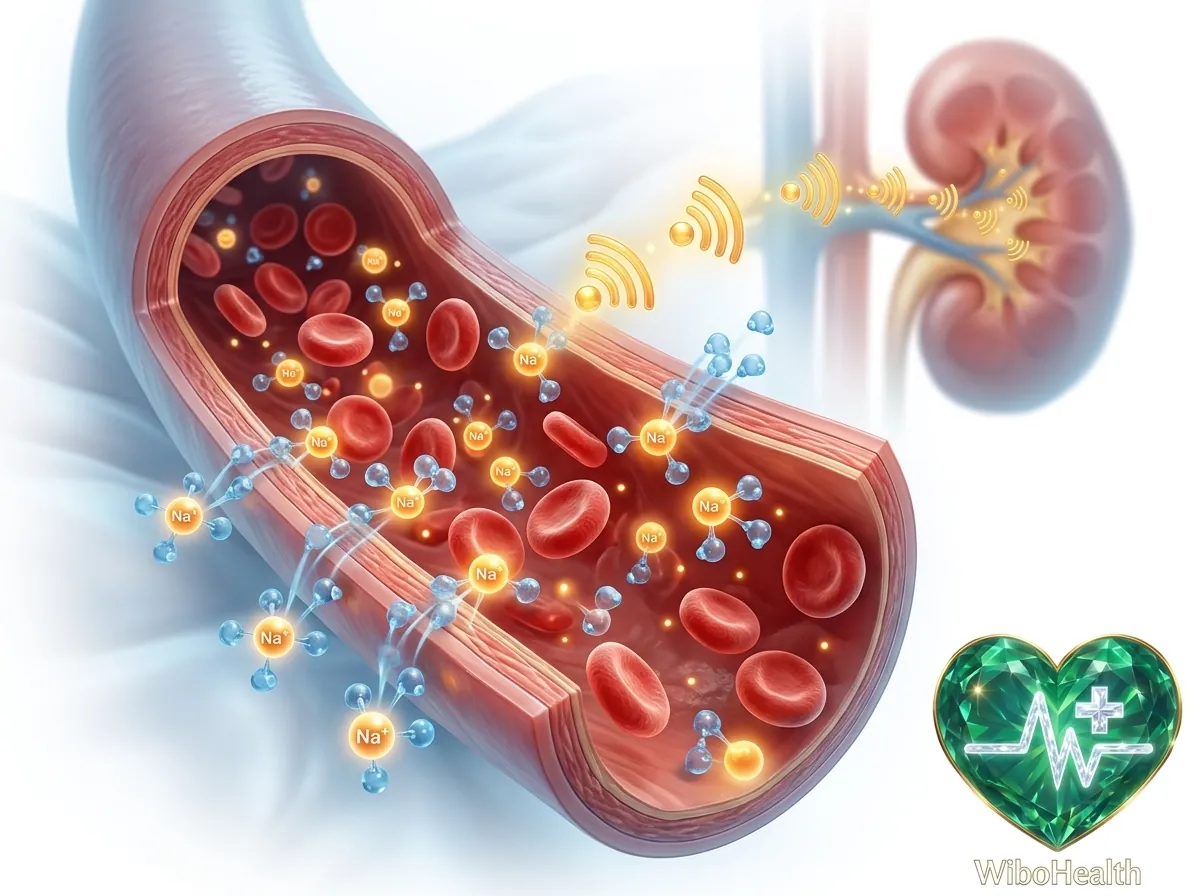
Chronically high levels of insulin in the blood (hyperinsulinaemia) send direct signals, straight to the point, telling the kidneys to reabsorb sodium instead of letting it leave in the urine. And wherever sodium goes, water follows. The total volume of blood inside your arteries goes up, and so does the pressure on them.
2. An overstimulated sympathetic nervous system
Excess insulin keeps the sympathetic nervous system on permanent high alert, as if there were a burglar in the house 24/7. The result? Narrowing of the blood vessels (vasoconstriction) and a faster beat from that sweet little heart of yours.
3. The vessel lining loses its flexibility (endothelial dysfunction)
Normally the lining of your arteries releases a tiny, magical gas called nitric oxide, whose job is to widen the arteries and keep them soft and supple. Once insulin resistance sets in, nitric oxide production drops and chronic low-grade inflammation starts eating away at the lining. An artery that used to be like soft rubber becomes like an old garden hose that has been baking in the sun for years.
4. The renin–angiotensin–aldosterone system (RAAS)
This is a hormonal system that regulates blood pressure and fluids in the body. With insulin resistance and excess body fat it starts working overtime: angiotensin II narrows the arteries and aldosterone holds on to even more sodium. A double whammy.
5. Visceral fat: not just a belly
The fat packed around the organs deep inside your abdomen is not a quiet energy store. It is active tissue that releases inflammatory substances (cytokines) and also produces the raw material for angiotensin. That's why your waist circumference can sometimes tell you more about your blood pressure risk than the number on the scale. (Read more about visceral fat and fatty liver.)
So, are there other causes?
Of course. They include genetics and age, salt sensitivity (which varies from person to person), sleep apnoea (more on that later), smoking, alcohol, and some medicines such as anti-inflammatory painkillers (NSAIDs), decongestant nasal sprays and, in some women, the contraceptive pill.
There is also a type called secondary hypertension, where a clear underlying cause is to blame, such as kidney disease or a thyroid or adrenal problem. Doctors think of it especially when high blood pressure appears at a young age, or when it is very high and isn't responding to treatment.
So how would I feel it? Here comes the surprise
In most cases you feel nothing at all. No pain, no warning. And that is exactly where the nickname "silent killer" comes from. Some people live for years with a blood pressure of 150, convinced they're made of steel.
Sometimes, especially when blood pressure is very high, you may notice things like:
- A morning headache, often at the back of the head
- Dizziness or ringing in the ears (tinnitus)
- Palpitations or being aware of your heartbeat
- General tiredness and trouble concentrating
But be careful: these symptoms are not a yardstick. Having no symptoms doesn't mean your blood pressure is fine. And the popular line "my blood pressure is up because my head hurts" is often the other way round: the pain and stress pushed the pressure up temporarily. The only judge is the blood pressure monitor.
How to measure your blood pressure at home like a pro
A single reading at the clinic sometimes lies. There's something called white coat hypertension: the moment you see the doctor, your pressure shoots up. And there's the opposite too, masked hypertension: perfectly fine at the clinic, high at home and at work. That's why home blood pressure monitoring is worth its weight in gold.
How to do it right:
- Use an upper-arm cuff monitor, not a wrist one, and make sure the cuff is the right size for your arm.
- No coffee, smoking or exercise for half an hour before measuring, and empty your bladder.
- Sit on a chair with your back supported and both feet flat on the floor, legs uncrossed, and rest for 5 minutes.
- Rest your arm on a table at heart level, with the cuff directly on your skin, not over your jumper.
- Don't talk or look at your phone while measuring.
- Take two readings one minute apart and write down the average.
- Repeat this morning and evening for a week, and take the log with you to your doctor.
If your average home reading comes out at 130/80 or higher, that's a sign you should talk to your doctor about it. Under the European guidelines (ESC 2024), the home threshold is 135/85.
On the edge of high blood pressure: what now?
If your readings are now between 120 and 139, or your diastolic is hovering around 80, this is no time to panic, but it's not the time for "we'll see tomorrow" either. This is the best possible stage to step in, because your arteries are still flexible and your body responds quickly.
Step one: find out what's going on inside
Ask your doctor for these tests, because they reveal whether the story is linked to insulin and metabolism:
- Fasting glucose and HbA1c
- Fasting insulin, which is used to calculate the insulin resistance index (HOMA-IR)
- A lipid profile, especially triglycerides and "good" HDL cholesterol
- Kidney function (creatinine, eGFR) and urine albumin
- Blood sodium and potassium, and thyroid hormone (TSH)
Also measure your waist at the level of your belly button. As a general rule, more than 94 cm in men and more than 80 cm in women points to visceral fat. You can also work out your waist-to-height ratio in seconds. And if your blood sugar results are borderline, read our guide to prediabetes.
Step two: give your lifestyle 3 to 6 months of serious effort
In the early-warning stage, and in many stage 1 cases without other risk factors, doctors start with lifestyle changes. Don't underestimate them: every kilo of excess weight you lose lowers blood pressure by about 1 mmHg. Healthy eating alone can bring systolic pressure down by 8 to 11 mmHg in many people. Sometimes that's as much as a pill.
But careful: if your doctor has prescribed medication, don't stop it on your own because you read a nice article. Nutrition and exercise work alongside the medicine, and it's your doctor who decides whether you can cut it down over time.
Your plate is your pharmacy: the foods that help
Two eating patterns have been well studied for blood pressure: the DASH diet, literally "Dietary Approaches to Stop Hypertension", and the Mediterranean diet. The good news? Both are built on simple, natural food, very close to what our grandmothers cooked all over the world before fast food invaded our lives.
Potassium: sodium's arch-rival
Potassium helps the kidneys get rid of sodium and relaxes the walls of the blood vessels. You'll find it in:
- Spinach, Swiss chard, molokhia and parsley
- Avocado, bananas and dried apricots
- Pulses: lentils, beans and chickpeas
- Sweet potatoes and ordinary potatoes boiled in their skins
- Plain yogurt and low-salt labneh
Important: if you have kidney disease, or you take blood pressure medicines or diuretics, talk to your doctor before you increase your potassium or use salt substitutes.
Magnesium: the king of relaxation
It helps the smooth muscle in the artery walls relax, and studies link magnesium to better insulin sensitivity. Find it in pumpkin seeds, almonds and cashews, leafy greens and 85% dark chocolate (two squares, not the whole bar, deal?).
Dietary nitrates: beetroot and rocket
Here's where the nitric oxide story comes back. Beetroot, rocket and spinach are rich in nitrates, which the body turns into nitric oxide, so the arteries widen. A glass of beetroot juice or a plate of rocket salad a day is a lovely habit.
Fibre and less sugar: to bring insulin down
Since insulin is the hidden lead character of this story, we need to calm it down (you'll find the glycaemic index of every food in our food guide):
- Oats, bulgur and real wholemeal bread instead of white
- Vegetables with every meal, and start your meal with the salad
- Protein with every meal: eggs, fish, chicken, pulses
Healthy fats
Extra virgin olive oil, oily fish such as salmon, sardines and mackerel twice a week for omega-3, and walnuts.
Kitchen staples with reasonable scientific support
- Hibiscus tea: some studies found it lowers blood pressure slightly; two or three cups a day, without sugar.
- Garlic: has a small but useful effect.
But there is no magic herb that replaces your medication or fixes an unhealthy lifestyle.
The foods we need to put on "block"
Hidden sodium: the enemy you can't see
So, is salt innocent? Not at all. It's a partner in crime, it just doesn't act alone. Want to know a secret? Most of the salt we eat doesn't come from the salt shaker on the table. More than 70% of it comes from ready-made and processed food. The goal is to stay below 2,000 mg of sodium a day, roughly one teaspoon of salt (5 grams) from all sources combined.
Watch out for:
- Bread and pastries: they don't taste salty, but they contain plenty
- Salty cheeses such as halloumi, feta and parmesan
- Pickles and olives
- Processed meats such as sausages, hot dogs and bacon
- Stock cubes and ready-made soups
- Crisps, salted nuts and sauces such as soy sauce and ketchup
- Restaurant food and fast food
A little label-reading trick: if the label lists sodium, multiply it by 2.5 to get the amount of salt. So 400 mg of sodium = 1 gram of salt.
Sugar and refined carbs: the answer is in the dessert bowl, not the salt shaker
Since insulin is the key, soft drinks, packaged juices, sweets and lots of white bread all push insulin up and feed the story we've just told. Added fructose (high-fructose corn syrup) in particular is linked to higher uric acid and higher blood pressure.
Liquorice: in drinks, desserts and sweets
This is something many people don't know. Liquorice contains a substance called glycyrrhizin, which behaves like aldosterone: it holds on to sodium, flushes out potassium and raises blood pressure. So if your blood pressure is borderline, cut back on liquorice drinks and sweets.
Alcohol and energy drinks
Alcohol, even in "social" amounts, raises blood pressure over time. Energy drinks, with their high doses of caffeine and sugar, can push it up suddenly. As for regular coffee, one or two cups a day is usually not a problem for most people.
Exercise: the medicine that costs nothing
Exercise works on several fronts at once: it improves insulin sensitivity, calms the sympathetic nervous system, increases nitric oxide release and reduces visceral fat. In other words, it tackles the story at its roots.
Aerobic exercise
Brisk walking, swimming, cycling: 150 minutes a week, that is half an hour on 5 days. That alone can lower systolic pressure by 5 to 8 mmHg. And a golden tip: a 10 to 15-minute walk after a meal brings blood sugar and insulin down beautifully.
Resistance training
Weights, resistance bands or your own body weight: two to three times a week. Muscles are the body's biggest consumer of sugar, and the more muscle you have, the less insulin you need.
The surprise: isometric exercise
A large analysis of studies published in 2023 found that isometric (static) exercise was among the most effective types for lowering blood pressure. The best known is the wall sit: lean your back against a wall and slide down as if sitting on an invisible chair. Roughly 4 rounds of 2 minutes each, with two minutes' rest in between, 3 times a week. Handgrip squeezes work too.
Careful: if your blood pressure is 180/110 or higher, or you have a heart condition, talk to your doctor before you start. Don't hold your breath while exercising (the Valsalva manoeuvre); keep breathing normally. And start small, because consistency matters more than enthusiasm in week one.
Sleep: the night-time repair shop for your arteries
At night, under normal circumstances, blood pressure drops by about 10 to 20% compared with the daytime. This is called nocturnal dipping, and it's your arteries' chance to rest and repair themselves. When you sleep too little or your sleep is broken, the repair shop closes and the sympathetic nervous system stays switched on all night.
People who regularly sleep less than 6 hours have a clearly higher risk of high blood pressure. The goal is 7 to 9 hours.
Obstructive sleep apnoea
This is one of the most important hidden causes of high blood pressure, especially blood pressure that won't respond to medication. The airway closes for several seconds, many times a night, oxygen levels drop, and the body wakes up in a panic and pumps out adrenaline. Imagine that happening dozens of times every night.
Suspect it if:
- You snore loudly, or someone has told you that you stop breathing in your sleep
- You wake up tired even after 8 hours of sleep, and nod off during the day
- You have morning headaches and a dry throat
If this sounds like you, ask your doctor about a sleep study. Treatment with a CPAP machine and weight loss can noticeably improve blood pressure.
Quick tips for better sleep
- Go to bed and get up at roughly the same time every day, even at weekends
- No coffee after 2 pm
- Less screen time in the last hour before bed, and keep the room dark and cool
- A light dinner, two to three hours before bedtime
Peace of mind: when your nerves snap… so does your blood pressure
Chronic stress makes the body release cortisol and adrenaline non-stop. Cortisol raises blood sugar and increases insulin resistance; adrenaline narrows the arteries and speeds up the heart. So we're back in the same loop: a sympathetic nervous system in a permanent state of emergency.
The solution is to hit the brakes. Your body has an opposing system called the parasympathetic nervous system, and its most important cable is the vagus nerve. There are very simple ways to switch it on:
Slow breathing
Breathe in through your nose for 5 seconds and out calmly for 5 seconds. That's about 6 breaths a minute, for 5 to 10 minutes, once or twice a day. Try it and measure your blood pressure before and after: you'll feel truly diastolic, relaxed, and this time a little ecstatic too 😄
Other things that make a difference
- A walk in nature or sitting in the morning sun
- Meditation, prayer or any spiritual practice that brings you peace
- Quality time with people you love, because loneliness is a risk factor in itself
- Less news and social media before bed
- If stress or anxiety has become too heavy to carry, talking to a mental health professional is not a weakness; it's part of treating blood pressure too
And smoking?
Every cigarette raises blood pressure for about half an hour afterwards and directly damages the lining of the arteries. And shisha is no kinder. If you do just one thing for your arteries, stop smoking.
The plan in a nutshell: starting tomorrow morning
And finally…
High blood pressure is not a life sentence, and it isn't a number that appears out of nowhere. It's a message from your body that something in your metabolism and arteries needs attention. The good news is that every small step, every walk, every plate of salad and every good night's sleep chips away at your blood pressure and adds years to the life of your arteries.
So don't wait for the "silent killer" to speak up. You speak first: measure your blood pressure today.
Your little heart will thank you… ba-boom… ba-boom… ba-boom. Only this time, nice and calm.
Scientific sources
- Whelton PK, Carey RM, Aronow WS, et al. 2017 ACC/AHA Guideline for the Prevention, Detection, Evaluation, and Management of High Blood Pressure in Adults. Hypertension 2018;71(6):e13–e115
- McEvoy JW, McCarthy CP, Bruno RM, et al. 2024 ESC Guidelines for the management of elevated blood pressure and hypertension. Eur Heart J 2024;45(38):3912–4018
- Hall JE, do Carmo JM, da Silva AA, Wang Z, Hall ME. Obesity-induced hypertension: interaction of neurohumoral and renal mechanisms. Circ Res 2015;116(6):991–1006
- Sacks FM, Svetkey LP, Vollmer WM, et al. Effects on blood pressure of reduced dietary sodium and the Dietary Approaches to Stop Hypertension (DASH) diet. N Engl J Med 2001;344(1):3–10
- Neter JE, Stam BE, Kok FJ, Grobbee DE, Geleijnse JM. Influence of weight reduction on blood pressure: a meta-analysis of randomized controlled trials. Hypertension 2003;42(5):878–884
- Edwards JJ, Deenmamode AHP, Griffiths M, et al. Exercise training and resting blood pressure: a large-scale pairwise and network meta-analysis of randomised controlled trials. Br J Sports Med 2023;57(20):1317–1326
- World Health Organization. Guideline: Sodium intake for adults and children. Geneva: WHO; 2012
- Serban C, Sahebkar A, Ursoniu S, Andrica F, Banach M. Effect of sour tea (Hibiscus sabdariffa L.) on arterial hypertension: a systematic review and meta-analysis of randomized controlled trials. J Hypertens 2015;33(6):1119–1127
- Sigurjónsdóttir HA, Franzson L, Manhem K, et al. Liquorice-induced rise in blood pressure: a linear dose-response relationship. J Hum Hypertens 2001;15(8):549–552
⚖️ This article is for health awareness and education and does not replace advice from your doctor. Never stop or change any medication without talking to your doctor first.