
Fatty Liver: Symptoms, Causes & The Good News in This Complete Guide
From the heart: a message to anyone who feels tired for no clear reason
If you wake up after eight hours of sleep feeling as if you haven't slept a minute, if your waist has slowly been getting wider and you now have a "hard belly" that won't shift however little you eat, or if a routine blood test ended with your doctor calmly saying, "Your results are fine, but there's a little fat on your liver", then this guide was written for you.
The first thing I want you to know and take to heart, as a doctor talking to a friend: don't worry, you are not alone, and above all your liver can recover; in the early stages its fat can disappear completely within a few weeks to a few months.
Fatty liver is not a life sentence, and the visceral fat hiding behind your abdominal muscles is not your destiny. In this article we'll set the complicated medical terms aside and talk in everyday language: what is quietly happening inside your body? Why do even slim people get it? And what simple daily plan reduces this fat and gives you back your clear head, your energy and your lightness?
1. What are fatty liver and visceral belly fat? (And why do slim people get them too?)
Imagine your body is a well-kept house and the liver is its "central kitchen and filtering station". Its main jobs are turning food into energy, storing a small reserve of nutrients and cleaning your blood around the clock.
Normally the liver contains very little fat (less than 5% of its weight). When the fat stored in it goes above 5%, we call it fatty liver, and in particular the type linked to metabolic syndrome and too much sugar and starch, whose modern scientific name is MASLD.
The myth that "fat comes from eating fat"
The biggest myth is that eating meat fat or oil is what causes liver fat. Clinically, the number one enemy of a fatty liver is sugar and refined starch, especially fructose.
When you drink a soft drink or a sweetened juice, or eat a fast-food meal full of white flour, your body absorbs these sugars very quickly. Your muscles can't take up all that energy, so the liver has to turn the surplus sugar into triglycerides in a fast internal process.
The puzzle of the "slim person with a fatty liver" (TOFI)
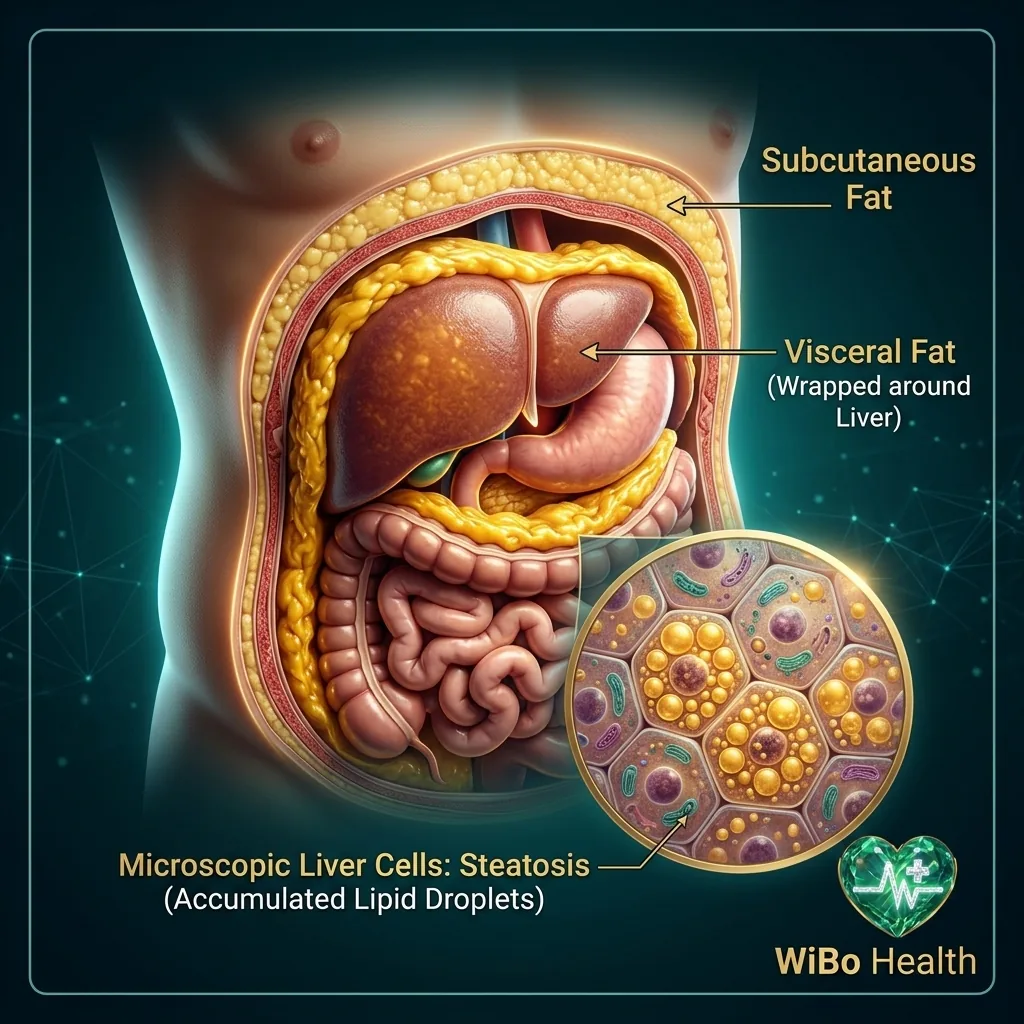
Many people say, "Doctor, I weigh 65 kg and I'm not visibly overweight. How can I have a fatty liver?" This is where visceral fat comes in. The fat in our bodies comes in two kinds:
- Subcutaneous fat: the soft fat you can pinch on your belly or thighs. From a health point of view it is the less harmful kind.
- Deep visceral fat (the hard belly): fat hidden deep in the abdominal cavity, wrapped around the liver, pancreas and intestines. You can't pinch it, and it behaves like an active "endocrine gland", sending inflammatory substances and fatty acids straight to the liver through the portal vein.
So you can have slim arms and legs and still carry a tired, fatty liver because of unhealthy eating habits, too little movement and constant stress.
2. How does your body tell you? The hidden signs of liver fat
The liver is a very patient organ: its inner tissue has no nerves that carry pain, which is why doctors call fatty liver a "silent disease". It doesn't cry out in the early stages, but it sends quiet signals that people mistake for the tiredness of everyday life:
a) Heavy tiredness and brain fog after meals
If a lunch with bread or rice leaves you desperate for a nap, or you can't concentrate and your thinking feels "foggy", this may be a sign of insulin resistance and of a liver struggling to process sugar and fat.
b) A mild heaviness in the upper right of the abdomen
The liver sits under the ribs on the right. When it swells with fat, it presses on the membrane around it (Glisson's capsule), and you may feel a heaviness or "mild discomfort", as if a small cushion were pressing on your right side, especially when you bend over or wear tight clothes.
c) A growing waist and a "liver belly"
A build-up of hard belly fat often goes hand in hand with fatty liver. If your waist measures more than 94 cm for men or 80 cm for women, that points to extra visceral fat and is worth a liver check. You can also work out your waist-to-height ratio in seconds.
d) Skin signs and darker patches on the neck
Have you noticed small skin tags around your neck or under your arms, or dark, velvety lines on the back of your neck? This isn't dirt or a surface skin problem; these signs are often linked to high insulin levels and insulin resistance, a condition that frequently goes with fatty liver.
3. Tests: how can you check your liver?
There's no need to be afraid of the tests; checking the liver is easy and accurate today:
- Liver enzymes in the blood (ALT & AST): when liver cells become inflamed by fat, these enzymes leak into the blood. ALT is the most liver-specific marker; if it is above the normal range, the fat has started to cause mild inflammation.
- Ultrasound: a painless five-minute scan. A healthy liver looks dark grey, while a fatty liver looks bright white and reflective (doctors call it a "bright liver").
- HbA1c and insulin resistance (HOMA-IR): fatty liver, metabolic syndrome and prediabetes often go together, so your HbA1c shows whether this fat load has started to affect how your body handles glucose.
4. The good news worth celebrating: your liver can recover!
The liver is the only organ in the human body with an exceptional ability to regenerate its own cells: if part of a healthy liver is removed in surgery, the rest grows back to almost its normal size.
What does that mean for you? As soon as you stop flooding it with refined sugar and trans fats and start a balanced plan, the liver begins to use its stored fat as fuel.
Losing 5% of your weight
Clearly reduces the amount of fat in the liver.
Losing 7 to 10%
Resolves fatty inflammation in many patients and usually brings liver enzymes back to normal.
Losing 10% or more
Can even reverse early liver fibrosis.
These results usually appear within two to three months (12 weeks) of sticking to better food and more movement, according to clinical studies and the guidelines of the European liver, diabetes and obesity societies.
5. Foods to choose and foods to avoid: your kitchen plan for a cleaner liver
Your real pharmacy is in your fridge. Here is a map of the foods backed by research:
- Plain black coffee: many observational studies suggest that 2 to 3 cups a day (without sugar) are linked to less liver fat and a lower risk of liver fibrosis, thanks to antioxidants such as chlorogenic acid.
- Cruciferous vegetables (broccoli, cauliflower, cabbage, rocket): rich in a sulphur compound called sulforaphane, which studies suggest activates the liver enzymes that clear toxins.
- Extra virgin olive oil: contains oleic acid and antioxidants; studies suggest that two tablespoons a day on salads, as part of a Mediterranean diet, improve liver enzymes and insulin sensitivity.
- Oily fish (salmon, sardines, mackerel): a natural source of omega-3 (EPA/DHA), which contributes to the maintenance of normal blood triglyceride levels.
- Artichoke: rich in cynarin, which is thought to stimulate bile flow and help the liver clear fat.
- Soft drinks and ready-made fruit juices: even when the label says "100% natural", drinking 30 g of liquid fructose without fibre is like firing a bullet straight at your liver cells.
- Trans fats and reused frying oil: hydrogenated margarine and frying oil used over and over raise inflammation and add to visceral fat.
- Baked goods and sweets made with white flour: white bread turns into sugar in your blood faster than a spoonful of sugar itself.
- Fried and ultra-processed foods: such as French fries; they combine harmful fats, salt and fast-absorbed starch, the mix that strains the liver's metabolism.
📊 Quick comparison: choose this 🟢 instead of this 🔴
Drinks
🟢 Black coffee, green tea, water with lemon
🔴 Soft drinks, juices, energy drinks
Fats and oils
🟢 Extra virgin olive oil, avocado, oily fish
🔴 Trans fats, reused frying oil, hydrogenated margarine
Protein
🟢 Eggs, salmon, chicken breast, lentils
🔴 Processed meat, hot dogs, fried burgers
Starches
🟢 Whole-grain oats, quinoa, lentils, berries
🔴 White bread, pastries, biscuits, white sugar
6. Food supplements that support liver health (according to research)
If you want an extra step alongside healthy eating, these are the most studied supplements. Talk to your doctor or pharmacist first, especially if you take medication:
- Milk thistle (silymarin): a wild plant used traditionally for the liver for centuries. Its active substance, silymarin, is an antioxidant, and studies suggest it protects liver cells, although the evidence in people is still limited.
- Omega-3 fatty acids (EPA/DHA): 2 g of EPA and DHA a day contributes to the maintenance of normal blood triglyceride levels; supplements should not exceed 5 g a day.
- Choline: found naturally in egg yolk and beef liver, it contributes to normal lipid metabolism and to the maintenance of normal liver function; it is needed to make the fat carriers (VLDL) that move fat out of the liver, and a severe shortage is linked to fat building up there.
- Magnesium (glycinate / malate): contributes to normal energy-yielding metabolism, and studies link low magnesium levels to insulin resistance.
7. The practical 12-week plan to reduce liver fat and visceral belly fat
How do you put all this into practice tomorrow morning? Here is the easy plan:
Weeks 1 to 4: stop the metabolic leak (cut sugar and fructose)
- Cut out everything with added sugar or high-fructose corn syrup.
- Swap white bread for whole-grain, barley or chickpea bread.
- Drink two glasses of water as soon as you wake up, followed by a cup of plain black coffee.
- Walk briskly for 20 minutes a day; walking is one of visceral fat's worst enemies.
Weeks 5 to 8: gentle intermittent fasting (14/10 or 16/8)
- Have your last meal at 7 pm and your first meal at 10 or 11 am the next day.
- During the fasting hours the liver's glycogen store runs out, so it has to burn its own fat for energy.
- Focus on meals high in protein and fibre to stay full and avoid sudden blood sugar dips.
⚠️ Before you fast
If you take diabetes medication (especially insulin or sulfonylureas), are pregnant or breastfeeding, or have a history of eating disorders, don't start intermittent fasting before talking to your doctor; your doses may need adjusting to avoid low blood sugar.
Weeks 9 to 12: reap the rewards and retest
- Many people notice their waist shrinking by 4 to 8 cm.
- The after-meal tiredness clearly fades and you feel lighter on your feet.
- Repeat your liver enzymes (ALT/AST) and ultrasound with your doctor; you and your doctor may be pleasantly surprised by the new result.
8. How will the Boodi app help you on this journey? (Coming soon)
Reducing liver fat takes an accurate calorie deficit (about 500 kcal a day) without feeling deprived or running out of energy. In the Boodi app we built a balanced diet programme on the established Mifflin-St Jeor equation, together with instant barcode scanning:
- Ingredient and preference scanner: tells you straight away whether a product contains hydrogenated fats or hidden sugars.
- Swap tree: if you love rice, bread or pasta, Boodi suggests alternatives that don't raise your blood sugar quickly.
- An open kitchen with all the world's cuisines: follow the 12-week plan with the dishes you love, without a dry Western diet forced on you.
9. The most searched questions about fatty liver
Does apple cider vinegar melt liver fat?
Natural apple cider vinegar (a teaspoon diluted in a large glass of water before a meal) may improve insulin sensitivity and soften the sharp rise in blood sugar after eating, which eases the load on the liver. On its own, without improving what you eat, it is not a magic solution.
How long does it take the liver to get rid of fat?
Liver fat starts to fall within about two weeks of cutting out sugar, and the results peak after 8 to 12 weeks of a disciplined diet and regular physical activity.
Is fruit completely off limits with a fatty liver?
No. Whole fruit contains fibre, vitamins and water that slow down sugar absorption. One or two pieces a day of low-sugar fruit (such as berries, strawberries, green apples and kiwi) are fine. Fruit juice is what to avoid, because it strips the fruit of its fibre and delivers a concentrated dose of fructose that goes straight to the liver.
Is fatty liver dangerous, and can it cause cancer?
In its early stages, fatty liver can be reversed in most cases. The danger comes when it is ignored for many years alongside smoking and poorly controlled diabetes: it can progress to fatty liver inflammation (MASH, formerly NASH), then to fibrosis and, rarely, to liver cancer. That is why finding it today and starting to deal with it now is the greatest gift you can give your body and your future.
Conclusion: start today, your liver is waiting for your first step
You don't need to change your whole life in one day. Start today with one simple decision: swap the soft drink for a glass of cold water with a slice of lemon, walk for 20 minutes outdoors, enjoy your morning coffee without sugar, and keep an eye out for the launch of the Boodi app, coming soon to guide you step by step.
Your health is the most precious thing you have, and your liver deserves the chance to breathe and become clean again.
Scientific sources
- Rinella ME, Lazarus JV, Ratziu V, et al. A multisociety Delphi consensus statement on new fatty liver disease nomenclature. J Hepatol 2023;79(6):1542–1556
- European Association for the Study of the Liver (EASL), European Association for the Study of Diabetes (EASD), European Association for the Study of Obesity (EASO). EASL–EASD–EASO Clinical Practice Guidelines on the management of metabolic dysfunction-associated steatotic liver disease (MASLD). J Hepatol 2024;81(3):492–542
- Vilar-Gomez E, Martinez-Perez Y, Calzadilla-Bertot L, et al. Weight loss through lifestyle modification significantly reduces features of nonalcoholic steatohepatitis. Gastroenterology 2015;149(2):367–378
- Promrat K, Kleiner DE, Niemeier HM, et al. Randomized controlled trial testing the effects of weight loss on nonalcoholic steatohepatitis. Hepatology 2010;51(1):121–129
- Kennedy OJ, Roderick P, Buchanan R, Fallowfield JA, Hayes PC, Parkes J. Systematic review with meta-analysis: coffee consumption and the risk of cirrhosis. Aliment Pharmacol Ther 2016;43(5):562–574
- Alberti KG, Eckel RH, Grundy SM, et al. Harmonizing the metabolic syndrome. Circulation 2009;120(16):1640–1645 (waist circumference thresholds)
- Commission Regulation (EU) No 432/2012: authorised health claims for DHA/EPA (normal blood triglyceride levels, 2 g/day), choline (normal lipid metabolism, normal liver function) and magnesium (normal energy-yielding metabolism)
⚖️ Medical disclaimer: this article is health education and lifestyle guidance from WiBo Health. It is not a medical diagnosis and does not replace advice from your doctor. Talk to your doctor before starting intermittent fasting or any food supplement, especially if you take medication or are pregnant or breastfeeding.