
Prediabetes: How to Stop the Train and Lower Your HbA1c Before It Turns Into Diabetes

Imagine you have just walked out of the lab or your doctor's office, test results in hand, eyes fixed on one number circled in red: an HbA1c of 5.9% or 6.1%, or maybe a fasting blood sugar of 112 mg/dL.
Perhaps your doctor said one short sentence as you left: "Your sugar is borderline... take care of yourself and eat less."
You step into the street and the thoughts come crashing in like waves: Do I have diabetes now? Are the days of relaxed family meals over? Will I spend the rest of my life on pills and needles? Where do I even start tomorrow morning?
Before you let the worry swallow your day, take a deep breath and read these words carefully: you do not have diabetes, this number is not a final verdict or a point of no return, and most important of all: this is not your fault.
You are not at the end of the road; you are standing at the "early warning station". That lab report is not bad news. It is actually the greatest wake-up call your body could give you. This article is not a complicated medical textbook. It is your practical plan, step by step, to bring your HbA1c back to safety and stop the train before it goes any further.
1. What does "borderline sugar" mean? Decoding your lab report simply
The first step to letting go of fear is understanding; we fear what we do not know. When you look at your blood test results, you will find two key terms that thousands of people search for every day:
- HbA1c (glycated haemoglobin): it does not tell you how much sugar is in your blood today or after yesterday's dinner. It is a kind of "memory tape" of your red blood cells that records the average sugar in your blood over the past 90 days.
- Fasting blood glucose: a test that measures the sugar concentration in your blood after an overnight fast (8 to 10 hours).
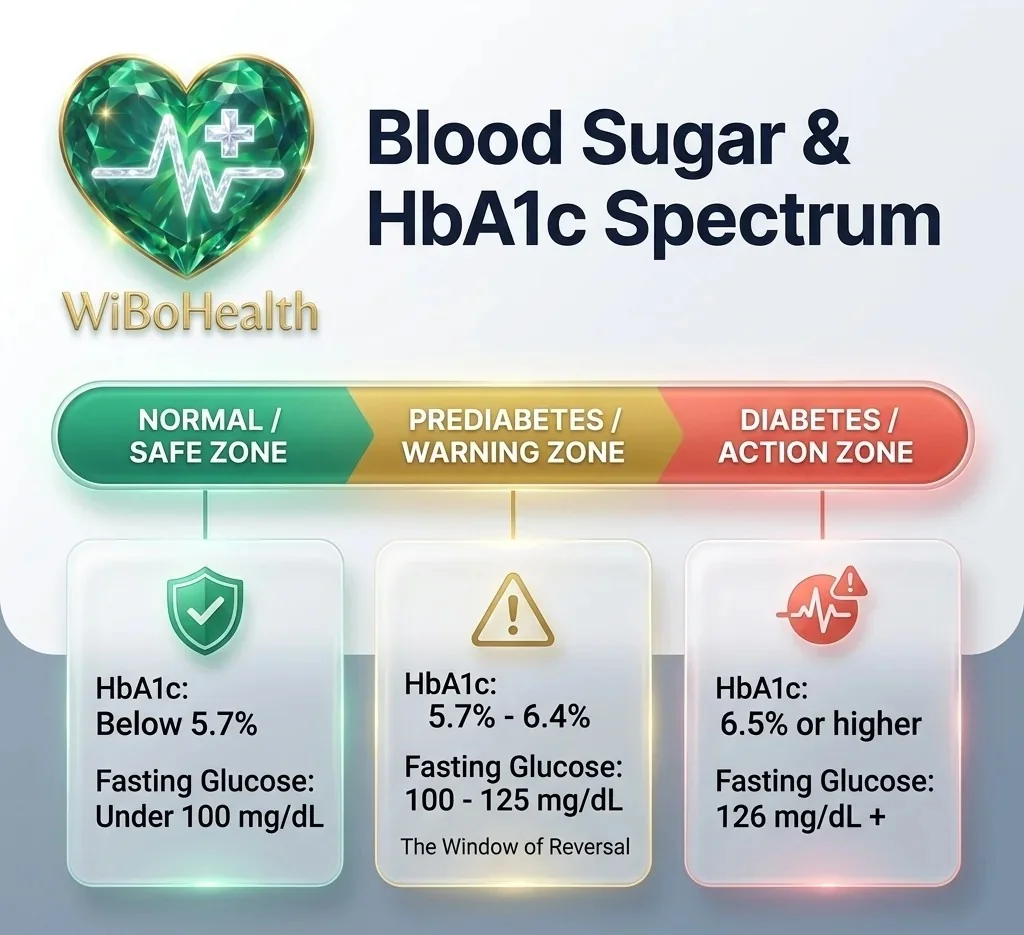
To make the numbers easy, doctors divide them into three clear zones:
- HbA1c: below 5.7%.
- Fasting glucose: below 100 mg/dL (below 5.6 mmol/L).
- What it means: your cells respond well to insulin and your pancreas works calmly and comfortably.
- HbA1c: between 5.7% and 6.4%.
- Fasting glucose: between 100 and 125 mg/dL (5.6 to 6.9 mmol/L).
- What it means: you are in the "prediabetes" stage. Your blood sugar is higher than normal but has not reached the diabetes threshold. This is your window of opportunity: the body can still restore its balance once you lift the extra load.
- HbA1c: 6.5% or higher.
- Fasting glucose: 126 mg/dL or higher (on two separate tests).
- What it means: the body has passed the warning stage and needs medication and regular follow-up to prevent complications.
💡 A golden rule to remember
If your HbA1c today is 5.8, 6.0 or even 6.3, you are in the yellow zone. The train has not reached the last station; it is slowing down right now, and you hold the key to steer it back onto the safe track.
2. Why did the train head this way in the first place? The story of the lock and the key
Many people feel deeply guilty and think prediabetes happens only because they ate one sweet too many. The physiology goes much deeper than that. To understand what is happening inside your body, picture this:
- Every time you eat (especially starches and sugars), the food is turned into glucose (sugar) that travels in your bloodstream.
- Sugar in the blood prompts the pancreas to release a hormone called insulin.
- Insulin works like a "key": it goes to your body's cells (muscles, liver), unlocks the door, lets the sugar in, and the cell uses it for energy and movement.
So where is the problem?
Over the years, with repeated meals full of fast starches, little movement and constant stress, the cells have filled up with sugar and do not want more. The locks have become "rusty and stiff": this is what we call insulin resistance.
The normal key no longer opens the door easily, so what does the poor pancreas do? It starts working overtime and makes more and more keys (it releases huge amounts of insulin) to force the cells to take in the sugar.
As long as the pancreas can keep doubling its effort, your blood sugar stays normal for years without you knowing! But after a while the pancreas gets tired and can no longer keep up with the huge demand. That is when sugar starts staying in the blood and building up, and your lab numbers begin to climb towards 5.7, 6.0 and beyond.
3. Did you have symptoms without noticing?
Prediabetes is called the "silent thief" because the vast majority feel no sudden pain. But the body does send subtle signals; if you think back over the past months, you may recognise some of them:
- The after-lunch food coma: heavy tiredness and an urge to sleep right after a lunch rich in rice, bread or pasta.
- Sugar cravings two hours after eating: sudden hunger and a strong urge for something sweet even though you just had a filling meal, caused by a sharp drop in blood sugar after a big insulin wave.
- Stubborn belly and waist fat: a noticeable increase in waist size that does not shift easily; high insulin is the body's main fat-storage hormone.
- Small skin changes: faint dark, velvety patches on the back of the neck or under the arms (acanthosis nigricans), or small skin tags around the neck; clear outward signs of insulin resistance.
- Mild thirst and waking up to urinate at night: the body starts trying to get rid of excess sugar through the kidneys.
4. The proven truth: how do we stop the train and lower HbA1c, scientifically?
Let us agree on one firm fact: there is no magic tea, no herbal mix from the internet and no secret recipe that erases prediabetes overnight. Anyone who tells you otherwise is selling you a cheap illusion that could harm your health.
On the other hand, there is a medical fact proven by the largest studies in the world (such as the well-known Diabetes Prevention Program, DPP): in prediabetes the pancreatic cells are not dead; they are only exhausted. Lighten their load, and the body's ability to restore insulin sensitivity and lower HbA1c is real and remarkable!
📊 What did the study show?
Research showed that losing just 5% to 7% of your current weight (about 4 to 6 kg if you weigh 80 kg), together with smart changes in movement and food quality, lowers the chance of progressing to diabetes by 58%, nearly twice the effect of metformin (31%) in the same study!
Here is how to do it in practice, step by step, without deprivation.
5. The smart plate plan: how to eat and lower your sugar without deprivation or hunger
The biggest mistake people make when they hear the word "prediabetes" is starving themselves or living on lettuce and water. That is a dead end that always ends in relapse and binge eating. The secret is not deprivation, but "food order" and "ingredient quality".
A. The golden "food order" trick (food sequencing)
Did you know that eating the same meal in a different order completely changes how your body handles the sugar? Studies have shown that eating in this order lowers the after-meal blood sugar peak by up to 40%:
- Start with fibre: a salad, leafy greens, cucumber or broccoli. Fibre forms a gel-like mesh in your gut that slows down the absorption of the sugar that follows.
- Then protein and healthy fats: eggs, chicken, meat, fish, avocado, or cheese and olive oil. Protein triggers fullness hormones and slows stomach emptying.
- Leave the starches for last: rice, bread or potatoes. By the time the starch reaches your gut, the fibre and protein mesh is ready to absorb it very slowly, preventing sharp sugar spikes.
B. Breakfast: the tune that sets the rest of your day
If you start your day with a croissant, a piece of cake, sugary breakfast cereal (corn flakes) or tea with three spoons of sugar, you set your blood sugar on fire from the morning, and insulin stays high all day asking for more carbohydrates.
The ideal breakfast to flatten your glucose curve:
- Boiled eggs, or eggs fried in olive oil or natural butter.
- Half an avocado or a handful of raw nuts (almonds or walnuts).
- A plate full of leafy greens (rocket, spinach, cucumber).
- A sprinkle of chia or flax seeds.
- A glass of water with a few drops of fresh lemon.
(A filling breakfast, rich in protein and quality fats, that gives you steady energy for hours without a sudden crash.)
C. Pancreas-friendly foods to build your meals around
- Cruciferous and leafy vegetables: spinach, rocket, broccoli and cauliflower; very filling and full of vitamins without raising your sugar.
- Legumes in moderation: lentils, chickpeas and beans; rich in a fibre called "resistant starch" that feeds your good gut bacteria.
- Quality healthy fats: extra virgin olive oil, olives, tahini and raw nuts. Fats raise insulin only slightly and keep you full for longer.
- Smart low-glycaemic-load fruit: do not cut out fruit completely; choose the smart ones: berries (blueberries, raspberries), strawberries and small green apples. Always eat them after a meal, as whole fruit with their fibre, and avoid juicing them.
D. The cooled-starch trick
If you crave rice or boiled potatoes, cook them and let them cool in the fridge for a few hours before eating (you can reheat them later). This simple step turns part of the starch into "resistant starch" that the body does not absorb as glucose; it passes to the gut as food for good bacteria, which noticeably reduces the rise in blood sugar.
6. Smart muscle movement: the "sponge" that soaks up sugar without insulin
Ask anyone which organ controls blood sugar and they will say: the pancreas. That is only half the answer! The other key organ, which handles about 80% of the sugar uptake after meals, is your skeletal muscle.
And here is the remarkable secret few people know: when your muscles move, they can open their gates and take sugar straight from the blood to use as fuel, without needing insulin at all (through transporters called GLUT4)! By moving, you give your pancreas a well-earned break.
How to use this every day without going to the gym
- The 10-to-15-minute magic after eating: do not sit down right after lunch or dinner. Walk around your room, move in the garden, or wash the dishes and tidy up. Light walking right after a meal pulls down the sugar peak before it builds up in your blood.
- The seated calf exercise (soleus push-ups): even at your desk or in front of the TV, repeatedly raising and lowering your heels works the deep calf muscle, a unique muscle that burns glucose very efficiently without tiring you out.
- Simple strength exercises twice a week: keeping your muscle mass with squats at home or wall push-ups builds "extra storage" for sugar in the future.
7. Sleep and stress: the unknown soldiers behind a high fasting test
Have you ever wondered why you wake up with a fasting sugar of 110 or 115 mg/dL even though you have not eaten for 10 hours? The answer lies in the stress hormones: cortisol and adrenaline.
When you stay up late or live with ongoing pressure and anxiety, your body releases cortisol, which sends an instant signal to the liver: "We are in danger! Release the sugar stores into the blood so we have energy to run!" That is why, if you fix your food but not your sleep, your fasting sugar will stay high:
- Sleep 7 to 8 hours a night: a single short night (less than 5 hours) can lower your cells' insulin sensitivity by 25% the next day!
- Close your kitchen 3 hours before bed: avoid late-night eating so your digestive system and pancreas can reset and your liver can rest while you sleep.
8. Your practical roadmap: the next 12 weeks
Because life changes do not happen in one go, split your journey into small, realistic goals over 12 weeks (the time your red blood cells need to renew, which is what your next HbA1c test will reflect):
📅 Weeks 1 to 2: clean up your drinks and settle your breakfast
- Stop drinking calories completely: juices (even natural ones), fizzy drinks, and sweetened tea or coffee. Switch to water, herbal tea or plain coffee.
- Move to a breakfast built on eggs, avocado and fibre, and say goodbye to pastries and white bread in the morning.
📅 Weeks 3 to 4: the walking habit and the plate order
- Apply the 10-minute walk rule straight after your main meal.
- Train yourself to eat vegetables first, then meat and protein, and finish with whatever starch is left.
📅 Weeks 5 to 8: a natural overnight fast and whole grains
- Rest your digestive system with a simple overnight fast: 12 hours between your last bite at dinner and your first bite at breakfast (for example, dinner at 8 pm and breakfast at 8 am).
- Swap white bread and white rice for whole-grain bread with flax seeds, and real, unprocessed oats.
📅 Weeks 9 to 12: stay steady and notice the changes
- By now you will notice a real drop in your trouser size, steady energy after lunch without the urge to nap, and fewer intense hunger attacks.
- Book an appointment with your doctor to recheck your HbA1c at the end of the third month, and see with your own eyes how the numbers have gone back down!
9. Common questions, clear answers
Does this mean I will definitely need a blood sugar medicine (such as metformin / Glucophage)?
Not necessarily at all. Most doctors give people with prediabetes 3 to 6 months to change their lifestyle with food and movement before considering any medication. In many cases, a modest weight loss and a change in diet are enough on their own to bring HbA1c back to normal. If your doctor feels metformin is needed in your case, it is a safe medicine and a temporary help, and the final decision always rests with your doctor's assessment.
How long does it take for HbA1c to come down?
Red blood cells live about 90 to 120 days. So any improvement you make in your food and movement today starts working right away, but you will only see the full, accurate result on your lab report after a full 3 months. Do not rush to retest after two weeks; give your body its natural time to repair.
Do I have to cut out bread, rice and fruit completely?
No! That all-or-nothing thinking is why most diets fail. What you need is "moderation and smart choices": eat smaller amounts of starch, swap white versions for whole grains, do not eat starch on its own on an empty stomach, and choose whole fruit with its fibre instead of juice, eaten after a full meal rather than as a snack on its own.
A heartfelt message to everyone holding their lab report today
See today as a turning point in your life: not the day you got ill, but the day you decided to listen to your body's honest message and truly start taking care of it.
The train has not turned into diabetes, the way back is wide open, and the answers are within reach: in a colourful plate of vegetables, in a quiet quarter-hour walk after your meal, and in restful sleep that repairs your cells. Start today, with just your next meal, and see how your body rewards you with energy and peace of mind.
Reviewed by Dr. Wassim Habib
WiBo Health Group 🌿
Scientific sources
- American Diabetes Association Professional Practice Committee. 2. Diagnosis and Classification of Diabetes: Standards of Care in Diabetes—2026. Diabetes Care 2026;49(Suppl 1)
- Diabetes Prevention Program Research Group. Reduction in the incidence of type 2 diabetes with lifestyle intervention or metformin. N Engl J Med 2002;346(6):393–403
- Diabetes Prevention Program Research Group. Long-term effects of lifestyle intervention or metformin on diabetes development and microvascular complications over 15-year follow-up: the Diabetes Prevention Program Outcomes Study. Lancet Diabetes Endocrinol 2015;3(11):866–875
- Shukla AP, Iliescu RG, Thomas CE, Aronne LJ. Food order has a significant impact on postprandial glucose and insulin levels. Diabetes Care 2015;38(7):e98–e99
- World Health Organization. Definition and diagnosis of diabetes mellitus and intermediate hyperglycaemia: report of a WHO/IDF consultation. Geneva: WHO; 2006
⚠️ Medical disclaimer: the content and information in this article are provided for general health education and nutrition awareness. They are in no way a medical diagnosis, a personal treatment plan, or a substitute for advice from your doctor or the healthcare provider who follows your case. Always talk to your doctor before making major changes to your diet or medication.