
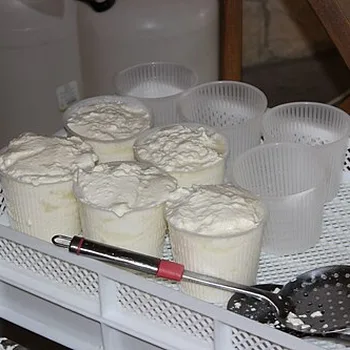
Ricotta Salata
Quick answer
A medium portion of Ricotta Salata (15 g) contains 42 kcal, with 0.5 g of net carbohydrates and 2.7 g of protein.
- Carbs0.5 g4.9%
- Protein2.7 g25.4%
- Fat3.3 g69.7%
- Fibre0 g
Percentages of total energy (calories)
Regular ricotta is fresh and moist, but "salata" (salted) ricotta is pressed, salted and aged for several months until it becomes a firm wheel you can grate, like dry feta or Parmesan. It is traditionally made from sheep's milk, which some people find easier on the stomach than cow's-milk cheese, and it has very little carbohydrate (about 3.5 g per 100 g), so the glycemic index does not apply. A sprinkle grated over lentil pasta or a tray of baked courgettes gives a rich, salty flavour without raising blood sugar and without the calories of ready-made sauces.
💡 Smart Nutritional Guidance
Consumption advice
Two tablespoons grated (15 g, about 42 kcal).
Best preparation methods
Grate it over roasted vegetables, salads or legume pasta, and use it instead of salt: grate the cheese and add no table salt to the dish.
Important Nutritional Note
It is naturally salty, so people with high blood pressure should eat it in moderation and count it in their daily salt.
Nutrition facts
| Nutrient | Per 100 g | Per typical portion (15 g) |
|---|---|---|
| Calories | 280 kcal | 42 kcal |
| Protein | 18 g | 2.7 g |
| Carbohydrate | 3.5 g | 0.5 g |
| Available carbohydrate | 3.5 g | 0.5 g |
| Fat | 22 g | 3.3 g |
| Dietary fibre | 0 g | 0 g |
The typical portion is approximate, for comparison purposes.
Comparison & smarter alternatives
It provides 6.4 g of protein per 100 kcal, ranking 31 of 46 in Dairy & cheese (highest first).
Related foods from the same family:
Frequently asked questions
Is Ricotta Salata good for weight loss?
It can fit a balanced plan with portion control: a 15 g portion gives 42 kcal, and what matters most is your total daily intake and the rest of the meal.
How does Ricotta Salata affect blood sugar?
Ricotta Salata contains only 3.5 g of available carbohydrate per 100 g, so the glycemic index does not apply and its direct effect on blood sugar is minimal. The meal’s effect depends on what you eat with it, such as bread, rice or sweetened sauces.
What is the nutritional value of a typical portion of Ricotta Salata?
A typical 15 g portion of Ricotta Salata provides about 42 kcal, 2.7 g protein, 0.5 g carbohydrate, 3.3 g fat and 0 g fibre.
What is the difference between fresh ricotta and ricotta salata?
Fresh ricotta is moist and contains more liquid and lactose, while ricotta salata is firm, aged, dried and salted, with much less lactose.
Is ricotta salata a good choice with insulin resistance?
A good one: it has very little carbohydrate and does not raise blood sugar, and its strong flavour makes a vegetable dish satisfying and tasty, so cutting back on starch is easier.
How do I keep the sodium in check when using it?
Because it is naturally salty, use it as a salt substitute in your cooking: grate the cheese and add no extra table salt to the dish.
Read also
References & Scientific Sources
- The glycemic index does not apply because this food has less than 5 g of available carbohydrate per 100 g, and a GI test requires 25 to 50 g of available carbohydrate, per: ISO 26642:2010. Food products — Determination of the glycaemic index (GI) and recommendation for food classification. International Organization for Standardization; 2010. www.iso.org/standard/43633.html
- Definition of available carbohydrate and glycemic load: FAO/WHO. Carbohydrates in human nutrition: report of a joint FAO/WHO expert consultation. FAO Food and Nutrition Paper 66. Rome; 1998. www.fao.org/4/w8079e/w8079e00.htm
Reviewed by Dr. Wassim Habib · Last reviewed 21 October 2026
Disclaimer: This guidance is for nutritional lifestyle orientation and does not constitute a diagnostic medical device under EU Regulation MDR 2017/745.