
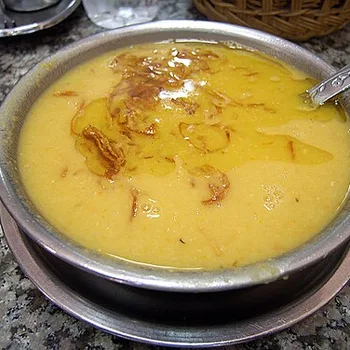
Mulligatawny Lentil Soup
Quick answer
A medium portion of Mulligatawny Lentil Soup (300 g) contains 345 kcal, with 40.5 g of net carbohydrates and 18.6 g of protein. Its glycemic index is 38 (Low) for how fast it raises blood sugar, while its glycemic load per portion is 15.4 (Medium) for its actual effect.
- Carbs54 g61.7%
- Protein18.6 g21.3%
- Fat6.6 g17%
- Fibre13.5 g
Percentages of total energy (calories)
Mulligatawny soup was born in India during the British era; its Tamil name means “pepper water”. It is made by simmering yellow or brown lentils with apple, carrot, celery and a blend of warming spices (turmeric, cumin, coriander, ginger and cinnamon). It is an excellent plant-based meal, providing 4.5g of fibre and 6.2g of protein per 100g for only 115 kcal. The soluble fibre in lentils helps bind some bile acids in the gut, one reason legumes are useful in a diet that supports normal cholesterol levels.
💡 Smart Nutritional Guidance
Consumption advice
A 300g bowl (about 345 kcal) is a filling lunch, ideal if you are on a calorie deficit and want to lose weight without feeling deprived.
Best preparation methods
Blend half the soup and leave the other half with whole lentils for a velvety texture without adding cream or flour.
Important Nutritional Note
Lentils contain galacto-oligosaccharides (GOS), which can cause bloating in irritable bowel syndrome. On a low-FODMAP diet, soak and rinse the lentils well, or use small portions of drained canned lentils.
Nutrition facts
| Nutrient | Per 100 g | Per typical portion (300 g) |
|---|---|---|
| Calories | 115 kcal | 345 kcal |
| Protein | 6.2 g | 18.6 g |
| Carbohydrate | 18 g | 54 g |
| Available carbohydrate | 13.5 g | 40.5 g |
| Fat | 2.2 g | 6.6 g |
| Dietary fibre | 4.5 g | 13.5 g |
The typical portion is approximate, for comparison purposes.
Comparison & smarter alternatives
Among the foods in Indian dishes with a glycemic index (6), it ranks 4 (lowest first).
Smart alternatives from the same family:
Frequently asked questions
Is Mulligatawny Lentil Soup good for weight loss?
It can be included in moderation: it contains 4.5 g of fibre per 100 g, which supports fullness, and a 300 g portion gives 345 kcal.
How does Mulligatawny Lentil Soup affect blood sugar?
Its glycemic index is 38 (Low), a clinically reviewed estimate rather than a laboratory measurement. A typical 300 g portion has a glycemic load of 15.4 (Medium), so it is best combined with protein or fibre-rich vegetables.
What is the nutritional value of a typical portion of Mulligatawny Lentil Soup?
A typical 300 g portion of Mulligatawny Lentil Soup provides about 345 kcal, 18.6 g protein, 54 g carbohydrate, 6.6 g fat and 13.5 g fibre.
Does mulligatawny lentil soup help with weight loss?
It can help as part of a balanced diet: the fibre and plant protein keep you full for hours, and soup fills the stomach for relatively few calories. The effect of ginger and spices on calorie burning is very small and not something to rely on.
How does this soup affect blood sugar and insulin resistance?
Its glycemic index is low (38) and the glycemic load of a 300g bowl is about 15.4. Sugar is absorbed slowly and gradually, which makes it a good dish for managing glucose.
Is mulligatawny soup gluten-free?
The traditional recipe based on lentils and vegetables is naturally gluten-free, but check that stock cubes or curry powder do not contain wheat flour.
Read also
- Prediabetes: How to Stop the Train and Lower Your HbA1cGuide
- Gestational Diabetes Guide: Normal Levels and Foods to EatGuide
References & Scientific Sources
- The glycemic index of this food is a clinically reviewed estimate by the WiBo Health medical team, not a laboratory measurement from the International GI Tables (Atkinson 2021). GI bands (low ≤ 55 · medium 56–69 · high ≥ 70) follow: ISO 26642:2010. Food products — Determination of the glycaemic index (GI) and recommendation for food classification. International Organization for Standardization; 2010. www.iso.org/standard/43633.html
- Definition of available carbohydrate and glycemic load: FAO/WHO. Carbohydrates in human nutrition: report of a joint FAO/WHO expert consultation. FAO Food and Nutrition Paper 66. Rome; 1998. www.fao.org/4/w8079e/w8079e00.htm
Reviewed by the WiBo Health medical team · Last reviewed 13 October 2026
Disclaimer: This guidance is for nutritional lifestyle orientation and does not constitute a diagnostic medical device under EU Regulation MDR 2017/745.