
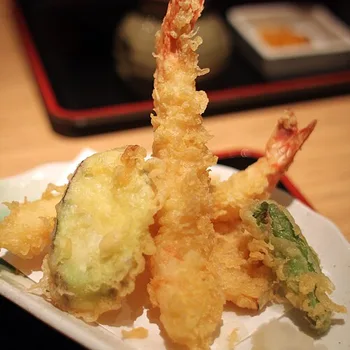
Mixed Crispy Vegetable Tempura
Quick answer
A medium portion of Mixed Crispy Vegetable Tempura (120 g) contains 166 kcal, with 19.4 g of net carbohydrates and 3 g of protein. Its glycemic index is 50 (Low) for how fast it raises blood sugar, while its glycemic load per portion is 9.7 (Low) for its actual effect.
- Carbs21.6 g50.3%
- Protein3 g7%
- Fat8.2 g42.7%
- Fibre2.2 g
Percentages of total energy (calories)
Vegetable tempura (pumpkin, aubergine, carrot, sweet pepper and mushroom) combines a delicious crunch with fibre and plant antioxidants such as beta-carotene and polyphenols. The quick frying inside the thin batter helps protect some of the heat-sensitive vitamins, but the large surface area of vegetable slices means they soak up more oil than shrimp or fish. The result is a tasty vegetable dish that is easy to serve to children and to people who do not like boiled vegetables, but it carries extra calories that call for attention to the portion.
💡 Smart Nutritional Guidance
Consumption advice
A 100 to 120g portion works well as a shared side or starter, giving plenty of plant variety without too much fat.
Best preparation methods
At home you can use an air fryer after a light spray of olive oil to get a similar crunch with far fewer calories and less fat.
Important Nutritional Note
Starchy vegetables in tempura (such as sweet potato and pumpkin) add more carbohydrate than watery ones such as courgette and pepper, so watch the mix if you follow a low-carb diet. The batter contains wheat flour (gluten).
Nutrition facts
| Nutrient | Per 100 g | Per typical portion (120 g) |
|---|---|---|
| Calories | 138 kcal | 165.6 kcal |
| Protein | 2.5 g | 3 g |
| Carbohydrate | 18 g | 21.6 g |
| Available carbohydrate | 16.2 g | 19.4 g |
| Fat | 6.8 g | 8.2 g |
| Dietary fibre | 1.8 g | 2.2 g |
The typical portion is approximate, for comparison purposes.
Comparison & smarter alternatives
Among the foods in Asian dishes with a glycemic index (33), it ranks 21 (lowest first).
Smart alternatives from the same family:
Frequently asked questions
Is Mixed Crispy Vegetable Tempura good for weight loss?
It can fit a balanced plan with portion control: a 120 g portion gives 166 kcal, and what matters most is your total daily intake and the rest of the meal.
How does Mixed Crispy Vegetable Tempura affect blood sugar?
Its glycemic index is 50 (Low), a clinically reviewed estimate rather than a laboratory measurement. A typical 120 g portion has a glycemic load of 9.7 (Low), so the effect of this portion on blood sugar is limited.
What is the nutritional value of a typical portion of Mixed Crispy Vegetable Tempura?
A typical 120 g portion of Mixed Crispy Vegetable Tempura provides about 166 kcal, 3 g protein, 21.6 g carbohydrate, 8.2 g fat and 2.2 g fibre.
Is vegetable tempura suitable for keto?
Not for strict keto: the batter is made from wheat flour, and vegetables such as carrot and pumpkin contain natural carbohydrate that exceeds keto limits.
How does vegetable tempura affect blood sugar?
Its glycemic index is low (50) thanks to the vegetable fibre and the fat, which slow absorption, and the glycemic load of a 120g portion is about 9.7.
How can you reduce the oil absorbed by vegetable tempura?
Keep the batter ice-cold, heat the oil properly to 175–180°C before adding the vegetables, and place them on a wire rack as soon as they are done rather than on paper towels, so steam and oil do not condense on them.
Read also
- Prediabetes: How to Stop the Train and Lower Your HbA1cGuide
- Gestational Diabetes Guide: Normal Levels and Foods to EatGuide
References & Scientific Sources
- The glycemic index of this food is a clinically reviewed estimate by the WiBo Health medical team, not a laboratory measurement from the International GI Tables (Atkinson 2021). GI bands (low ≤ 55 · medium 56–69 · high ≥ 70) follow: ISO 26642:2010. Food products — Determination of the glycaemic index (GI) and recommendation for food classification. International Organization for Standardization; 2010. www.iso.org/standard/43633.html
- Definition of available carbohydrate and glycemic load: FAO/WHO. Carbohydrates in human nutrition: report of a joint FAO/WHO expert consultation. FAO Food and Nutrition Paper 66. Rome; 1998. www.fao.org/4/w8079e/w8079e00.htm
Reviewed by the WiBo Health medical team · Last reviewed 13 October 2026
Disclaimer: This guidance is for nutritional lifestyle orientation and does not constitute a diagnostic medical device under EU Regulation MDR 2017/745.