
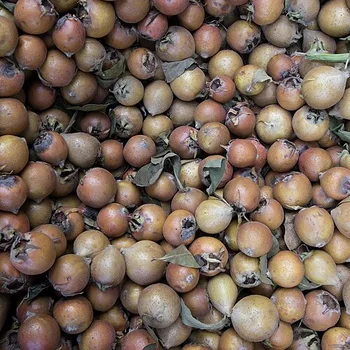
European Medlar
Quick answer
A medium portion of European Medlar (80 g) contains 38 kcal, with 5.4 g of net carbohydrates and 0.4 g of protein. Its glycemic index is 40 (Low) for how fast it raises blood sugar, while its glycemic load per portion is 2.1 (Low) for its actual effect.
- Carbs9.2 g92.4%
- Protein0.4 g4%
- Fat0.2 g3.6%
- Fibre3.8 g
Percentages of total energy (calories)
A venerable winter fruit that was queen of European tables in the Middle Ages, with a curious secret known only to nature lovers: pick it straight from the tree and it is hard, sour and puckering, but leave it for weeks in a cool place until it turns brown and completely soft (a stage called bletting), and the magic happens! Its flesh turns into a warm, velvety paste like apple sauce spiced with cinnamon and nutmeg. Its estimated glycemic index is low (40) and two fruits have a glycemic load of only 2.1, giving you warmth and calm fullness without added sugar.
💡 Smart Nutritional Guidance
Consumption advice
Two fully ripe fruits (about 80 g). A lovely winter choice as a warm dessert with a cup of green or cinnamon tea in the afternoon.
Best preparation methods
Do not peel it with a knife: just squeeze the soft fruit between two fingers, scoop out the brown, pudding-like flesh with a spoon, and discard the dry skin and the large seeds.
Important Nutritional Note
Do not crack the large, hard seeds with your teeth; throw them away, as they contain traces of natural compounds that are best not eaten. And do not eat the fruit while it is hard and green: its sharp tannins can upset your stomach.
Nutrition facts
| Nutrient | Per 100 g | Per typical portion (80 g) |
|---|---|---|
| Calories | 47 kcal | 37.6 kcal |
| Protein | 0.5 g | 0.4 g |
| Carbohydrate | 11.5 g | 9.2 g |
| Available carbohydrate | 6.7 g | 5.4 g |
| Fat | 0.2 g | 0.2 g |
| Dietary fibre | 4.8 g | 3.8 g |
The typical portion is approximate, for comparison purposes.
Comparison & smarter alternatives
Among the foods in Fruit with a glycemic index (57), it ranks 31 (lowest first).
Smart alternatives from the same family:
Frequently asked questions
Is European Medlar good for weight loss?
Yes. European Medlar is very low in calories (47 kcal per 100 g), so you can eat a generous amount to add volume and fullness to a meal without many calories.
How does European Medlar affect blood sugar?
Its glycemic index is 40 (Low), a clinically reviewed estimate rather than a laboratory measurement. A typical 80 g portion has a glycemic load of 2.1 (Low), so the effect of this portion on blood sugar is limited.
What is the nutritional value of a typical portion of European Medlar?
A typical 80 g portion of European Medlar provides about 38 kcal, 0.4 g protein, 9.2 g carbohydrate, 0.2 g fat and 3.8 g fibre.
Why must a medlar turn brown and very soft before you eat it?
This is not rot but natural ripening after picking: the astringent tannins break down and some starch and acids turn into sugars, so the flesh becomes soft and sweet, tasting like apple and cinnamon jam.
Does medlar suit people with sluggish digestion or IBS?
Its flesh is rich in pectin, a gentle, gel-forming fibre that helps keep the bowels regular. If you have a sensitive gut, start with one fruit and see how you tolerate it.
How can someone with diabetes enjoy it more safely?
Eat the flesh of two fruits with a spoonful of ground almonds or yoghurt: the protein and healthy fat slow the absorption of the fruit sugar, so the rise in blood sugar stays calm.
Read also
- Prediabetes: How to Stop the Train and Lower Your HbA1cGuide
- Gestational Diabetes Guide: Normal Levels and Foods to EatGuide
References & Scientific Sources
- The glycemic index of this food is a clinically reviewed estimate by the WiBo Health medical team, not a laboratory measurement from the International GI Tables (Atkinson 2021). GI bands (low ≤ 55 · medium 56–69 · high ≥ 70) follow: ISO 26642:2010. Food products — Determination of the glycaemic index (GI) and recommendation for food classification. International Organization for Standardization; 2010. www.iso.org/standard/43633.html
- Definition of available carbohydrate and glycemic load: FAO/WHO. Carbohydrates in human nutrition: report of a joint FAO/WHO expert consultation. FAO Food and Nutrition Paper 66. Rome; 1998. www.fao.org/4/w8079e/w8079e00.htm
Reviewed by Dr. Wassim Habib · Last reviewed 20 October 2026
Disclaimer: This guidance is for nutritional lifestyle orientation and does not constitute a diagnostic medical device under EU Regulation MDR 2017/745.