
Marionberries
Quick answer
A medium portion of Marionberries (125 g) contains 60 kcal, with 8.4 g of net carbohydrates and 1.5 g of protein. Its glycemic index is 25 (Low) for how fast it raises blood sugar, while its glycemic load per portion is 2.1 (Low) for its actual effect.
- Carbs14.8 g84.9%
- Protein1.5 g8.6%
- Fat0.5 g6.5%
- Fibre6.4 g
Percentages of total energy (calories)
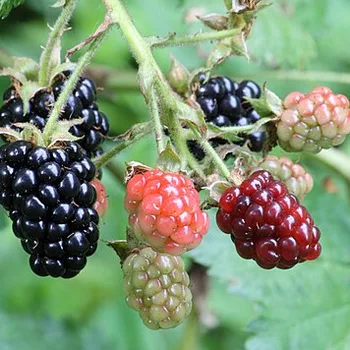
Developed in Oregon, USA, to become an icon of quality, chefs even call it the "Cabernet of blackberries", comparing it with the finest grapes, because of its complex flavour that blends the sweetness of wild blackberry with light earthy notes and well-balanced acidity. The berries are long and glossy and the flesh melts smoothly. One cup (125 g) gives you about 6.4 g of fibre and only 60 kcal, with a low estimated glycemic index (25) and a glycemic load of 2.1, so your energy stays steady for hours.
💡 Smart Nutritional Guidance
Consumption advice
A full cup (125 g). A great mid-day snack for a natural lift and focus.
Best preparation methods
Mix them with a small handful of raw walnuts or a sprinkle of hemp seeds: the healthy fat and protein make the snack more filling and calm the absorption of sugar.
Important Nutritional Note
The seeds are very small and do not bother your teeth, and together with the skin they contain antioxidant compounds such as ellagic acid. Chew the berries well to benefit, and wash them only just before eating.
Nutrition facts
| Nutrient | Per 100 g | Per typical portion (125 g) |
|---|---|---|
| Calories | 48 kcal | 60 kcal |
| Protein | 1.2 g | 1.5 g |
| Carbohydrate | 11.8 g | 14.8 g |
| Available carbohydrate | 6.7 g | 8.4 g |
| Fat | 0.4 g | 0.5 g |
| Dietary fibre | 5.1 g | 6.4 g |
The typical portion is approximate, for comparison purposes.
Comparison & smarter alternatives
Among the foods in Fruit with a glycemic index (57), it ranks 13 (lowest first).
Smart alternatives from the same family:
Frequently asked questions
Is Marionberries good for weight loss?
Yes. Marionberries is very low in calories (48 kcal per 100 g), so you can eat a generous amount to add volume and fullness to a meal without many calories.
How does Marionberries affect blood sugar?
Its glycemic index is 25 (Low), a clinically reviewed estimate rather than a laboratory measurement. A typical 125 g portion has a glycemic load of 2.1 (Low), so the effect of this portion on blood sugar is limited.
What is the nutritional value of a typical portion of Marionberries?
A typical 125 g portion of Marionberries provides about 60 kcal, 1.5 g protein, 14.8 g carbohydrate, 0.5 g fat and 6.4 g fibre.
What makes marionberries taste different from ordinary blackberries?
Ordinary blackberries can taste watery or harshly sour if not fully ripe, while marionberries have a honeyed, balanced sweetness and a thin skin that melts in the mouth.
What does the ellagic acid in marionberries do?
Gut bacteria turn it into compounds called urolithins, which researchers are studying for their possible role in cell health and inflammation. Early results are encouraging, but their effect on insulin resistance in people is not settled yet.
How do I keep marionberries fresh for as long as possible?
Put a dry paper towel in the bottom of a container, lay the berries in a single layer without piling them up, keep them dry on the coldest shelf of the fridge, and wash them only just before eating.
Read also
- Prediabetes: How to Stop the Train and Lower Your HbA1cGuide
- Gestational Diabetes Guide: Normal Levels and Foods to EatGuide
References & Scientific Sources
- The glycemic index of this food is a clinically reviewed estimate by the WiBo Health medical team, not a laboratory measurement from the International GI Tables (Atkinson 2021). GI bands (low ≤ 55 · medium 56–69 · high ≥ 70) follow: ISO 26642:2010. Food products — Determination of the glycaemic index (GI) and recommendation for food classification. International Organization for Standardization; 2010. www.iso.org/standard/43633.html
- Definition of available carbohydrate and glycemic load: FAO/WHO. Carbohydrates in human nutrition: report of a joint FAO/WHO expert consultation. FAO Food and Nutrition Paper 66. Rome; 1998. www.fao.org/4/w8079e/w8079e00.htm
Reviewed by Dr. Wassim Habib · Last reviewed 20 October 2026
Disclaimer: This guidance is for nutritional lifestyle orientation and does not constitute a diagnostic medical device under EU Regulation MDR 2017/745.