
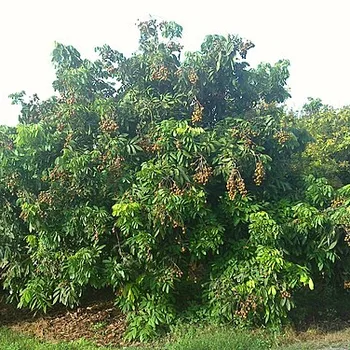
Longan (Dragon Eye)
Quick answer
A medium portion of Longan (Dragon Eye) (100 g) contains 60 kcal, with 14 g of net carbohydrates and 1.3 g of protein. Its glycemic index is 50 (Low) for how fast it raises blood sugar, while its glycemic load per portion is 7 (Low) for its actual effect.
- Carbs15.1 g90.8%
- Protein1.3 g7.8%
- Fat0.1 g1.4%
- Fibre1.1 g
Percentages of total energy (calories)
Asians call it "dragon eye" because when you peel its smooth, woody shell, the translucent flesh looks like the pupil of an eye around a shiny black seed. It resembles the famous lychee, but its taste is warmer and deeper, with a musky honey flavour and a gentle floral touch. Its estimated glycemic index is 50, within the low range, and the glycemic load of a portion is 7 (low), as long as you eat it fresh and keep an eye on how many you eat.
💡 Smart Nutritional Guidance
Consumption advice
The balanced daily portion is 8 to 10 peeled fruits (about 80 to 100 g). Lovely as a summer dessert after a balanced lunch.
Best preparation methods
Eat it fresh and chilled from the fridge. Watch out for canned longan in the supermarket: it is usually soaked in a heavy sugar syrup that raises blood sugar quickly and cancels out the benefits of the fresh fruit.
Important Nutritional Note
Take out the flesh and discard the hard black seed: it is not edible, so do not crack it with your teeth or swallow it. Stick to the suggested portion, as longan is easy to keep eating one after another without noticing.
Nutrition facts
| Nutrient | Per 100 g | Per typical portion (100 g) |
|---|---|---|
| Calories | 60 kcal | 60 kcal |
| Protein | 1.3 g | 1.3 g |
| Carbohydrate | 15.1 g | 15.1 g |
| Available carbohydrate | 14 g | 14 g |
| Fat | 0.1 g | 0.1 g |
| Dietary fibre | 1.1 g | 1.1 g |
The typical portion is approximate, for comparison purposes.
Comparison & smarter alternatives
Among the foods in Fruit with a glycemic index (57), it ranks 47 (lowest first).
Smart alternatives from the same family:
Frequently asked questions
Is Longan (Dragon Eye) good for weight loss?
Yes. Longan (Dragon Eye) is very low in calories (60 kcal per 100 g), so you can eat a generous amount to add volume and fullness to a meal without many calories.
How does Longan (Dragon Eye) affect blood sugar?
Its glycemic index is 50 (Low), a clinically reviewed estimate rather than a laboratory measurement. A typical 100 g portion has a glycemic load of 7 (Low), so the effect of this portion on blood sugar is limited.
What is the nutritional value of a typical portion of Longan (Dragon Eye)?
A typical 100 g portion of Longan (Dragon Eye) provides about 60 kcal, 1.3 g protein, 15.1 g carbohydrate, 0.1 g fat and 1.1 g fibre.
Why is longan linked to calm and sleep in traditional Chinese medicine?
It is traditionally used in soothing evening drinks and contains polyphenols. Scientific evidence that it improves sleep in people is still limited, so enjoy it as a tasty fruit with a light dinner.
What is the difference between fresh and dried longan?
Drying removes the water, so the sugars are concentrated into a much smaller weight. A small handful of dried longan therefore raises blood sugar much faster. Fresh is better for blood sugar; eat dried longan only in very small amounts.
Does longan raise your body temperature, as people say?
This comes from traditional Chinese medicine, which describes longan as "warming in nature", but scientifically it does not raise your body temperature.
Read also
- Prediabetes: How to Stop the Train and Lower Your HbA1cGuide
- Gestational Diabetes Guide: Normal Levels and Foods to EatGuide
References & Scientific Sources
- The glycemic index of this food is a clinically reviewed estimate by the WiBo Health medical team, not a laboratory measurement from the International GI Tables (Atkinson 2021). GI bands (low ≤ 55 · medium 56–69 · high ≥ 70) follow: ISO 26642:2010. Food products — Determination of the glycaemic index (GI) and recommendation for food classification. International Organization for Standardization; 2010. www.iso.org/standard/43633.html
- Definition of available carbohydrate and glycemic load: FAO/WHO. Carbohydrates in human nutrition: report of a joint FAO/WHO expert consultation. FAO Food and Nutrition Paper 66. Rome; 1998. www.fao.org/4/w8079e/w8079e00.htm
Reviewed by Dr. Wassim Habib · Last reviewed 20 October 2026
Disclaimer: This guidance is for nutritional lifestyle orientation and does not constitute a diagnostic medical device under EU Regulation MDR 2017/745.