
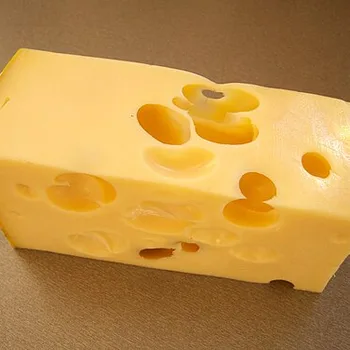
Dutch Maasdam Cheese
Quick answer
A medium portion of Dutch Maasdam Cheese (30 g) contains 105 kcal, with 0.4 g of net carbohydrates and 7.8 g of protein.
- Carbs0.4 g1.7%
- Protein7.8 g29.5%
- Fat8.1 g68.8%
- Fibre0 g
Percentages of total energy (calories)
Maasdam (Maasdammer 45+) is the Dutch answer to Swiss Emmental, created to combine quick ripening and a supple texture with big holes and a sweet, nutty flavour. The secret is propionic acid bacteria (Propionibacterium) during ripening: they consume the lactate left over from the fermentation of milk sugar and release carbon dioxide, which forms the holes, while producing compounds that give a naturally sweet taste without any added sugar. Maasdam provides 26g of protein per 100g and is rich in calcium and phosphorus.
💡 Smart Nutritional Guidance
Consumption advice
A single 30g slice gives satisfying protein and fat, but the cheese is 27% fat, so one or two portions a day is enough.
Best preparation methods
Maasdam melts well: melt it on a slice of wholegrain bread with tomato, or cut it into cubes and eat it with walnuts as an afternoon snack.
Important Nutritional Note
Thanks to ripening, Maasdam contains less than 0.1g of lactose per 100g, so it suits most people with lactose intolerance. It is not suitable for people with a cow’s milk protein (casein) allergy, and it contributes a fair amount of salt.
Nutrition facts
| Nutrient | Per 100 g | Per typical portion (30 g) |
|---|---|---|
| Calories | 350 kcal | 105 kcal |
| Protein | 26 g | 7.8 g |
| Carbohydrate | 1.5 g | 0.4 g |
| Available carbohydrate | 1.5 g | 0.4 g |
| Fat | 27 g | 8.1 g |
| Dietary fibre | 0 g | 0 g |
The typical portion is approximate, for comparison purposes.
Comparison & smarter alternatives
It provides 7.4 g of protein per 100 kcal, ranking 14 of 46 in Dairy & cheese (highest first).
Related foods from the same family:
Frequently asked questions
Is Dutch Maasdam Cheese good for weight loss?
It can fit a balanced plan with portion control: a 30 g portion gives 105 kcal, and what matters most is your total daily intake and the rest of the meal.
How does Dutch Maasdam Cheese affect blood sugar?
Dutch Maasdam Cheese contains only 1.5 g of available carbohydrate per 100 g, so the glycemic index does not apply and its direct effect on blood sugar is minimal. The meal’s effect depends on what you eat with it, such as bread, rice or sweetened sauces.
What is the nutritional value of a typical portion of Dutch Maasdam Cheese?
A typical 30 g portion of Dutch Maasdam Cheese provides about 105 kcal, 7.8 g protein, 0.4 g carbohydrate, 8.1 g fat and 0 g fibre.
Does Maasdam contain sugar that makes it taste sweet?
No, it contains almost no carbohydrate or sugar. The sweetness comes from natural compounds formed during fermentation, such as propionic acid and certain amino acids, so it does not raise blood sugar and suits diabetes and keto.
Does Maasdam raise cholesterol?
It contains natural saturated fat. Moderate amounts (about 30g a day) within a balanced diet are fine for most people and provide calcium, but take care if you have familial hypercholesterolaemia or heart disease.
What is the difference between Maasdam and Dutch Gouda?
Gouda is denser, ranges from young to extra-aged and has a creamy, salty flavour, while Maasdam has big holes, a mildly sweet nutty taste and a more supple texture.
Read also
References & Scientific Sources
- The glycemic index does not apply because this food has less than 5 g of available carbohydrate per 100 g, and a GI test requires 25 to 50 g of available carbohydrate, per: ISO 26642:2010. Food products — Determination of the glycaemic index (GI) and recommendation for food classification. International Organization for Standardization; 2010. www.iso.org/standard/43633.html
- Definition of available carbohydrate and glycemic load: FAO/WHO. Carbohydrates in human nutrition: report of a joint FAO/WHO expert consultation. FAO Food and Nutrition Paper 66. Rome; 1998. www.fao.org/4/w8079e/w8079e00.htm
Reviewed by the WiBo Health medical team · Last reviewed 13 October 2026
Disclaimer: This guidance is for nutritional lifestyle orientation and does not constitute a diagnostic medical device under EU Regulation MDR 2017/745.