
Coconut Sugar
Quick answer
A medium portion of Coconut Sugar (4 g) contains 15 kcal, with 3.6 g of net carbohydrates and 0 g of protein. Its glycemic index is 54 (Low) for how fast it raises blood sugar, while its glycemic load per portion is 1.9 (Low) for its actual effect.
- Carbs3.7 g98.6%
- Protein0 g1.2%
- Fat0 g0.2%
- Fibre0.1 g
Percentages of total energy (calories)
How many calories are in coconut sugar?
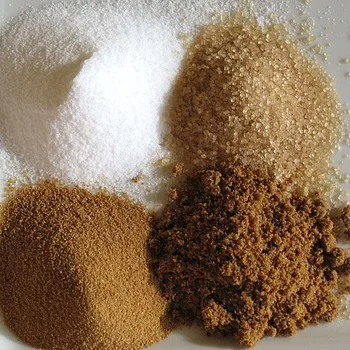
Coconut sugar is made from the sap of the coconut palm's flower, boiled until it becomes brown granules. There are 375 calories per 100 g, and a teaspoon (4 g) has about 15 calories, which is about the same as white sugar (16 calories per spoon).
Does coconut sugar raise blood sugar?
Here there is a story we need to correct: many packs say "low glycemic index". The truth is that the University of Sydney measured it and found an index of 54, which is right on the edge of low. Another measurement from the Philippines gave 35. White sugar is about 65.
So it is a little gentler than white sugar, but the difference is not as big as the marketing suggests. In the end, the body handles it as sugar.
Is it healthier than white sugar?
It contains small amounts of minerals, but in the amount you use (a spoon or two) the difference is negligible. So if you choose it "because it is healthy", the amount is what makes the difference, not the type of sugar.
How to use it smartly
- You can use it in baking and cooking instead of brown sugar; its taste has a nice touch of caramel.
- Cut the amount by half in any recipe, and you probably won't notice the difference.
- If you want sweetness without any sugar at all, go for stevia or erythritol.
Alternatives and figures for comparison
- Coconut sugar: 54
- Honey: 61
- White sugar: about 65
- Erythritol: 0
Nutrition facts
| Nutrient | Per 100 g | Per typical portion (4 g) |
|---|---|---|
| Calories | 375 kcal | 15 kcal |
| Protein | 1.1 g | 0 g |
| Carbohydrate | 92 g | 3.7 g |
| Available carbohydrate | 89.8 g | 3.6 g |
| Sugar | not available | — |
| Fat | 0.1 g | 0 g |
| Dietary fibre | 2.2 g | 0.1 g |
| Glycemic index | 54 · Low | |
| Glycemic load | — | 1.9 |
| Insulin index | not tested | |
The typical portion is approximate, for comparison purposes.
Comparison & smarter alternatives
Among the foods in Special ingredients & supplements with a glycemic index (21), it ranks 13 (lowest first).
Frequently asked questions
How many calories are in coconut sugar?
375 calories per 100 g, and about 15 calories per teaspoon, about the same as white sugar.
Does coconut sugar raise blood sugar?
Yes, but a little more gently than white sugar. Its index is 54 according to the University of Sydney.
Is coconut sugar suitable for people with diabetes?
In the end it is sugar, so it raises blood sugar. The amount matters most, and calorie-free sweeteners such as stevia are a better choice.
Is coconut sugar healthier than ordinary sugar?
It contains minerals in small amounts, but in the amount you eat the difference is negligible.
Read also
- Prediabetes: How to Stop the Train and Lower Your HbA1cGuide
- Gestational Diabetes Guide: Normal Levels and Foods to EatGuide
References & Scientific Sources
- The glycemic index of this food comes from a published measurement (source in the next item). GI bands (low ≤ 55 · medium 56–69 · high ≥ 70) follow: ISO 26642:2010. Food products — Determination of the glycaemic index (GI) and recommendation for food classification. International Organization for Standardization; 2010. www.iso.org/standard/43633.html
- The glycemic index of coconut sugar (54) is taken from a measurement by the Sydney University Glycemic Index Research Service (SUGiRS). A lower value (35 ± 5) has been published by the Food and Nutrition Research Institute of the Philippines (FNRI); the difference may be due to the production method and the timing of the harvest.
- Definition of available carbohydrate and glycemic load: FAO/WHO. Carbohydrates in human nutrition: report of a joint FAO/WHO expert consultation. FAO Food and Nutrition Paper 66. Rome; 1998. www.fao.org/4/w8079e/w8079e00.htm
Medically reviewed by Dr. Wassim Habib | Founder, WiBo Health · 31 October 2026
Disclaimer: This guidance is for nutritional lifestyle orientation and does not constitute a diagnostic medical device under EU Regulation MDR 2017/745.