
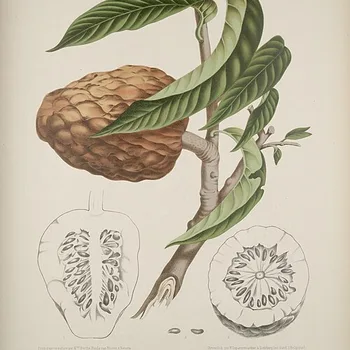
Cherimoya
Quick answer
A medium portion of Cherimoya (150 g) contains 112 kcal, with 22.5 g of net carbohydrates and 2.4 g of protein. Its glycemic index is 40 (Low) for how fast it raises blood sugar, while its glycemic load per portion is 9 (Low) for its actual effect.
- Carbs27 g85%
- Protein2.4 g7.6%
- Fat1 g7.4%
- Fibre4.5 g
Percentages of total energy (calories)
Mark Twain called cherimoya (custard apple) “the most delicious fruit known to men”. It has scaly green skin and smooth white flesh that melts in the mouth with a custard flavour combining banana, pineapple, mango and strawberry. It provides 3g of fibre per 100g with 75 kcal and is a source of vitamin C, vitamin B6 and potassium. It is a luxurious natural dessert in a balanced diet, but its sweetness means it contains fruit sugars, so people with diabetes should enjoy it in a measured portion.
💡 Smart Nutritional Guidance
Consumption advice
A sensible portion is half a medium fruit (about 150g, roughly 112 kcal). Eaten chilled after a protein-rich lunch, it gives you the pleasure of a dessert without processed sugar.
Best preparation methods
Cut a ripe fruit (it gives slightly when pressed, like an avocado) in half, squeeze over a few drops of lemon and scoop out the white flesh with a spoon.
Important Nutritional Note
The shiny black seeds and the skin are not edible: the seeds contain annonacin, a compound toxic to nerves. Spit the seeds out whole and never chew or grind them.
Nutrition facts
| Nutrient | Per 100 g | Per typical portion (150 g) |
|---|---|---|
| Calories | 75 kcal | 112.5 kcal |
| Protein | 1.6 g | 2.4 g |
| Carbohydrate | 18 g | 27 g |
| Available carbohydrate | 15 g | 22.5 g |
| Fat | 0.7 g | 1 g |
| Dietary fibre | 3 g | 4.5 g |
The typical portion is approximate, for comparison purposes.
Comparison & smarter alternatives
Among the foods in Fruit with a glycemic index (57), it ranks 30 (lowest first).
Smart alternatives from the same family:
Frequently asked questions
Is Cherimoya good for weight loss?
It can be included in moderation: it contains 3 g of fibre per 100 g, which supports fullness, and a 150 g portion gives 113 kcal.
How does Cherimoya affect blood sugar?
Its glycemic index is 40 (Low), a clinically reviewed estimate rather than a laboratory measurement. A typical 150 g portion has a glycemic load of 9 (Low), so the effect of this portion on blood sugar is limited.
What is the nutritional value of a typical portion of Cherimoya?
A typical 150 g portion of Cherimoya provides about 113 kcal, 2.4 g protein, 27 g carbohydrate, 1 g fat and 4.5 g fibre.
What is the glycemic index of cherimoya?
Its glycemic index is low (40) and the glycemic load of 150g is about 9. Its fibre slows sugar absorption, but because it is so sweet, people with diabetes should stick to half a small fruit.
Does cherimoya fit a keto diet?
Not strict keto, as 100g contains about 15g of net carbohydrate, but it is a healthy alternative to ice cream and sweets in a balanced diet.
Does cherimoya help improve mood?
It is a source of vitamin B6, which contributes to normal psychological function and to the normal functioning of the nervous system, but it is not a treatment for mood or sleep disorders.
Read also
- Prediabetes: How to Stop the Train and Lower Your HbA1cGuide
- Gestational Diabetes Guide: Normal Levels and Foods to EatGuide
References & Scientific Sources
- The glycemic index of this food is a clinically reviewed estimate by the WiBo Health medical team, not a laboratory measurement from the International GI Tables (Atkinson 2021). GI bands (low ≤ 55 · medium 56–69 · high ≥ 70) follow: ISO 26642:2010. Food products — Determination of the glycaemic index (GI) and recommendation for food classification. International Organization for Standardization; 2010. www.iso.org/standard/43633.html
- Definition of available carbohydrate and glycemic load: FAO/WHO. Carbohydrates in human nutrition: report of a joint FAO/WHO expert consultation. FAO Food and Nutrition Paper 66. Rome; 1998. www.fao.org/4/w8079e/w8079e00.htm
Reviewed by the WiBo Health medical team · Last reviewed 13 October 2026
Disclaimer: This guidance is for nutritional lifestyle orientation and does not constitute a diagnostic medical device under EU Regulation MDR 2017/745.