
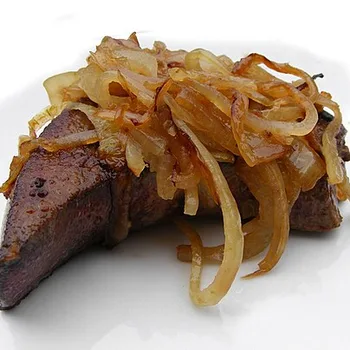
Canned Smoked Icelandic Cod Liver
Quick answer
A medium portion of Canned Smoked Icelandic Cod Liver (60 g) contains 246 kcal, with 0.6 g of net carbohydrates and 3.3 g of protein.
- Carbs0.6 g1%
- Protein3.3 g5.3%
- Fat25.8 g93.7%
- Fibre0 g
Percentages of total energy (calories)
The gently smoked “gold of the North Atlantic”, with a creamy texture that melts in the mouth and a luxurious taste of the sea. It is a very rich natural source of omega-3 fatty acids and vitamins D and A, with almost no carbohydrate, so the glycemic index does not apply.
💡 Smart Nutritional Guidance
Consumption advice
Enjoy it mashed on a slice of toasted wholegrain bread with a squeeze of fresh lemon to balance its natural richness.
Best preparation methods
Stick to a small portion once a week (half a can) to get the benefits without overdoing the fat-soluble vitamins.
Important Nutritional Note
Clinical note for pregnancy: because it is extremely rich in animal vitamin A (retinol), it is best avoided during pregnancy to prevent excess vitamin A.
Nutrition facts
| Nutrient | Per 100 g | Per typical portion (60 g) |
|---|---|---|
| Calories | 410 kcal | 246 kcal |
| Protein | 5.5 g | 3.3 g |
| Carbohydrate | 1 g | 0.6 g |
| Available carbohydrate | 1 g | 0.6 g |
| Fat | 43 g | 25.8 g |
| Dietary fibre | 0 g | 0 g |
The typical portion is approximate, for comparison purposes.
Comparison & smarter alternatives
It provides 1.3 g of protein per 100 kcal, ranking 70 of 70 in Meat, fish & eggs (highest first).
Related foods from the same family:
Frequently asked questions
Does canned cod liver help with blood sugar control?
It has almost no carbohydrate and contains healthy fats, so its effect on glucose is minimal.
What is the difference between cod liver and cod liver oil?
Canned cod liver is a whole food that provides protein, natural fats and vitamins, while the oil is a pure extracted fat.
Read also
References & Scientific Sources
- The glycemic index does not apply because this food has less than 5 g of available carbohydrate per 100 g, and a GI test requires 25 to 50 g of available carbohydrate, per: ISO 26642:2010. Food products — Determination of the glycaemic index (GI) and recommendation for food classification. International Organization for Standardization; 2010. www.iso.org/standard/43633.html
- Definition of available carbohydrate and glycemic load: FAO/WHO. Carbohydrates in human nutrition: report of a joint FAO/WHO expert consultation. FAO Food and Nutrition Paper 66. Rome; 1998. www.fao.org/4/w8079e/w8079e00.htm
Reviewed by the WiBo Health medical team · Last reviewed 13 October 2026
Disclaimer: This guidance is for nutritional lifestyle orientation and does not constitute a diagnostic medical device under EU Regulation MDR 2017/745.