
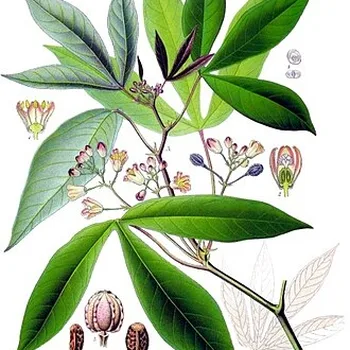
Boiled Cassava (Yuca)
Quick answer
A medium portion of Boiled Cassava (Yuca) (150 g) contains 240 kcal, with 54.3 g of net carbohydrates and 2.1 g of protein. Its glycemic index is 55 (Low) for how fast it raises blood sugar, while its glycemic load per portion is 29.9 (High) for its actual effect.
- Carbs57 g94.8%
- Protein2.1 g3.5%
- Fat0.4 g1.7%
- Fibre2.7 g
Percentages of total energy (calories)
Cassava root (also called yuca or manioc) is a staple for hundreds of millions of people in Africa and South America, with a dense, starchy white heart. It is a good carbohydrate source for athletes during carb-loading and muscle gain, providing 38g of carbohydrate and about 160 kcal per 100g with almost no fat. It is naturally gluten-free, which makes it a suitable alternative to wheat for people with coeliac disease.
💡 Smart Nutritional Guidance
Consumption advice
A 150g boiled piece gives you about 240 kcal. It works well as fuel about two hours before hard training and suits grain-free diets.
Best preparation methods
Peel off the thick brown skin and boil the root in plenty of water for 25 to 30 minutes until fully tender, then remove the tough fibrous core. Boiled or mashed with garlic and olive oil is much better than fried.
Important Nutritional Note
Never eat cassava raw: it contains cyanogenic glycosides that release toxic cyanide, especially in bitter varieties. Peeling, soaking and boiling thoroughly, then discarding the cooking water, makes it safe.
Nutrition facts
| Nutrient | Per 100 g | Per typical portion (150 g) |
|---|---|---|
| Calories | 160 kcal | 240 kcal |
| Protein | 1.4 g | 2.1 g |
| Carbohydrate | 38 g | 57 g |
| Available carbohydrate | 36.2 g | 54.3 g |
| Fat | 0.3 g | 0.4 g |
| Dietary fibre | 1.8 g | 2.7 g |
The typical portion is approximate, for comparison purposes.
Comparison & smarter alternatives
Among the foods in Potatoes & tubers with a glycemic index (7), it ranks 3 (lowest first).
Smart alternatives from the same family:
Frequently asked questions
Is Boiled Cassava (Yuca) good for weight loss?
It can fit a balanced plan with portion control: a 150 g portion gives 240 kcal, and what matters most is your total daily intake and the rest of the meal.
How does Boiled Cassava (Yuca) affect blood sugar?
Its glycemic index is 55 (Low), a clinically reviewed estimate rather than a laboratory measurement. A typical 150 g portion has a glycemic load of 29.9 (High), so it is best to reduce or split the portion and combine it with protein and fibre.
What is the nutritional value of a typical portion of Boiled Cassava (Yuca)?
A typical 150 g portion of Boiled Cassava (Yuca) provides about 240 kcal, 2.1 g protein, 57 g carbohydrate, 0.4 g fat and 2.7 g fibre.
Is cassava suitable for diabetes and weight-loss diets?
Its glycemic index is just inside the low band (55), but its glycemic load is high (about 29.9 per 150g) because it is so starchy. People with diabetes need small, measured portions, and it does not suit low-carb diets.
What is the difference between cassava and ordinary potatoes?
Cassava is more energy-dense: it contains roughly twice the carbohydrate and calories of boiled potato by weight, while their fibre content is similar.
Is tapioca flour from cassava gluten-free?
Yes. Tapioca is naturally gluten-free and one of the best-known wheat flour substitutes in baking for coeliac disease; choose products guaranteed free from cross-contamination.
Read also
- HbA1c & Insulin Resistance: Comprehensive Clinical GuideArticle
- Prediabetes: How to Stop the Train and Lower Your HbA1cGuide
- Gestational Diabetes Guide: Normal Levels and Foods to EatGuide
References & Scientific Sources
- The glycemic index of this food is a clinically reviewed estimate by the WiBo Health medical team, not a laboratory measurement from the International GI Tables (Atkinson 2021). GI bands (low ≤ 55 · medium 56–69 · high ≥ 70) follow: ISO 26642:2010. Food products — Determination of the glycaemic index (GI) and recommendation for food classification. International Organization for Standardization; 2010. www.iso.org/standard/43633.html
- Definition of available carbohydrate and glycemic load: FAO/WHO. Carbohydrates in human nutrition: report of a joint FAO/WHO expert consultation. FAO Food and Nutrition Paper 66. Rome; 1998. www.fao.org/4/w8079e/w8079e00.htm
Reviewed by the WiBo Health medical team · Last reviewed 13 October 2026
Disclaimer: This guidance is for nutritional lifestyle orientation and does not constitute a diagnostic medical device under EU Regulation MDR 2017/745.