
Boiled African Yam
Quick answer
A medium portion of Boiled African Yam (150 g) contains 177 kcal, with 35.8 g of net carbohydrates and 2.2 g of protein. Its glycemic index is 51 (Low) for how fast it raises blood sugar, while its glycemic load per portion is 18.3 (Medium) for its actual effect.
- Carbs42 g93.5%
- Protein2.2 g5%
- Fat0.3 g1.5%
- Fibre6.1 g
Percentages of total energy (calories)
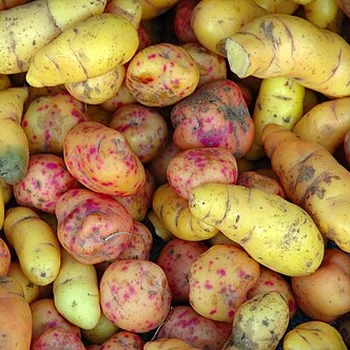
True African yam (Dioscorea) is a large tuber with rough brown skin and dry, starchy flesh, and a traditional staple across West Africa. It differs from the common sweet potato: it contains slowly digested starch with 4.1g of fibre per 100g and is a good source of potassium and vitamin B6. It also contains a plant compound called diosgenin, which industry extracts to make some hormonal medicines, but the body does not turn it into hormones when you eat yam. Yam provides warm, steady energy, making it a good choice in whole-food diets.
💡 Smart Nutritional Guidance
Consumption advice
A 150g portion gives you about 177 kcal: a good carbohydrate choice at lunch that supports physical activity without the sluggishness of white bread.
Best preparation methods
Peel it and boil it in lightly salted water until cooked through like potato, then mash with a spoonful of extra virgin olive oil, a little black pepper and cumin. Yam is not eaten raw.
Important Nutritional Note
Yam is rich in potassium, which is good for the heart and blood pressure, but people with advanced kidney disease should ask their doctor how much potassium they can have per day.
Nutrition facts
| Nutrient | Per 100 g | Per typical portion (150 g) |
|---|---|---|
| Calories | 118 kcal | 177 kcal |
| Protein | 1.5 g | 2.2 g |
| Carbohydrate | 28 g | 42 g |
| Available carbohydrate | 23.9 g | 35.8 g |
| Fat | 0.2 g | 0.3 g |
| Dietary fibre | 4.1 g | 6.1 g |
The typical portion is approximate, for comparison purposes.
Comparison & smarter alternatives
Among the foods in Potatoes & tubers with a glycemic index (7), it ranks 2 (lowest first).
Smart alternatives from the same family:
Frequently asked questions
Is Boiled African Yam good for weight loss?
It can be included in moderation: it contains 4.1 g of fibre per 100 g, which supports fullness, and a 150 g portion gives 177 kcal.
How does Boiled African Yam affect blood sugar?
Its glycemic index is 51 (Low), a clinically reviewed estimate rather than a laboratory measurement. A typical 150 g portion has a glycemic load of 18.3 (Medium), so it is best combined with protein or fibre-rich vegetables.
What is the nutritional value of a typical portion of Boiled African Yam?
A typical 150 g portion of Boiled African Yam provides about 177 kcal, 2.2 g protein, 42 g carbohydrate, 0.3 g fat and 6.1 g fibre.
Is yam the same as sweet potato?
No. Sweet potato belongs to the morning glory family and has moist, sweet orange flesh, while true yam belongs to an entirely different family, with white or yellowish flesh that is less sweet, starchier and drier.
What is the glycemic index of boiled yam?
Its glycemic index is low (51) thanks to its fibre and slowly digested starch, and the glycemic load of a 150g portion is about 18.3, which is medium. It is gentler on blood sugar than fries or white rice.
Does yam help balance hormones?
Diosgenin in yam is a raw material used in the laboratory to make some hormones, but the human body cannot convert it into hormones, and there is not enough evidence that eating yam or using yam creams balances hormones or relieves menopausal symptoms.
Read also
- HbA1c & Insulin Resistance: Comprehensive Clinical GuideArticle
- Prediabetes: How to Stop the Train and Lower Your HbA1cGuide
- Gestational Diabetes Guide: Normal Levels and Foods to EatGuide
References & Scientific Sources
- The glycemic index of this food is a clinically reviewed estimate by the WiBo Health medical team, not a laboratory measurement from the International GI Tables (Atkinson 2021). GI bands (low ≤ 55 · medium 56–69 · high ≥ 70) follow: ISO 26642:2010. Food products — Determination of the glycaemic index (GI) and recommendation for food classification. International Organization for Standardization; 2010. www.iso.org/standard/43633.html
- Definition of available carbohydrate and glycemic load: FAO/WHO. Carbohydrates in human nutrition: report of a joint FAO/WHO expert consultation. FAO Food and Nutrition Paper 66. Rome; 1998. www.fao.org/4/w8079e/w8079e00.htm
Reviewed by the WiBo Health medical team · Last reviewed 13 October 2026
Disclaimer: This guidance is for nutritional lifestyle orientation and does not constitute a diagnostic medical device under EU Regulation MDR 2017/745.