
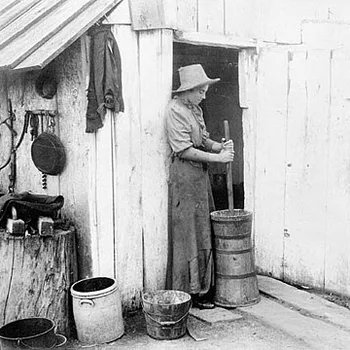
Traditional Cultured Butter (Baladi)
Quick answer
A medium portion of Traditional Cultured Butter (Baladi) (10 g) contains 73 kcal, with 0.1 g of net carbohydrates and 0.1 g of protein.
- Carbs0.1 g0.3%
- Protein0.1 g0.4%
- Fat8.2 g99.3%
- Fibre0 g
Percentages of total energy (calories)
Yellow gold churned from naturally fermented yoghurt milk; it contains a small amount of butyric acid (about 3% of its fat) and fat-soluble vitamin A.
💡 Smart Nutritional Guidance
Consumption advice
A small spoon of it on fried eggs in the morning keeps you full for long and your energy steady.
Best preparation methods
A healthier choice than hydrogenated vegetable fat (margarine), which may contain trans fats.
Important Nutritional Note
This food does not need a glycemic index, but the foods eaten with it determine the meal’s effect on blood sugar.
Nutrition facts
| Nutrient | Per 100 g | Per typical portion (10 g) |
|---|---|---|
| Calories | 730 kcal | 73 kcal |
| Protein | 0.8 g | 0.1 g |
| Carbohydrate | 0.5 g | 0.1 g |
| Available carbohydrate | 0.5 g | 0.1 g |
| Fat | 82 g | 8.2 g |
| Dietary fibre | 0 g | 0 g |
The typical portion is approximate, for comparison purposes.
Comparison & smarter alternatives
It has 730 kcal per 100 g, ranking 4 of 19 in Healthy fats (lowest first).
Related foods from the same family:
Frequently asked questions
Is Traditional Cultured Butter (Baladi) good for weight loss?
Traditional Cultured Butter (Baladi) provides 730 kcal per 100 g, so it is high in calories and fits a weight-loss plan only in small, measured amounts; a 10 g portion gives 73 kcal.
How does Traditional Cultured Butter (Baladi) affect blood sugar?
Traditional Cultured Butter (Baladi) contains only 0.5 g of available carbohydrate per 100 g, so the glycemic index does not apply and its direct effect on blood sugar is minimal. The meal’s effect depends on what you eat with it, such as bread, rice or sweetened sauces.
What is the nutritional value of a typical portion of Traditional Cultured Butter (Baladi)?
A typical 10 g portion of Traditional Cultured Butter (Baladi) provides about 73 kcal, 0.1 g protein, 0.1 g carbohydrate, 8.2 g fat and 0 g fibre.
What is the difference between baladi butter and commercial butter?
Baladi butter is churned from fermented full-fat milk, so it has a mild lactic tang and may contain some beneficial bacteria, whereas commercial butter is usually made from pasteurised cream without fermentation.
Read also
References & Scientific Sources
- The glycemic index does not apply because this food has less than 5 g of available carbohydrate per 100 g, and a GI test requires 25 to 50 g of available carbohydrate, per: ISO 26642:2010. Food products — Determination of the glycaemic index (GI) and recommendation for food classification. International Organization for Standardization; 2010. www.iso.org/standard/43633.html
- Definition of available carbohydrate and glycemic load: FAO/WHO. Carbohydrates in human nutrition: report of a joint FAO/WHO expert consultation. FAO Food and Nutrition Paper 66. Rome; 1998. www.fao.org/4/w8079e/w8079e00.htm
Reviewed by the WiBo Health medical team · Last reviewed 13 October 2026
Disclaimer: This guidance is for nutritional lifestyle orientation and does not constitute a diagnostic medical device under EU Regulation MDR 2017/745.