
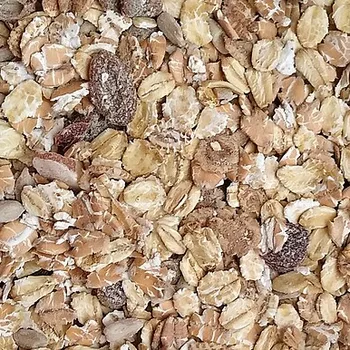
Overnight Oats with Greek Yogurt & Nuts
Quick answer
A medium portion of Overnight Oats with Greek Yogurt & Nuts (200 g) contains 430 kcal, with 47 g of net carbohydrates and 21 g of protein. Its glycemic index is 45 (Low) for how fast it raises blood sugar, while its glycemic load per portion is 21.1 (High) for its actual effect.
- Carbs56 g52%
- Protein21 g19.5%
- Fat13.6 g28.4%
- Fibre9 g
Percentages of total energy (calories)
Overnight oats are popular with nutrition experts for good reason. Skipping the boiling and soaking whole rolled oats cold for hours preserves more resistant starch than cooked porridge. This starch is not digested in the small intestine; it reaches the colon, where beneficial bacteria turn it into short-chain fatty acids such as butyrate that nourish the gut lining. Thick Greek yogurt adds casein and whey protein, while the nuts bring a pleasant crunch and monounsaturated fats.
💡 Smart Nutritional Guidance
Consumption advice
A complete meal combining complex carbohydrate, protein and healthy fats. A 200g portion keeps you going until lunch without an energy dip.
Best preparation methods
Use whole rolled or steel-cut oats rather than instant oats, plain Greek yogurt without added sugar, and sweeten with fresh berries or a pinch of cinnamon.
Important Nutritional Note
People with severe lactose intolerance may need lactose-free Greek yogurt, and anyone with a nut allergy should swap the walnuts and almonds for sunflower or pumpkin seeds.
Nutrition facts
| Nutrient | Per 100 g | Per typical portion (200 g) |
|---|---|---|
| Calories | 215 kcal | 430 kcal |
| Protein | 10.5 g | 21 g |
| Carbohydrate | 28 g | 56 g |
| Available carbohydrate | 23.5 g | 47 g |
| Fat | 6.8 g | 13.6 g |
| Dietary fibre | 4.5 g | 9 g |
The typical portion is approximate, for comparison purposes.
Comparison & smarter alternatives
Among the foods in Grains & starches with a glycemic index (61), it ranks 13 (lowest first).
Smart alternatives from the same family:
Frequently asked questions
Is Overnight Oats with Greek Yogurt & Nuts good for weight loss?
It can be included in moderation: it contains 4.5 g of fibre per 100 g, which supports fullness, and a 200 g portion gives 430 kcal.
How does Overnight Oats with Greek Yogurt & Nuts affect blood sugar?
Its glycemic index is 45 (Low), a clinically reviewed estimate rather than a laboratory measurement. A typical 200 g portion has a glycemic load of 21.1 (High), so it is best to reduce or split the portion and combine it with protein and fibre.
What is the nutritional value of a typical portion of Overnight Oats with Greek Yogurt & Nuts?
A typical 200 g portion of Overnight Oats with Greek Yogurt & Nuts provides about 430 kcal, 21 g protein, 56 g carbohydrate, 13.6 g fat and 9 g fibre.
How do overnight oats with yogurt affect blood sugar?
The glycemic index is low (45): 10.5g of protein per 100g together with beta-glucan fibre and healthy fats slows sugar absorption. A full 200g portion still carries a high glycemic load (about 21) because of the amount of carbohydrate, so people with diabetes may prefer half a portion topped up with extra yogurt.
Read also
- HbA1c & Insulin Resistance: Comprehensive Clinical GuideArticle
- Prediabetes: How to Stop the Train and Lower Your HbA1cGuide
- Gestational Diabetes Guide: Normal Levels and Foods to EatGuide
References & Scientific Sources
- The glycemic index of this food is a clinically reviewed estimate by the WiBo Health medical team, not a laboratory measurement from the International GI Tables (Atkinson 2021). GI bands (low ≤ 55 · medium 56–69 · high ≥ 70) follow: ISO 26642:2010. Food products — Determination of the glycaemic index (GI) and recommendation for food classification. International Organization for Standardization; 2010. www.iso.org/standard/43633.html
- Definition of available carbohydrate and glycemic load: FAO/WHO. Carbohydrates in human nutrition: report of a joint FAO/WHO expert consultation. FAO Food and Nutrition Paper 66. Rome; 1998. www.fao.org/4/w8079e/w8079e00.htm
Reviewed by the WiBo Health medical team · Last reviewed 13 October 2026
Disclaimer: This guidance is for nutritional lifestyle orientation and does not constitute a diagnostic medical device under EU Regulation MDR 2017/745.