
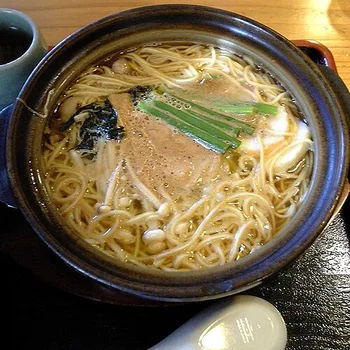
Malaysian Seafood Laksa
Quick answer
A medium portion of Malaysian Seafood Laksa (400 g) contains 780 kcal, with 75.2 g of net carbohydrates and 44 g of protein. Its glycemic index is 50 (Low) for how fast it raises blood sugar, while its glycemic load per portion is 37.6 (High) for its actual effect.
- Carbs84 g42.4%
- Protein44 g22.2%
- Fat31.2 g35.4%
- Fibre8.8 g
Percentages of total energy (calories)
Seafood laksa is one of the best-known dishes of Malaysia and Singapore, combining rice noodles, prawns, seafood and tofu in a creamy, spiced broth made with coconut milk, lemongrass paste, galangal, turmeric and chilli. It is a warming complete meal with 11g of protein per 100g thanks to the seafood, but coconut milk and rice noodles bring a full 400g bowl to about 780 kcal, so it is a filling main meal that needs balancing on a calorie deficit.
💡 Smart Nutritional Guidance
Consumption advice
One bowl is a complete lunch. It suits athletes in recovery, while anyone cutting calories should reduce the portion or the noodles.
Best preparation methods
To cut the calories substantially, ask for half the rice noodles to be replaced with bean sprouts or shirataki noodles, and for the coconut broth to be thinned with a light fish stock.
Important Nutritional Note
The soup contains prawns, fish and fermented shrimp paste (belacan), so avoid it if you have a shellfish or fish allergy. It is also high in sodium, so people with high blood pressure or on the DASH diet should limit it.
Nutrition facts
| Nutrient | Per 100 g | Per typical portion (400 g) |
|---|---|---|
| Calories | 195 kcal | 780 kcal |
| Protein | 11 g | 44 g |
| Carbohydrate | 21 g | 84 g |
| Available carbohydrate | 18.8 g | 75.2 g |
| Fat | 7.8 g | 31.2 g |
| Dietary fibre | 2.2 g | 8.8 g |
The typical portion is approximate, for comparison purposes.
Comparison & smarter alternatives
Among the foods in Asian dishes with a glycemic index (33), it ranks 23 (lowest first).
Smart alternatives from the same family:
Frequently asked questions
Is Malaysian Seafood Laksa good for weight loss?
It can fit a balanced plan with portion control: a 400 g portion gives 780 kcal, and what matters most is your total daily intake and the rest of the meal.
How does Malaysian Seafood Laksa affect blood sugar?
Its glycemic index is 50 (Low), a clinically reviewed estimate rather than a laboratory measurement. A typical 400 g portion has a glycemic load of 37.6 (High), so it is best to reduce or split the portion and combine it with protein and fibre.
What is the nutritional value of a typical portion of Malaysian Seafood Laksa?
A typical 400 g portion of Malaysian Seafood Laksa provides about 780 kcal, 44 g protein, 84 g carbohydrate, 31.2 g fat and 8.8 g fibre.
Is laksa suitable for intermittent fasting?
It can be a good choice to break a fast with one main meal, because coconut fat and seafood protein keep you full for a long time. Do count its high calories (about 780 kcal per bowl) in your daily needs.
How does laksa affect blood sugar and insulin resistance?
Its glycemic index is low (50) because coconut fat and protein slow the absorption of the noodle starch, but the glycemic load of a full bowl is high (about 37.6), so people with diabetes do better with fewer noodles.
Does the coconut milk in laksa raise cholesterol?
Coconut fat is mostly saturated and rich in lauric acid, which raises both LDL (“bad”) and HDL (“good”) cholesterol, so enjoy coconut-rich dishes in moderation, especially if your cholesterol is high.
Read also
- Prediabetes: How to Stop the Train and Lower Your HbA1cGuide
- Gestational Diabetes Guide: Normal Levels and Foods to EatGuide
References & Scientific Sources
- The glycemic index of this food is a clinically reviewed estimate by the WiBo Health medical team, not a laboratory measurement from the International GI Tables (Atkinson 2021). GI bands (low ≤ 55 · medium 56–69 · high ≥ 70) follow: ISO 26642:2010. Food products — Determination of the glycaemic index (GI) and recommendation for food classification. International Organization for Standardization; 2010. www.iso.org/standard/43633.html
- Definition of available carbohydrate and glycemic load: FAO/WHO. Carbohydrates in human nutrition: report of a joint FAO/WHO expert consultation. FAO Food and Nutrition Paper 66. Rome; 1998. www.fao.org/4/w8079e/w8079e00.htm
Reviewed by the WiBo Health medical team · Last reviewed 13 October 2026
Disclaimer: This guidance is for nutritional lifestyle orientation and does not constitute a diagnostic medical device under EU Regulation MDR 2017/745.