
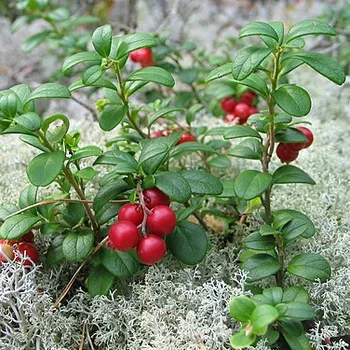
Lingonberries (Unsweetened)
Quick answer
A medium portion of Lingonberries (Unsweetened) (50 g) contains 27 kcal, with 4.2 g of net carbohydrates and 0.3 g of protein. Its glycemic index is 25 (Low) for how fast it raises blood sugar, while its glycemic load per portion is 1.1 (Low) for its actual effect.
- Carbs6.1 g87%
- Protein0.3 g5%
- Fat0.2 g8%
- Fibre1.9 g
Percentages of total energy (calories)
The secret of Swedish and Finnish cooking that nobody there would give up! Wild ruby-red berries the size of beads, with a refreshing, pleasantly sharp sour taste. Scandinavians serve them with rich meat and fish dishes, and small human studies have noticed that eating these berries with a starchy meal reduced the insulin rise that followed, while their possible benefits for the liver are being studied in animals. Most important for your blood sugar: the estimated glycemic index is low (25) and a portion has a glycemic load of only 1.1.
💡 Smart Nutritional Guidance
Consumption advice
A small half cup (about 50 g). Two spoonfuls next to a rich lunch add freshness and balance to the meal.
Best preparation methods
Beware of commercial jams in the supermarket: many contain about half their weight in added sugar! Buy frozen or fresh berries and crush them raw with a little stevia or monk fruit, then serve as a cold sauce with meat or over oats and yoghurt.
Important Nutritional Note
Their taste is clearly sour and astringent, so if you suffer from acid reflux, do not eat them alone on an empty stomach; always have them with other food.
Nutrition facts
| Nutrient | Per 100 g | Per typical portion (50 g) |
|---|---|---|
| Calories | 54 kcal | 27 kcal |
| Protein | 0.7 g | 0.3 g |
| Carbohydrate | 12.2 g | 6.1 g |
| Available carbohydrate | 8.4 g | 4.2 g |
| Fat | 0.5 g | 0.2 g |
| Dietary fibre | 3.8 g | 1.9 g |
The typical portion is approximate, for comparison purposes.
Comparison & smarter alternatives
Among the foods in Fruit with a glycemic index (57), it ranks 14 (lowest first).
Smart alternatives from the same family:
Frequently asked questions
Is Lingonberries (Unsweetened) good for weight loss?
Yes. Lingonberries (Unsweetened) is very low in calories (54 kcal per 100 g), so you can eat a generous amount to add volume and fullness to a meal without many calories.
How does Lingonberries (Unsweetened) affect blood sugar?
Its glycemic index is 25 (Low), a clinically reviewed estimate rather than a laboratory measurement. A typical 50 g portion has a glycemic load of 1.1 (Low), so the effect of this portion on blood sugar is limited.
What is the nutritional value of a typical portion of Lingonberries (Unsweetened)?
A typical 50 g portion of Lingonberries (Unsweetened) provides about 27 kcal, 0.3 g protein, 6.1 g carbohydrate, 0.2 g fat and 1.9 g fibre.
Why do Scandinavians insist on lingonberries with meatballs and rich meals?
It is an old food tradition: the fresh acidity balances the richness of the dish. Small Northern European studies also noticed that adding these berries to a starchy meal reduced the insulin rise afterwards, and research is ongoing.
Do lingonberries protect the urinary tract like cranberries?
They contain much the same proanthocyanidins, which are being studied for their role in stopping bacteria from sticking to the bladder wall, but evidence that they prevent infections in people is still limited. If you have symptoms of a urinary infection, see your doctor.
How can I enjoy them if I do not like the sour taste?
Mix them with sweet, low-sugar fruit such as boysenberries or mashed strawberries, or blend them into a smoothie with almond milk and a pinch of cinnamon to soften the sourness without raising the sugar.
Read also
- Prediabetes: How to Stop the Train and Lower Your HbA1cGuide
- Gestational Diabetes Guide: Normal Levels and Foods to EatGuide
References & Scientific Sources
- The glycemic index of this food is a clinically reviewed estimate by the WiBo Health medical team, not a laboratory measurement from the International GI Tables (Atkinson 2021). GI bands (low ≤ 55 · medium 56–69 · high ≥ 70) follow: ISO 26642:2010. Food products — Determination of the glycaemic index (GI) and recommendation for food classification. International Organization for Standardization; 2010. www.iso.org/standard/43633.html
- Definition of available carbohydrate and glycemic load: FAO/WHO. Carbohydrates in human nutrition: report of a joint FAO/WHO expert consultation. FAO Food and Nutrition Paper 66. Rome; 1998. www.fao.org/4/w8079e/w8079e00.htm
Reviewed by Dr. Wassim Habib · Last reviewed 20 October 2026
Disclaimer: This guidance is for nutritional lifestyle orientation and does not constitute a diagnostic medical device under EU Regulation MDR 2017/745.