
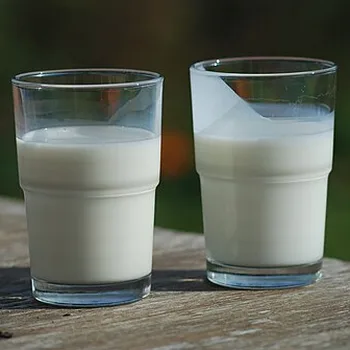
Fruit Cultured Buttermilk Drink
Quick answer
A medium portion of Fruit Cultured Buttermilk Drink (200 g) contains 90 kcal, with 14.6 g of net carbohydrates and 6 g of protein. Its glycemic index is 40 (Low) for how fast it raises blood sugar, while its glycemic load per portion is 5.8 (Low) for its actual effect.
- Carbs15 g65.8%
- Protein6 g26.3%
- Fat0.8 g7.9%
- Fibre0.4 g
Percentages of total energy (calories)
Fruit-flavoured cultured buttermilk, known in the Netherlands as vruchtenkarnemelk, is a popular summer drink for staying hydrated. It is based on very low-fat buttermilk (0.4g of fat per 100ml) fermented with lactic acid bacteria. Its mild acidity makes it refreshing, and the live cultures may support a balanced gut microbiome. To be transparent, though, the added fruit or concentrated juice raises the sugar to about 7g per 100ml, so it is not a sugar-free drink and should be counted in your daily carbohydrate.
💡 Smart Nutritional Guidance
Consumption advice
One 200ml glass is a better choice than fizzy drinks and sweetened juices, and gives you 6g of protein along with good hydration.
Best preparation methods
Drink it cold after a good shake to mix in the fruit sediment, and dilute it with half a glass of sparkling water or ice cubes to lower the sugar in every sip.
Important Nutritional Note
Although its glycemic index is low (40), one glass contains about 15g of carbohydrate, so people with diabetes should count it as part of their meal.
Nutrition facts
| Nutrient | Per 100 g | Per typical portion (200 g) |
|---|---|---|
| Calories | 45 kcal | 90 kcal |
| Protein | 3 g | 6 g |
| Carbohydrate | 7.5 g | 15 g |
| Available carbohydrate | 7.3 g | 14.6 g |
| Fat | 0.4 g | 0.8 g |
| Dietary fibre | 0.2 g | 0.4 g |
The typical portion is approximate, for comparison purposes.
Comparison & smarter alternatives
Among the foods in Milk & dairy drinks with a glycemic index (8), it ranks 6 (lowest first).
Smart alternatives from the same family:
Frequently asked questions
Is Fruit Cultured Buttermilk Drink good for weight loss?
Yes. Fruit Cultured Buttermilk Drink is very low in calories (45 kcal per 100 g), so you can eat a generous amount to add volume and fullness to a meal without many calories.
How does Fruit Cultured Buttermilk Drink affect blood sugar?
Its glycemic index is 40 (Low), a clinically reviewed estimate rather than a laboratory measurement. A typical 200 g portion has a glycemic load of 5.8 (Low), so the effect of this portion on blood sugar is limited.
What is the nutritional value of a typical portion of Fruit Cultured Buttermilk Drink?
A typical 200 g portion of Fruit Cultured Buttermilk Drink provides about 90 kcal, 6 g protein, 15 g carbohydrate, 0.8 g fat and 0.4 g fibre.
Does a fruit buttermilk drink help with heartburn?
Some people find it soothing for digestion, but there is not enough evidence that it relieves reflux or heartburn. Acidic or sweetened versions can even make symptoms worse for some, so watch how your body responds.
Is this drink suitable for keto?
Not for classic keto, as it contains 7.5g of carbohydrate per 100ml. It can suit athletes and moderate-carb diets as a source of fluid and protein after training.
Is it a good choice for children?
It is a better option than artificially flavoured milk and fizzy drinks, because it provides calcium, protein and live cultures with less sugar than soft drinks, but it is still a sweetened drink to serve in moderation.
Read also
- Prediabetes: How to Stop the Train and Lower Your HbA1cGuide
- Gestational Diabetes Guide: Normal Levels and Foods to EatGuide
References & Scientific Sources
- The glycemic index of this food is a clinically reviewed estimate by the WiBo Health medical team, not a laboratory measurement from the International GI Tables (Atkinson 2021). GI bands (low ≤ 55 · medium 56–69 · high ≥ 70) follow: ISO 26642:2010. Food products — Determination of the glycaemic index (GI) and recommendation for food classification. International Organization for Standardization; 2010. www.iso.org/standard/43633.html
- Definition of available carbohydrate and glycemic load: FAO/WHO. Carbohydrates in human nutrition: report of a joint FAO/WHO expert consultation. FAO Food and Nutrition Paper 66. Rome; 1998. www.fao.org/4/w8079e/w8079e00.htm
Reviewed by the WiBo Health medical team · Last reviewed 13 October 2026
Disclaimer: This guidance is for nutritional lifestyle orientation and does not constitute a diagnostic medical device under EU Regulation MDR 2017/745.