
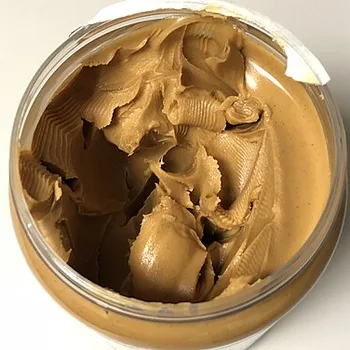
Dutch Crunchy Peanut Butter
Quick answer
A medium portion of Dutch Crunchy Peanut Butter (30 g) contains 178 kcal, with 3.4 g of net carbohydrates and 7.8 g of protein. Its glycemic index is 14 (Low) for how fast it raises blood sugar, while its glycemic load per portion is 0.5 (Low) for its actual effect.
- Carbs5.4 g11.3%
- Protein7.8 g16.4%
- Fat15.3 g72.3%
- Fibre2 g
Percentages of total energy (calories)
Peanut butter has a special place in Dutch culture, where it is called pindakaas, and the crunchy version with crushed peanut pieces is loved for its texture and roasted flavour. It is a nutrient-dense food, providing 26g of plant protein per 100g along with oleic acid (the same monounsaturated fat found in olive oil), vitamin E and magnesium. The key is to manage its energy density: its high natural fat content brings it to about 595 kcal per 100g, so a single spoonful is enough for concentrated energy and good fullness.
💡 Smart Nutritional Guidance
Consumption advice
A good portion is one level to one heaped tablespoon (20 to 30g), giving you about 5 to 8g of protein without upsetting your daily calorie budget.
Best preparation methods
Spread it on fresh apple slices or celery sticks instead of white bread: the fruit fibre plus the peanut fat gives you crunch and quick fullness.
Important Nutritional Note
Peanuts are one of the leading causes of anaphylaxis, so peanut butter is strictly off-limits if you have a peanut allergy. Read the label to avoid hydrogenated oils and lots of added sugar and salt.
Nutrition facts
| Nutrient | Per 100 g | Per typical portion (30 g) |
|---|---|---|
| Calories | 595 kcal | 178.5 kcal |
| Protein | 26 g | 7.8 g |
| Carbohydrate | 18 g | 5.4 g |
| Available carbohydrate | 11.2 g | 3.4 g |
| Fat | 51 g | 15.3 g |
| Dietary fibre | 6.8 g | 2 g |
The typical portion is approximate, for comparison purposes.
Comparison & smarter alternatives
Among the foods in Nuts & seeds with a glycemic index (20), it ranks 3 (lowest first).
Smart alternatives from the same family:
Frequently asked questions
Is Dutch Crunchy Peanut Butter good for weight loss?
Dutch Crunchy Peanut Butter provides 595 kcal per 100 g, so it is high in calories and fits a weight-loss plan only in small, measured amounts; a 30 g portion gives 179 kcal.
How does Dutch Crunchy Peanut Butter affect blood sugar?
Its glycemic index is 14 (Low), a clinically reviewed estimate rather than a laboratory measurement. A typical 30 g portion has a glycemic load of 0.5 (Low), so the effect of this portion on blood sugar is limited.
What is the nutritional value of a typical portion of Dutch Crunchy Peanut Butter?
A typical 30 g portion of Dutch Crunchy Peanut Butter provides about 179 kcal, 7.8 g protein, 5.4 g carbohydrate, 15.3 g fat and 2 g fibre.
Does crunchy peanut butter raise blood sugar in people with diabetes?
Its glycemic index is very low (14) and the glycemic load of a 30g spoonful is only about 0.5. The fat and protein slow absorption, which makes it a suitable snack for insulin resistance as long as you stick to the portion.
Does peanut butter help you lose weight or gain weight?
It depends on the portion. A small amount (one spoonful a day) adds fullness and fits a weight-loss plan, while eating a lot leads to weight gain because it is so calorie-dense.
What is the difference between Dutch peanut butter and ordinary commercial brands?
Good Dutch pindakaas usually has a high peanut content (around 90% or more) with real coarse pieces, while some cheaper products add sugar and hydrogenated oils. Compare the ingredient lists before you buy.
Read also
- The Hidden Thyroid SluggishnessArticle
- Prediabetes: How to Stop the Train and Lower Your HbA1cGuide
- Gestational Diabetes Guide: Normal Levels and Foods to EatGuide
References & Scientific Sources
- The glycemic index of this food is a clinically reviewed estimate by the WiBo Health medical team, not a laboratory measurement from the International GI Tables (Atkinson 2021). GI bands (low ≤ 55 · medium 56–69 · high ≥ 70) follow: ISO 26642:2010. Food products — Determination of the glycaemic index (GI) and recommendation for food classification. International Organization for Standardization; 2010. www.iso.org/standard/43633.html
- Definition of available carbohydrate and glycemic load: FAO/WHO. Carbohydrates in human nutrition: report of a joint FAO/WHO expert consultation. FAO Food and Nutrition Paper 66. Rome; 1998. www.fao.org/4/w8079e/w8079e00.htm
Reviewed by the WiBo Health medical team · Last reviewed 13 October 2026
Disclaimer: This guidance is for nutritional lifestyle orientation and does not constitute a diagnostic medical device under EU Regulation MDR 2017/745.