
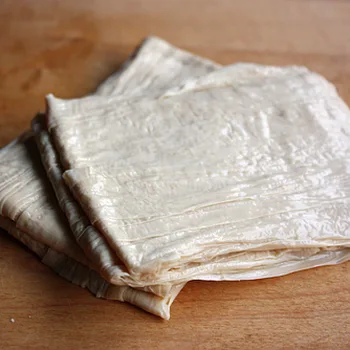
Dried Tofu Skin (Yuba)
Quick answer
A medium portion of Dried Tofu Skin (Yuba) (35 g) contains 133 kcal, with 3.3 g of net carbohydrates and 15.7 g of protein.
- Carbs4.2 g12.3%
- Protein15.7 g46.2%
- Fat6.3 g41.5%
- Fibre0.9 g
Percentages of total energy (calories)
Yuba is one of the nutritional treasures of traditional Asian cooking. It is not tofu in the strict sense but the silky film that slowly forms on the surface of soy milk as it is heated gently. These layers are lifted off and carefully dried, concentrating the protein and fat of the soybean: 45g of protein per 100g dry weight, more than fresh meat gram for gram because it is dried. Once soaked and cooked, its texture resembles wide pasta, with a mild nutty taste that soaks up spices and broth. That makes it an excellent choice for plant-based diets and for anyone who wants more protein without saturated animal fat.
💡 Smart Nutritional Guidance
Consumption advice
A 35g dry portion (about 100g once soaked) gives you nearly 16g of protein. Balance the meal with a side of leafy greens.
Best preparation methods
Soak dried yuba sheets in warm water for 15 to 20 minutes until soft and pliable, then drain, cut into long strips and use them in place of fettuccine with vegetables stir-fried in sesame oil and garlic.
Important Nutritional Note
Because it is dried and concentrated, yuba is fairly high in calories (about 380 kcal per 100g dry) thanks to its natural fat, so watch the portion if you are in a calorie deficit. It is made from soy, so avoid it if you have a soy allergy.
Nutrition facts
| Nutrient | Per 100 g | Per typical portion (35 g) |
|---|---|---|
| Calories | 380 kcal | 133 kcal |
| Protein | 45 g | 15.7 g |
| Carbohydrate | 12 g | 4.2 g |
| Available carbohydrate | 9.5 g | 3.3 g |
| Fat | 18 g | 6.3 g |
| Dietary fibre | 2.5 g | 0.9 g |
The typical portion is approximate, for comparison purposes.
Comparison & smarter alternatives
It has 380 kcal per 100 g, ranking 45 of 45 in Asian dishes (lowest first).
Related foods from the same family:
Frequently asked questions
Is Dried Tofu Skin (Yuba) good for weight loss?
It can be a useful part of a weight-loss plan because it provides 11.8 g of protein per 100 kcal, and protein supports fullness. A 35 g portion gives 133 kcal.
How does Dried Tofu Skin (Yuba) affect blood sugar?
Dried Tofu Skin (Yuba) contains only 9.5 g of available carbohydrate per 100 g, so the glycemic index does not apply and its direct effect on blood sugar is minimal. The meal’s effect depends on what you eat with it, such as bread, rice or sweetened sauces.
What is the nutritional value of a typical portion of Dried Tofu Skin (Yuba)?
A typical 35 g portion of Dried Tofu Skin (Yuba) provides about 133 kcal, 15.7 g protein, 4.2 g carbohydrate, 6.3 g fat and 0.9 g fibre.
Is yuba a healthy, gluten-free alternative to pasta?
Yes. Yuba is made only from soybeans and water and is naturally gluten-free (check the label if you have coeliac disease). It gives a pasta-like texture with far less starch and about three times the protein of pasta.
How does yuba affect blood sugar in diabetes and insulin resistance?
Its effect on blood sugar is very small. Its net carbohydrate is low (about 9.5g per 100g dry), and the protein and fat slow digestion and prevent sudden glucose spikes.
What is the nutritional difference between regular tofu and yuba?
Regular tofu contains more water and 8 to 15% protein, while yuba is the dried protein-and-fat film and reaches 45% protein, so it is far denser in both nutrients and calories.
Read also
References & Scientific Sources
- The glycemic index does not apply because this food has less than 5 g of available carbohydrate per 100 g, and a GI test requires 25 to 50 g of available carbohydrate, per: ISO 26642:2010. Food products — Determination of the glycaemic index (GI) and recommendation for food classification. International Organization for Standardization; 2010. www.iso.org/standard/43633.html
- Definition of available carbohydrate and glycemic load: FAO/WHO. Carbohydrates in human nutrition: report of a joint FAO/WHO expert consultation. FAO Food and Nutrition Paper 66. Rome; 1998. www.fao.org/4/w8079e/w8079e00.htm
Reviewed by the WiBo Health medical team · Last reviewed 13 October 2026
Disclaimer: This guidance is for nutritional lifestyle orientation and does not constitute a diagnostic medical device under EU Regulation MDR 2017/745.