
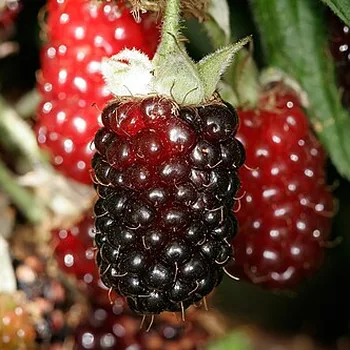
Boysenberries
Quick answer
A medium portion of Boysenberries (125 g) contains 62 kcal, with 8.6 g of net carbohydrates and 1.4 g of protein. Its glycemic index is 25 (Low) for how fast it raises blood sugar, while its glycemic load per portion is 2.2 (Low) for its actual effect.
- Carbs15.2 g87.3%
- Protein1.4 g7.9%
- Fat0.4 g4.8%
- Fibre6.6 g
Percentages of total energy (calories)
Have you ever imagined a fruit with the sweetness of blackberry, the perfume of raspberry and the freshness of loganberry? That is exactly what a boysenberry is! A large, dark ruby berry with juicy flesh that bursts in your mouth with rich flavour. The feature nutrition experts love is that one cup (125 g) gives you about 6.6 g of fibre for only 62 kcal, with a low estimated glycemic index (25) and a glycemic load of just 2.2 per cup, so your blood sugar stays calm and steady.
💡 Smart Nutritional Guidance
Consumption advice
A medium cup (about 125 g). Excellent for a light breakfast with cottage cheese, or as an elegant dessert after dinner.
Best preparation methods
A very soft, juicy fruit: mash it with a fork with a few drops of vanilla and, if you like, a little natural sweetener for the quickest fresh jam to spread on wholegrain bread, with no cooking and no commercial sugar.
Important Nutritional Note
The skin is very thin, so wash the berries in cold water only just before eating, and keep them in the fridge, as they spoil quickly when left out.
Nutrition facts
| Nutrient | Per 100 g | Per typical portion (125 g) |
|---|---|---|
| Calories | 50 kcal | 62.5 kcal |
| Protein | 1.1 g | 1.4 g |
| Carbohydrate | 12.2 g | 15.2 g |
| Available carbohydrate | 6.9 g | 8.6 g |
| Fat | 0.3 g | 0.4 g |
| Dietary fibre | 5.3 g | 6.6 g |
The typical portion is approximate, for comparison purposes.
Comparison & smarter alternatives
Among the foods in Fruit with a glycemic index (57), it ranks 12 (lowest first).
Smart alternatives from the same family:
Frequently asked questions
Is Boysenberries good for weight loss?
Yes. Boysenberries is very low in calories (50 kcal per 100 g), so you can eat a generous amount to add volume and fullness to a meal without many calories.
How does Boysenberries affect blood sugar?
Its glycemic index is 25 (Low), a clinically reviewed estimate rather than a laboratory measurement. A typical 125 g portion has a glycemic load of 2.2 (Low), so the effect of this portion on blood sugar is limited.
What is the nutritional value of a typical portion of Boysenberries?
A typical 125 g portion of Boysenberries provides about 63 kcal, 1.4 g protein, 15.2 g carbohydrate, 0.4 g fat and 6.6 g fibre.
How does boysenberry fibre help with blood sugar and cholesterol?
Part of its fibre is gel-forming, and this type of fibre slows the absorption of sugar in the gut and binds some cholesterol-carrying bile acids, helping to remove them. A cup of boysenberries therefore supports a balanced diet for blood sugar and blood fats.
Are boysenberries suitable for low-carb and keto diets?
They suit low-carb very well: a full cup has only about 8.6 g of net carbohydrate. On strict keto, about half the amount keeps you within your daily limit.
Is it true that boysenberries benefit the lungs?
Researchers in New Zealand carried out laboratory and animal studies suggesting that its polyphenols may reduce inflammation in the airways, but this benefit has not yet been shown in people, so it is no substitute for asthma treatment.
Read also
- Prediabetes: How to Stop the Train and Lower Your HbA1cGuide
- Gestational Diabetes Guide: Normal Levels and Foods to EatGuide
References & Scientific Sources
- The glycemic index of this food is a clinically reviewed estimate by the WiBo Health medical team, not a laboratory measurement from the International GI Tables (Atkinson 2021). GI bands (low ≤ 55 · medium 56–69 · high ≥ 70) follow: ISO 26642:2010. Food products — Determination of the glycaemic index (GI) and recommendation for food classification. International Organization for Standardization; 2010. www.iso.org/standard/43633.html
- Definition of available carbohydrate and glycemic load: FAO/WHO. Carbohydrates in human nutrition: report of a joint FAO/WHO expert consultation. FAO Food and Nutrition Paper 66. Rome; 1998. www.fao.org/4/w8079e/w8079e00.htm
Reviewed by Dr. Wassim Habib · Last reviewed 20 October 2026
Disclaimer: This guidance is for nutritional lifestyle orientation and does not constitute a diagnostic medical device under EU Regulation MDR 2017/745.