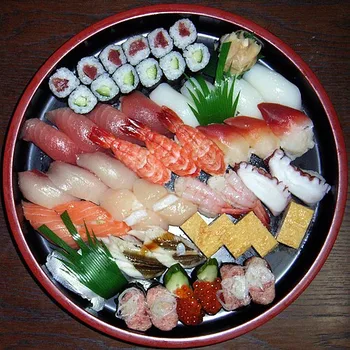
Salmon Sushi Roll
Sushi is loved worldwide as a symbol of light, elegant eating, but the most common question is: does sushi rice raise blood sugar? Sushi rice is seasoned with vinegar and added sugar, giving it a moderate glycemic index (≈52), but the omega-3-rich fat and high protein of the salmon slow this absorption and give the meal a good metabolic balance.
Glycemic index
Glycemic load
Calories
Protein
💡 Smart Nutritional Guidance
Consumption advice
Start your meal with a bowl of miso soup or an edamame salad to fill up on fibre and protein, keep to 6 to 8 pieces as a complete meal, and avoid fried (crunchy) rolls or rolls drowned in sweet creamy sauces.
Best preparation methods
Dip the sushi into diluted soy sauce on the salmon side rather than the rice side, so the rice doesn't soak up extra sodium, and enjoy a touch of natural wasabi to wake up the taste buds.
Important Nutritional Note
⚠️ Only use sushi-grade salmon that has been frozen beforehand according to seafood safety standards; raw fish is not recommended for pregnant women, children or people with weakened immunity, because of the risk of parasites and bacteria.
Nutrition facts
| Nutrient | Per 100 g | Per typical portion (180 g) |
|---|---|---|
| Calories | 180 kcal | 324 kcal |
| Protein | 9 g | 16.2 g |
| Carbohydrate | 21 g | 37.8 g |
| Available carbohydrate | 20 g | 36 g |
| Fat | 7 g | 12.6 g |
| Dietary fibre | 1 g | 1.8 g |
The typical portion is approximate, for comparison purposes.
Comparison & smarter alternatives
Among the foods in Asian dishes with a glycemic index (14), it ranks 8 (lowest first).
Smart alternatives from the same family:
Frequently asked questions
Is Salmon Sushi Roll good for weight loss?
It can fit a balanced plan with portion control: a 180 g portion gives 324 kcal, and what matters most is your total daily intake and the rest of the meal.
How does Salmon Sushi Roll affect blood sugar?
Its glycemic index is 52 (Low), a clinically reviewed estimate rather than a laboratory measurement. A typical 180 g portion has a glycemic load of 18.7 (Medium), so it is best combined with protein or fibre-rich vegetables.
What is the nutritional value of a typical portion of Salmon Sushi Roll?
A typical 180 g portion of Salmon Sushi Roll provides about 324 kcal, 16.2 g protein, 37.8 g carbohydrate, 12.6 g fat and 1.8 g fibre.
Reviewed by the WiBo Health medical team · Last reviewed 13 October 2026
Disclaimer: This guidance is for nutritional lifestyle orientation and does not constitute a diagnostic medical device under EU Regulation MDR 2017/745.