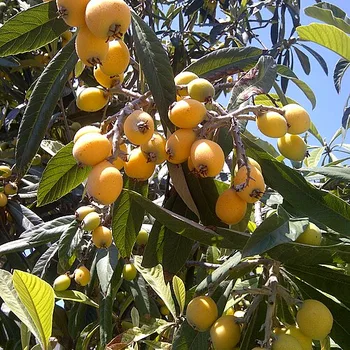
Loquat
The golden first sign of spring that fills the markets of the Levant and the Mediterranean: small yellow fruits with a flavour between apricot and plum and a cheerful tang. Loquats have a medium glycemic index (≈55) and are rich in water and fibre.
Glycemic index
Glycemic load
Calories
Protein
💡 Smart Nutritional Guidance
Consumption advice
Keep your portion to 4 or 5 fruits as a refreshing fruit serving; they quench thirst and provide potassium and vitamin C without weighing on the digestion.
Best preparation methods
Gently peel the skin and remove the large, smooth seeds inside, then enjoy the fresh flesh straight away; avoid juicing them or cooking them into sugary jams, to keep their natural benefits.
Important Nutritional Note
Loquat fruit and leaves contain triterpenes that support healthy blood vessels; it is a light fruit that suits metabolic balance and natural fullness.
Nutrition facts
| Nutrient | Per 100 g | Per typical portion (100 g) |
|---|---|---|
| Calories | 47 kcal | 47 kcal |
| Protein | 0.4 g | 0.4 g |
| Carbohydrate | 12.1 g | 12.1 g |
| Available carbohydrate | 10.4 g | 10.4 g |
| Fat | 0.2 g | 0.2 g |
| Dietary fibre | 1.7 g | 1.7 g |
The typical portion is approximate, for comparison purposes.
Comparison & smarter alternatives
Among the foods in Fruit with a glycemic index (29), it ranks 25 (lowest first).
Lower-GI alternatives:
Frequently asked questions
Is Loquat good for weight loss?
Yes. Loquat is very low in calories (47 kcal per 100 g), so you can eat a generous amount to add volume and fullness to a meal without many calories.
How does Loquat affect blood sugar?
Its glycemic index is 55 (Low), a clinically reviewed estimate rather than a laboratory measurement. A typical 100 g portion has a glycemic load of 5.7 (Low), so the effect of this portion on blood sugar is limited.
What is the nutritional value of a typical portion of Loquat?
A typical 100 g portion of Loquat provides about 47 kcal, 0.4 g protein, 12.1 g carbohydrate, 0.2 g fat and 1.7 g fibre.
Reviewed by the WiBo Health medical team · Last reviewed 13 October 2026
Disclaimer: This guidance is for nutritional lifestyle orientation and does not constitute a diagnostic medical device under EU Regulation MDR 2017/745.