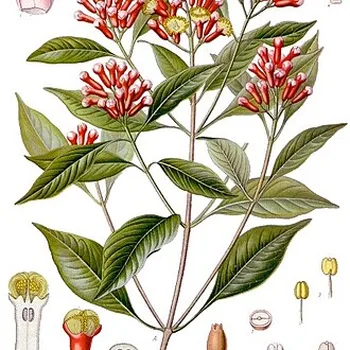
Cloves
Fragrant clove buds with their round heads: one of the oldest spices, with a hot, warm flavour rich in eugenol. Because only a few cloves are used for flavour, the glycemic index does not apply, and cloves are among the most antioxidant-rich foods known.
Glycemic index
Glycemic load
Calories
Protein
💡 Smart Nutritional Guidance
Consumption advice
Add two or three cloves to a pot of black tea or coffee, or when boiling meat; they give a soothing warmth to the stomach and freshen the breath.
Best preparation methods
Simmer cloves gently with tea or herbs to release their aromatic oils and antioxidants, or boil them in water and use as a natural mouth rinse for comfortable gums.
Important Nutritional Note
The eugenol in cloves supports healthy circulation and helps counter oxidative stress; a safe, excellent spice for moderate daily use.
Nutrition facts
| Nutrient | Per 100 g | Per typical portion (1 g) |
|---|---|---|
| Calories | 274 kcal | 2.7 kcal |
| Protein | 6 g | 0.1 g |
| Carbohydrate | 65.5 g | 0.7 g |
| Available carbohydrate | 31.6 g | 0.3 g |
| Fat | 13 g | 0.1 g |
| Dietary fibre | 33.9 g | 0.3 g |
The typical portion is approximate, for comparison purposes.
Comparison & smarter alternatives
It has 274 kcal per 100 g, ranking 6 of 12 in Spices & herbs (lowest first).
Related foods from the same family:
Frequently asked questions
Are Cloves good for weight loss?
It can be included in moderation: it contains 33.9 g of fibre per 100 g, which supports fullness, and a 1 g portion gives 3 kcal.
How do Cloves affect blood sugar?
Cloves contain only 31.6 g of available carbohydrate per 100 g, so the glycemic index does not apply and its direct effect on blood sugar is minimal. The meal’s effect depends on what you eat with it, such as bread, rice or sweetened sauces.
What is the nutritional value of a typical portion of Cloves?
A typical 1 g portion of Cloves provides about 3 kcal, 0.1 g protein, 0.7 g carbohydrate, 0.1 g fat and 0.3 g fibre.
Reviewed by the WiBo Health medical team · Last reviewed 13 October 2026
Disclaimer: This guidance is for nutritional lifestyle orientation and does not constitute a diagnostic medical device under EU Regulation MDR 2017/745.