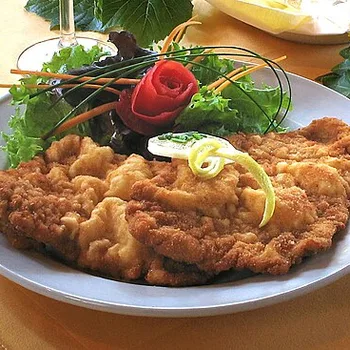
Wiener Schnitzel Veal Cutlet
Wiener schnitzel is a thin, carefully pounded slice of lean veal, coated in a crisp golden layer of breadcrumbs and egg. It has a low glycemic index (clinically reviewed estimate ≈35), as the breadcrumb coating is a limited amount of starch combined with pure meat protein.
Glycemic index
Glycemic load
Calories
Protein
💡 Smart Nutritional Guidance
Consumption advice
Squeeze a fresh lemon wedge over it and eat it with a refreshing green salad instead of the usual fries, to keep the calories in check.
Best preparation methods
Bake it in an air fryer or in the oven with a light spray of oil instead of deep frying; the veal will cook to an amazing tenderness.
Important Nutritional Note
Rich in lean animal protein, zinc and iron; commercial frying adds oxidised omega-6 fats, so home oven-cooking is far better for the heart.
Nutrition facts
| Nutrient | Per 100 g | Per typical portion (150 g) |
|---|---|---|
| Calories | 280 kcal | 420 kcal |
| Protein | 26 g | 39 g |
| Carbohydrate | 12 g | 18 g |
| Available carbohydrate | 11.2 g | 16.8 g |
| Fat | 14 g | 21 g |
| Dietary fibre | 0.8 g | 1.2 g |
The typical portion is approximate, for comparison purposes.
Comparison & smarter alternatives
Among the foods in Meat, fish & eggs with a glycemic index (3), it ranks 2 (lowest first).
Smart alternatives from the same family:
Frequently asked questions
Is schnitzel suitable for people with diabetes?
Yes, in moderation: its glycemic index is low (≈35), most of its weight is lean protein, and the breadcrumb coating has only a mild effect on blood sugar.
What is the nutritional value of a veal schnitzel portion (150 g)?
The portion contains about 420 kcal, 39 g of high-quality protein, 21 g of fat and 18 g of carbohydrate from the coating.
What is the difference between the original Wiener schnitzel and chicken schnitzel?
The original is protected by Austrian law and made only from veal (Kalb), whereas the version common worldwide is made from chicken or turkey breast.
Reviewed by the WiBo Health medical team · Last reviewed 13 October 2026
Disclaimer: This guidance is for nutritional lifestyle orientation and does not constitute a diagnostic medical device under EU Regulation MDR 2017/745.