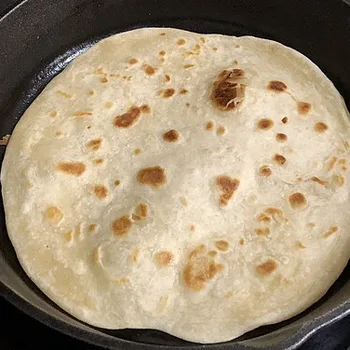
Whole Wheat Roti (Oil-Free Chapati)
Indian roti (chapati) is the everyday unleavened wholewheat flatbread, cooked on a hot dry griddle without a drop of oil. It has a low glycemic index (clinically reviewed estimate ≈52) and is the best Indian friend of people with diabetes, heart disease or on a diet.
Glycemic index
Glycemic load
Calories
Protein
💡 Smart Nutritional Guidance
Consumption advice
Have one or two palm-sized rotis with dal, sautéed vegetables and protein, and use them to scoop up your food without spreading them with plenty of ghee.
Best preparation methods
Wholewheat flour (atta) is kneaded with warm water only, rolled thin and cooked on a hot tawa until it puffs up from the inner steam, with no oil needed.
Important Nutritional Note
Rich in wheat bran, insoluble fibre and B vitamins, which makes it a far better choice than commercial white naan.
Nutrition facts
| Nutrient | Per 100 g | Per typical portion (40 g) |
|---|---|---|
| Calories | 275 kcal | 110 kcal |
| Protein | 8.8 g | 3.5 g |
| Carbohydrate | 55 g | 22 g |
| Available carbohydrate | 48 g | 19.2 g |
| Fat | 1.5 g | 0.6 g |
| Dietary fibre | 7 g | 2.8 g |
The typical portion is approximate, for comparison purposes.
Comparison & smarter alternatives
Among the foods in Breads & pastries with a glycemic index (16), it ranks 4 (lowest first).
Smart alternatives from the same family:
Frequently asked questions
Why is roti the best bread for people with diabetes?
Because it is made from 100% wholewheat flour with its bran and contains no sugar or oil, and its glycemic index is low (≈52).
What is the nutritional value of one Indian roti (40 g)?
One roti provides only about 110 kcal, 3.5 g of protein, less than 1 g of fat and 22 g of fibre-rich complex carbohydrate.
What is the difference between roti, chapati and paratha?
Roti and chapati are dry wholewheat breads made without oil, while paratha is rolled with layers of ghee or oil and is higher in calories and fat.
Reviewed by the WiBo Health medical team · Last reviewed 13 October 2026
Disclaimer: This guidance is for nutritional lifestyle orientation and does not constitute a diagnostic medical device under EU Regulation MDR 2017/745.