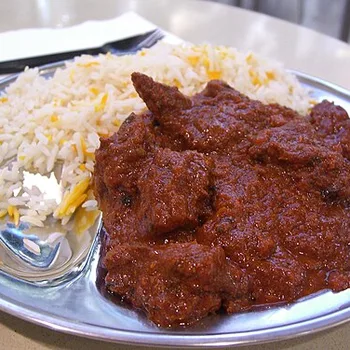
Spicy Goan Vindaloo Curry
Vindaloo is the legend of Goa in India, with Portuguese roots: meat cooked in a fiery, tangy sauce seasoned with vinegar, garlic, hot red chilli and cumin. Its glycemic index does not apply because it contains no starch, and it is one of the boldest and hottest curries of all.
Glycemic index
Glycemic load
Calories
Protein
💡 Smart Nutritional Guidance
Consumption advice
Eat it carefully with a fork alongside chilled cucumber raita to soften the burning heat, and don't overdo the starchy sides.
Best preparation methods
Marinating the meat for hours in vinegar, garlic and chilli breaks down its fibres so it melts in the mouth, and the vinegar helps curb the glucose rise from the accompanying meal.
Important Nutritional Note
Acetic acid and capsaicin boost calorie burning and circulation, but vindaloo is very hot and strictly not for people with stomach ulcers or ulcerative colitis.
Nutrition facts
| Nutrient | Per 100 g | Per typical portion (250 g) |
|---|---|---|
| Calories | 124 kcal | 310 kcal |
| Protein | 12 g | 30 g |
| Carbohydrate | 2 g | 5 g |
| Available carbohydrate | 1.3 g | 3.2 g |
| Fat | 7.6 g | 19 g |
| Dietary fibre | 0.7 g | 1.8 g |
The typical portion is approximate, for comparison purposes.
Comparison & smarter alternatives
It has 124 kcal per 100 g, ranking 7 of 10 in Indian dishes (lowest first).
Related foods from the same family:
Frequently asked questions
Does vindaloo raise blood sugar?
It has no effect on blood sugar: it is meat, vinegar and sugar-free spices, and its glycemic index does not apply.
How many calories are in a 250 g portion of vindaloo curry?
The portion provides about 310 kcal, 30 g of pure protein, 19 g of fat and less than 5 g of carbohydrate from the garlic and spices.
Where does vindaloo's sour flavour come from?
From natural vinegar: the name comes from the Portuguese dish vinha d'alhos, meaning meat marinated in vinegar and garlic.
Reviewed by the WiBo Health medical team · Last reviewed 13 October 2026
Disclaimer: This guidance is for nutritional lifestyle orientation and does not constitute a diagnostic medical device under EU Regulation MDR 2017/745.