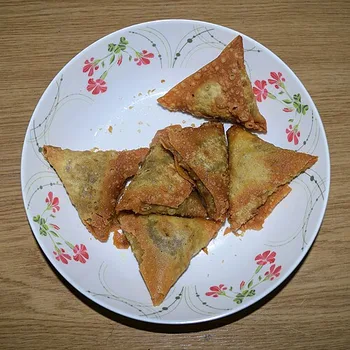
Vegetable Samosa with Spiced Potatoes
The Indian vegetable samosa is India's most famous crispy street snack, with its distinctive pyramid shape: crisp pastry filled with spiced potato, peas, coriander and toasted cumin seeds. It has a low glycemic index (clinically reviewed estimate ≈54) and is a tasty starter that needs portion control.
Glycemic index
Glycemic load
Calories
Protein
💡 Smart Nutritional Guidance
Consumption advice
Keep to one medium samosa with green mint-and-coriander chutney, and avoid dipping it in sugary commercial tamarind sauce.
Best preparation methods
Bake samosas in an air fryer or oven with a light brush of oil instead of deep frying; you get the same Indian crunch with half the calories.
Important Nutritional Note
The peas, cumin and coriander in the filling add useful fibre, but the fried pastry and potato starch call for caution in diabetes and for weight-watchers.
Nutrition facts
| Nutrient | Per 100 g | Per typical portion (100 g) |
|---|---|---|
| Calories | 262 kcal | 262 kcal |
| Protein | 5 g | 5 g |
| Carbohydrate | 28 g | 28 g |
| Available carbohydrate | 24.5 g | 24.5 g |
| Fat | 14 g | 14 g |
| Dietary fibre | 3.5 g | 3.5 g |
The typical portion is approximate, for comparison purposes.
Comparison & smarter alternatives
Among the foods in Indian dishes with a glycemic index (5), it ranks 5 (lowest first).
Smart alternatives from the same family:
Frequently asked questions
Are vegetable samosas allowed for people with diabetes?
Yes, just one (100 g), preferably oven-baked: its glycemic index sits at the 54 limit (low), and the key is not to overdo fried starches.
How many calories are in a typical Indian vegetable samosa (100 g)?
A fried samosa contains about 260 kcal, 5 g of protein, 14 g of fat and 28 g of carbohydrate.
Which chutney goes best with samosas?
Mint and coriander chutney with lemon and green chilli: it is sugar-free, rich in antioxidants and helps digestion.
Reviewed by the WiBo Health medical team · Last reviewed 13 October 2026
Disclaimer: This guidance is for nutritional lifestyle orientation and does not constitute a diagnostic medical device under EU Regulation MDR 2017/745.