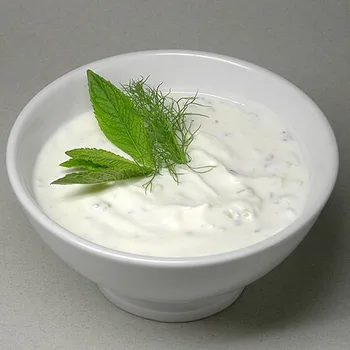
Authentic Greek Tzatziki Dip
Greek tzatziki is a classic, refreshing dip made from strained Greek yoghurt, grated and squeezed cucumber, garlic, olive oil and fresh dill. Its glycemic index does not apply because it contains almost no net starch, and it is a good friend to digestion and the arteries.
Glycemic index
Glycemic load
Calories
Protein
💡 Smart Nutritional Guidance
Consumption advice
Use it as a top-quality healthy replacement for commercial sauces such as mayonnaise; dip cucumber and carrot sticks in it or spoon it over grilled meat.
Best preparation methods
Squeeze the grated cucumber well in a cloth to remove the excess water before mixing it with thick yoghurt, so the dip stays creamy and firm.
Important Nutritional Note
Greek yoghurt provides live probiotic bacteria, protein and calcium, while garlic provides allicin, which helps lower blood pressure and strengthen immunity.
Nutrition facts
| Nutrient | Per 100 g | Per typical portion (50 g) |
|---|---|---|
| Calories | 95 kcal | 47.5 kcal |
| Protein | 4.8 g | 2.4 g |
| Carbohydrate | 3.6 g | 1.8 g |
| Available carbohydrate | 3.1 g | 1.6 g |
| Fat | 6.8 g | 3.4 g |
| Dietary fibre | 0.5 g | 0.2 g |
The typical portion is approximate, for comparison purposes.
Comparison & smarter alternatives
It has 95 kcal per 100 g, ranking 1 of 8 in Greek dishes (lowest first).
Related foods from the same family:
Frequently asked questions
Is tzatziki allowed on keto and low-carb diets?
Allowed and ideal: its carbohydrate is almost nil, and its protein and healthy fat support quick fullness.
What is the nutritional value of a 50 g portion of tzatziki (two tablespoons)?
The portion contains about 50 kcal, 2.4 g of protein, 3.4 g of healthy fat and less than 2 g of carbohydrate.
Is tzatziki suitable for people with lactose intolerance?
Strained Greek yoghurt contains much less lactose than ordinary milk, and most people with mild intolerance tolerate it.
Reviewed by the WiBo Health medical team · Last reviewed 13 October 2026
Disclaimer: This guidance is for nutritional lifestyle orientation and does not constitute a diagnostic medical device under EU Regulation MDR 2017/745.