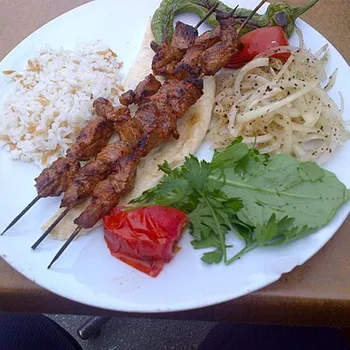
Turkish Lamb Shish Kebab
Turkish lamb shish kebab (kuzu şiş) is a jewel of Anatolian grilling: tender cubes of lamb marinated with pepper paste, olive oil and onion and grilled over charcoal. Its glycemic index does not apply because it contains no carbohydrate, and it is a pure protein meal that keeps you very full without any worry about blood sugar.
Glycemic index
Glycemic load
Calories
Protein
💡 Smart Nutritional Guidance
Consumption advice
Eat the skewers with a fork alongside sumac onions and a grilled vegetable salad, and avoid wrapping them in white bread to keep insulin steady.
Best preparation methods
A marinade of onion juice, olive oil and yoghurt with Aleppo pepper is enough to tenderise the meat; grill it over gentle heat so it stays juicy without charring.
Important Nutritional Note
A highly efficient source of haem iron, vitamin B12 and zinc for immunity and muscle mass; people with heart disease should go easy on the tail fat.
Nutrition facts
| Nutrient | Per 100 g | Per typical portion (150 g) |
|---|---|---|
| Calories | 197 kcal | 295.5 kcal |
| Protein | 18.7 g | 28 g |
| Carbohydrate | 0.5 g | 0.8 g |
| Available carbohydrate | 0.5 g | 0.8 g |
| Fat | 12 g | 18 g |
| Dietary fibre | 0 g | 0 g |
The typical portion is approximate, for comparison purposes.
Comparison & smarter alternatives
It has 197 kcal per 100 g, ranking 7 of 10 in Turkish dishes (lowest first).
Related foods from the same family:
Frequently asked questions
Does Turkish shish kebab raise blood sugar?
Not at all. It is grilled meat with no starch, and causes no rise in glucose or excess insulin release.
How many calories and how much protein are in a 150 g portion of lamb shish kebab?
It provides about 295 kcal, 28 g of lean protein and 18 g of natural fat, with practically no carbohydrate.
Is shish kebab suitable for keto and weight loss?
It is a 100% keto dish that gives energy and fullness for hours and keeps fat burning active.
Reviewed by the WiBo Health medical team · Last reviewed 13 October 2026
Disclaimer: This guidance is for nutritional lifestyle orientation and does not constitute a diagnostic medical device under EU Regulation MDR 2017/745.