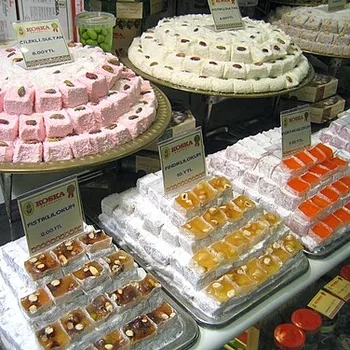
Turkish Delight (Lokum) with Pistachio
Turkish delight (lokum) is the historic sweet of the sultans, with a soft, chewy, gel-like texture, flavours of rose water and mastic, and a coat of starch and pistachios. It has a high glycemic index (clinically reviewed estimate ≈75) because it is pure sugar and refined starch, so people with diabetes need maximum caution.
Glycemic index
Glycemic load
Calories
Protein
💡 Smart Nutritional Guidance
Consumption advice
Keep to one very small cube (15–20 g) with a cup of unsweetened Turkish coffee, on holidays and special occasions only.
Best preparation methods
Always choose lokum filled with whole nuts such as pistachios or walnuts; the nut fat slightly slows the very fast sugar absorption.
Important Nutritional Note
Strict clinical warning: a fast-absorbed sweet that raises blood sugar very quickly and strains the pancreas; people with diabetes or insulin resistance should avoid it as an everyday treat.
Nutrition facts
| Nutrient | Per 100 g | Per typical portion (30 g) |
|---|---|---|
| Calories | 375 kcal | 112.5 kcal |
| Protein | 2.2 g | 0.7 g |
| Carbohydrate | 82 g | 24.6 g |
| Available carbohydrate | 80.8 g | 24.2 g |
| Fat | 4.5 g | 1.3 g |
| Dietary fibre | 1.2 g | 0.4 g |
The typical portion is approximate, for comparison purposes.
Comparison & smarter alternatives
Among the foods in Sweets & desserts with a glycemic index (27), it ranks 26 (lowest first).
Smart alternatives from the same family:
Frequently asked questions
Why is the glycemic index of Turkish delight so high?
Because it is made from white sugar, glucose syrup and refined corn starch, which turn into blood sugar almost as soon as they dissolve in the mouth.
How many calories are in two cubes of Turkish delight (30 g)?
The portion contains about 112 kcal, almost no protein or fat (about 1 g from the pistachios) and consists mainly of around 25 g of pure sugars.
Is lokum with pistachios healthier?
Slightly, because pistachios add protein and fibre that soften the glycemic load compared with plain lokum made only of sugar and starch.
Reviewed by the WiBo Health medical team · Last reviewed 13 October 2026
Disclaimer: This guidance is for nutritional lifestyle orientation and does not constitute a diagnostic medical device under EU Regulation MDR 2017/745.