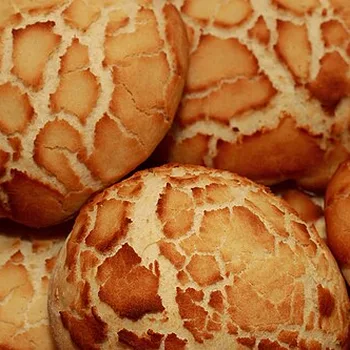
Dutch Tiger Bread
The most popular everyday bread in Dutch bakeries: a loaf with a crisp, crackled top crust that looks like a tiger's skin, made by brushing the surface with a paste of rice flour and sesame oil before baking. The crumb is made from light white flour, and it has a medium glycemic index (≈68).
Glycemic index
Glycemic load
Calories
Protein
💡 Smart Nutritional Guidance
Consumption advice
One slice is enough; always top it with filling protein such as aged Gouda, natural peanut butter or boiled egg to avoid the quick hunger that white-bread starch brings.
Best preparation methods
Choose the whole-wheat version (volkoren tijgerbrood); it gives you the same crunchy tiger crust but with a bran-rich crumb and fibre that is absorbed more slowly.
Important Nutritional Note
The soft white crumb breaks down into sugar quickly in the digestive tract, so pairing it with healthy fats and protein slows the glucose spike and keeps you full for longer.
Nutrition facts
| Nutrient | Per 100 g | Per typical portion (35 g) |
|---|---|---|
| Calories | 255 kcal | 89.2 kcal |
| Protein | 9.2 g | 3.2 g |
| Carbohydrate | 46 g | 16.1 g |
| Available carbohydrate | 40 g | 14 g |
| Fat | 2.8 g | 1 g |
| Dietary fibre | 6 g | 2.1 g |
The typical portion is approximate, for comparison purposes.
Comparison & smarter alternatives
Among the foods in Grains & starches with a glycemic index (35), it ranks 27 (lowest first).
Smart alternatives from the same family:
Frequently asked questions
Is Dutch Tiger Bread good for weight loss?
It can be included in moderation: it contains 6 g of fibre per 100 g, which supports fullness, and a 35 g portion gives 89 kcal.
How does Dutch Tiger Bread affect blood sugar?
Its glycemic index is 68 (Medium), a clinically reviewed estimate rather than a laboratory measurement. A typical 35 g portion has a glycemic load of 9.5 (Low), so the effect of this portion on blood sugar is limited.
What is the nutritional value of a typical portion of Dutch Tiger Bread?
A typical 35 g portion of Dutch Tiger Bread provides about 89 kcal, 3.2 g protein, 16.1 g carbohydrate, 1 g fat and 2.1 g fibre.
Reviewed by the WiBo Health medical team · Last reviewed 13 October 2026
Disclaimer: This guidance is for nutritional lifestyle orientation and does not constitute a diagnostic medical device under EU Regulation MDR 2017/745.