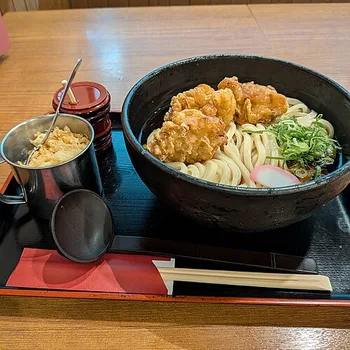
Thick Japanese Udon Noodles
Noodle lovers know the comfort of a bowl of udon soup: thick, wide, soft strands with great springiness and a silky smoothness that satisfies the craving for delicious dough in a warm broth.
Glycemic index
Glycemic load
Calories
Protein
💡 Smart Nutritional Guidance
Consumption advice
Udon is made from wheat flour, so don’t make it the only main ingredient in the bowl; fill it with dashi broth, a boiled egg, spinach and shiitake mushrooms for a balanced meal.
Best preparation methods
Cook udon al dente and don’t overcook it, so the gluten network doesn’t break down and turn it into fast-absorbed sugar.
Important Nutritional Note
Its glycemic index is low but at the upper limit (55), and the glycemic load of a 200 g portion is relatively high (28.4); people with diabetes should control the amount or choose soba instead.
Nutrition facts
| Nutrient | Per 100 g | Per typical portion (200 g) |
|---|---|---|
| Calories | 130 kcal | 260 kcal |
| Protein | 4 g | 8 g |
| Carbohydrate | 27 g | 54 g |
| Available carbohydrate | 25.8 g | 51.6 g |
| Fat | 0.5 g | 1 g |
| Dietary fibre | 1.2 g | 2.4 g |
The typical portion is approximate, for comparison purposes.
Comparison & smarter alternatives
Among the foods in Grains & starches with a glycemic index (39), it ranks 23 (lowest first).
Smart alternatives from the same family:
Frequently asked questions
Do udon noodles make you gain weight?
A filling portion (200 g cooked) contains 260 kcal and 51.6 g available carbohydrate. With a clear broth and vegetables it is a moderate meal, but with fried toppings and thick sauces it will certainly add weight.
Is udon gluten-free?
No. Classic udon is made from high-gluten white wheat flour, which gives it its typical chewy texture, so it is not suitable for people with coeliac disease.
What is the nutritional value of a 200 g bowl?
It gives you 260 kcal, 8 g protein, 1 g fat and 51.6 g available (net) carbohydrate.
Reviewed by the WiBo Health medical team · Last reviewed 13 October 2026
Disclaimer: This guidance is for nutritional lifestyle orientation and does not constitute a diagnostic medical device under EU Regulation MDR 2017/745.