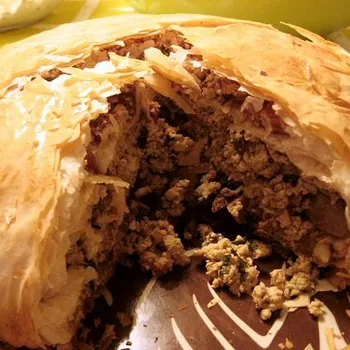
Seafood Pastilla with Vermicelli
Spicy seafood pastilla (pastilla aux fruits de mer) is the zesty seafood version of pastilla: a fine filling of calamari, prawns, white fish, glass noodles, soy sauce and harissa in filo pastry. It has a low glycemic index (clinically reviewed estimate ≈52) and a tangy, spiced flavour.
Glycemic index
Glycemic load
Calories
Protein
💡 Smart Nutritional Guidance
Consumption advice
Have a medium piece with a squeeze of fresh lemon; the pure seafood protein makes up most of the filling and keeps you full for a long time.
Best preparation methods
Use fewer glass noodles and more seafood and vegetables such as mushrooms and peppers, and bake it with a light brush of olive oil instead of butter.
Important Nutritional Note
Rich in zinc, iodine and vitamin B12 from the seafood and antioxidants from the harissa; watch the sodium from the soy sauce and seafood sauces.
Nutrition facts
| Nutrient | Per 100 g | Per typical portion (150 g) |
|---|---|---|
| Calories | 193 kcal | 289.5 kcal |
| Protein | 16 g | 24 g |
| Carbohydrate | 14.7 g | 22 g |
| Available carbohydrate | 13.8 g | 20.7 g |
| Fat | 8 g | 12 g |
| Dietary fibre | 0.9 g | 1.4 g |
The typical portion is approximate, for comparison purposes.
Comparison & smarter alternatives
Among the foods in Moroccan dishes with a glycemic index (5), it ranks 3 (lowest first).
Smart alternatives from the same family:
Frequently asked questions
Is seafood pastilla better for people with diabetes than chicken pastilla?
Yes: it has no caramelised icing sugar and is rich in lean seafood protein and spices, which keeps its glycemic index lower (≈52).
What is the nutritional value of a portion of seafood pastilla (150 g)?
It provides about 290 kcal, 24 g of high-quality seafood protein, 12 g of fat and around 22 g of starch from the pastry and noodles.
Does seafood pastilla raise cholesterol?
The natural cholesterol in prawns and calamari is not a concern for most people; what matters is not overdoing the fat brushed on the pastry.
Reviewed by the WiBo Health medical team · Last reviewed 13 October 2026
Disclaimer: This guidance is for nutritional lifestyle orientation and does not constitute a diagnostic medical device under EU Regulation MDR 2017/745.