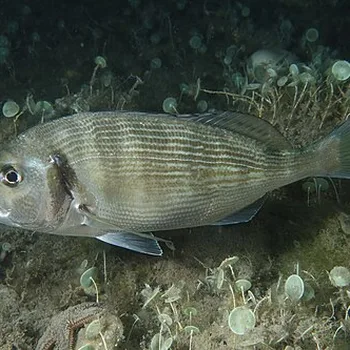
Gilthead Seabream (Dorade)
Gilthead seabream is the undisputed star of Mediterranean and Arab coasts, loved by everyone for its naturally sweet flavour and perfectly firm flesh. It contains no carbohydrate, so a glycemic index does not apply, making it an excellent everyday ally for anyone managing blood sugar while enjoying healthy, tasty food.
Glycemic index
Glycemic load
Calories
Protein
💡 Smart Nutritional Guidance
Consumption advice
Share it charcoal-grilled or oven-baked with a fresh green salad and a few spoonfuls of basmati rice to keep the total glycemic load of the meal in check.
Best preparation methods
Open the belly of the fish, rub it with cumin, lemon, garlic and dill, then roast it in the oven; this brings out its flavour without any processed fats.
Important Nutritional Note
An excellent source of vitamin B12 and selenium, which support the thyroid and nerve function in people living with long-term diabetes.
Nutrition facts
| Nutrient | Per 100 g | Per typical portion (150 g) |
|---|---|---|
| Calories | 115 kcal | 172.5 kcal |
| Protein | 20.5 g | 30.8 g |
| Carbohydrate | 0 g | 0 g |
| Available carbohydrate | 0 g | 0 g |
| Fat | 3.2 g | 4.8 g |
| Dietary fibre | 0 g | 0 g |
The typical portion is approximate, for comparison purposes.
Comparison & smarter alternatives
It provides 17.8 g of protein per 100 kcal, ranking 24 of 49 in Meat, fish & eggs (highest first).
Related foods from the same family:
Frequently asked questions
Is seabream suitable for diabetes and insulin resistance?
Yes, completely. Its excellent protein and beneficial fats help slow stomach emptying and keep long-term blood sugar markers (HbA1c) stable.
How many calories and how much protein are in a medium seabream?
A 150 g portion of seabream fillet gives you about 170 kcal and around 30 g of protein, with zero carbohydrate.
Does seabream help with weight loss and fat burning?
Certainly. The long-lasting fullness from its high protein curbs cravings for starchy foods and snacks between main meals.
Reviewed by the WiBo Health medical team · Last reviewed 13 October 2026
Disclaimer: This guidance is for nutritional lifestyle orientation and does not constitute a diagnostic medical device under EU Regulation MDR 2017/745.