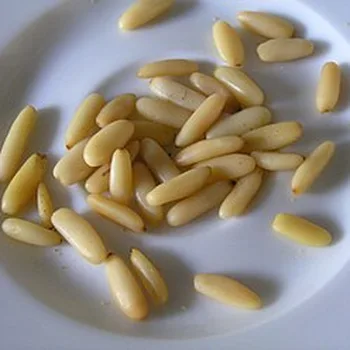
Raw Premium Mediterranean Pine Nuts
The aristocrat of the Levantine table and the fragrant delight of festive dishes: small, smooth ivory seeds gathered with difficulty from forest pine cones, with a buttery flavour and a texture that melts in the mouth, adding generosity and richness to any dish.
Glycemic index
Glycemic load
Calories
Protein
💡 Smart Nutritional Guidance
Consumption advice
Sprinkle a tablespoon (15 g), raw or lightly toasted, over fatteh, hummus or rocket salad, or use it as the base of Italian pesto.
Best preparation methods
Toast them over very low heat without any added oil for just two minutes; the natural oil of the pine nuts is enough to brown them, and high heat burns them quickly.
Important Nutritional Note
Their glycemic index is very low (15) and their glycemic load almost nil (0.2); they contain pinolenic acid, a unique fatty acid that may stimulate the release of satiety hormones in the gut.
Nutrition facts
| Nutrient | Per 100 g | Per typical portion (15 g) |
|---|---|---|
| Calories | 673 kcal | 101 kcal |
| Protein | 13.7 g | 2.1 g |
| Carbohydrate | 13.1 g | 2 g |
| Available carbohydrate | 9.4 g | 1.4 g |
| Fat | 68.4 g | 10.3 g |
| Dietary fibre | 3.7 g | 0.6 g |
The typical portion is approximate, for comparison purposes.
Comparison & smarter alternatives
Among the foods in Nuts & seeds with a glycemic index (15), it ranks 8 (lowest first).
Smart alternatives from the same family:
Frequently asked questions
How do pine nuts help curb appetite and control weight?
Small studies suggest that pinolenic acid in pine nuts stimulates the satiety hormones CCK and GLP-1, which may reduce hunger.
What are the benefits of pine nuts for the heart and arteries?
They are rich in monounsaturated fat, magnesium and vitamin E, which keep the arteries supple and support healthy cholesterol.
What is the nutritional value of a tablespoon (15 g)?
It gives you 101 kcal, 2 g protein, 10.2 g healthy fat and only 1.4 g available (net) carbohydrate.
Reviewed by the WiBo Health medical team · Last reviewed 13 October 2026
Disclaimer: This guidance is for nutritional lifestyle orientation and does not constitute a diagnostic medical device under EU Regulation MDR 2017/745.