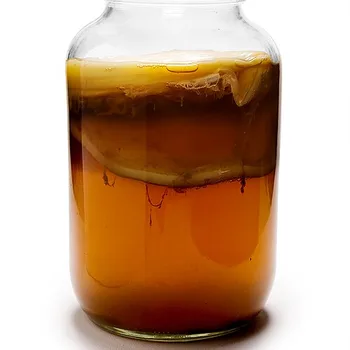
Raw Organic Probiotic Kombucha
A natural sparkling elixir of vitality: black and green tea fermented by a living colony of beneficial bacteria and yeasts (SCOBY), giving a fizzy, tangy, slightly sweet tea that refreshes the body as a natural alternative to soft drinks.
Glycemic index
Glycemic load
Calories
Protein
💡 Smart Nutritional Guidance
Consumption advice
Start with half a glass (120 ml) a day with lunch until your digestion gets used to it, then you can drink a full glass (250 ml) to refresh your digestion.
Best preparation methods
Drink it chilled and choose raw, unpasteurised kinds so the probiotics stay alive; avoid brands that add sugar or artificial flavours after fermentation.
Important Nutritional Note
The bacteria use up a large part of the sugar during fermentation to make beneficial organic acids, so the glycemic index does not apply, but a glass (250 ml) still contains about 11 g of residual sugar, which people with diabetes should count.
Nutrition facts
| Nutrient | Per 100 g | Per typical portion (250 g) |
|---|---|---|
| Calories | 18 kcal | 45 kcal |
| Protein | 0.1 g | 0.2 g |
| Carbohydrate | 4.5 g | 11.2 g |
| Available carbohydrate | 4.5 g | 11.2 g |
| Fat | 0 g | 0 g |
| Dietary fibre | 0 g | 0 g |
The typical portion is approximate, for comparison purposes.
Comparison & smarter alternatives
It has 18 kcal per 100 g, ranking 18 of 29 in Drinks (lowest first).
Related foods from the same family:
Frequently asked questions
Does kombucha contain alcohol or sugar?
Fermentation leaves residual sugar (about 11 g per glass) and a negligible trace of alcohol (under 0.5%, non-intoxicating); it is a lighter alternative to soda, which contains more than twice as much sugar.
How does kombucha affect gut health and digestion?
It supplies the gut with acetic acid, gluconic acid and live probiotics, supporting a healthy balance of gut bacteria and reducing gas and bloating.
What is the nutritional value of a 250 ml glass?
It gives you about 45 kcal, no fat and about 11 g carbohydrate from residual natural sugars.
Reviewed by the WiBo Health medical team · Last reviewed 13 October 2026
Disclaimer: This guidance is for nutritional lifestyle orientation and does not constitute a diagnostic medical device under EU Regulation MDR 2017/745.