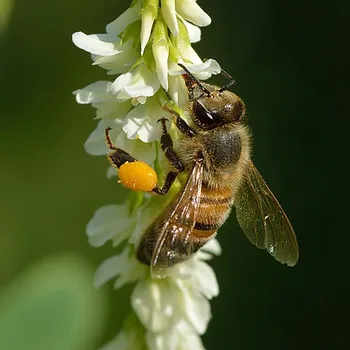
Raw Bee Pollen Granules
The elixir of the hive and a complete natural tonic: small golden and orange granules collected by worker bees from flowers, holding an amazing mix of live enzymes, vitamins and all the essential amino acids.
Glycemic index
Glycemic load
Calories
Protein
💡 Smart Nutritional Guidance
Consumption advice
Start with a quarter teaspoon a day and build up to one tablespoon (10 g); sprinkle it on Greek yoghurt or oats for a morning boost.
Best preparation methods
Never mix it into boiling or hot liquids, or you will destroy the live enzymes and heat-sensitive B vitamins.
Important Nutritional Note
Its glycemic index is low (30) and the glycemic load of a tablespoon is only 1.0; very useful for people with diabetes to support the nerves and reduce oxidative stress.
Nutrition facts
| Nutrient | Per 100 g | Per typical portion (10 g) |
|---|---|---|
| Calories | 315 kcal | 31.5 kcal |
| Protein | 24 g | 2.4 g |
| Carbohydrate | 42 g | 4.2 g |
| Available carbohydrate | 34 g | 3.4 g |
| Fat | 5.5 g | 0.6 g |
| Dietary fibre | 8 g | 0.8 g |
The typical portion is approximate, for comparison purposes.
Comparison & smarter alternatives
Among the foods in Special ingredients & supplements with a glycemic index (10), it ranks 4 (lowest first).
Smart alternatives from the same family:
Frequently asked questions
Who should be careful with bee pollen?
People with a severe allergy to bee stings or to seasonal pollen; test your tolerance with a single granule first.
Does bee pollen increase energy levels?
Yes, it is an excellent natural supplement for athletes because it improves the muscles’ use of oxygen and reduces chronic fatigue.
What is the nutritional value of a tablespoon (10 g)?
It contains 31 kcal, 2.4 g complete protein and 3.4 g natural carbohydrate.
Reviewed by the WiBo Health medical team · Last reviewed 13 October 2026
Disclaimer: This guidance is for nutritional lifestyle orientation and does not constitute a diagnostic medical device under EU Regulation MDR 2017/745.