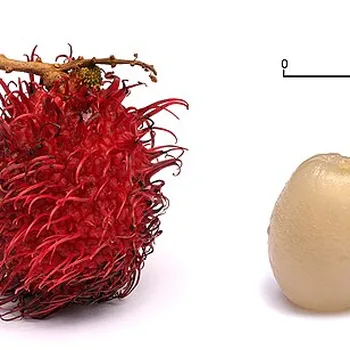
Rambutan
FruitThe Asian fruit with a striking hairy red skin and translucent white flesh similar to lychee. Rambutan has a moderately sweet taste and plenty of juice, with a medium glycemic index (≈50), so it should be eaten in moderation to keep simple sugars in check.
Glycemic index
Glycemic load
Calories
Protein
💡 Smart Nutritional Guidance
Consumption advice
Keep your portion to 4 or 5 fresh fruits as a refreshing summer snack; the flesh is rich in water and vitamin C and very hydrating on hot days.
Best preparation methods
Peel the fresh fruit with your fingers and eat the flesh straight away without biting the bitter seed inside; eat it as it is, without sweeteners or blending it into juice.
Important Nutritional Note
Rambutan is rich in copper, manganese and antioxidants; if you watch your weight and blood sugar, sticking to a set number of fruits lets you enjoy its tropical flavour without excess energy.
Nutrition facts
| Nutrient | Per 100 g | Per typical portion (100 g) |
|---|---|---|
| Calories | 82 kcal | 82 kcal |
| Protein | 0.7 g | 0.7 g |
| Carbohydrate | 20.9 g | 20.9 g |
| Available carbohydrate | 20 g | 20 g |
| Fat | 0.2 g | 0.2 g |
| Dietary fibre | 0.9 g | 0.9 g |
The typical portion is approximate, for comparison purposes.
Comparison & smarter alternatives
Among the foods in Fruit with a glycemic index (29), it ranks 19 (lowest first).
Smart alternatives from the same family:
Frequently asked questions
Is Rambutan good for weight loss?
It can fit a balanced plan with portion control: a 100 g portion gives 82 kcal, and what matters most is your total daily intake and the rest of the meal.
How does Rambutan affect blood sugar?
Its glycemic index is 50 (Low), a clinically reviewed estimate rather than a laboratory measurement. A typical 100 g portion has a glycemic load of 10 (Low), so the effect of this portion on blood sugar is limited.
What is the nutritional value of a typical portion of Rambutan?
A typical 100 g portion of Rambutan provides about 82 kcal, 0.7 g protein, 20.9 g carbohydrate, 0.2 g fat and 0.9 g fibre.
Reviewed by the WiBo Health medical team · Last reviewed 13 October 2026
Disclaimer: This guidance is for nutritional lifestyle orientation and does not constitute a diagnostic medical device under EU Regulation MDR 2017/745.