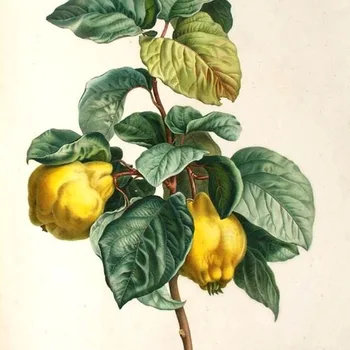
Poached Quince with Cinnamon
The fragrant golden fruit of autumn, with deep roots in Damascus and Turkey: a hard fruit that gentle poaching turns into soft, amber-pink pieces scented with cloves and warm cinnamon, a healthy winter dessert that soothes the stomach and lifts the spirits.
Glycemic index
Glycemic load
Calories
Protein
💡 Smart Nutritional Guidance
Consumption advice
An ideal substitute for rich oriental sweets; enjoy it warm after lunch, or with a spoon of clotted cream or Greek yoghurt and crushed walnuts.
Best preparation methods
Poach it in water spiced with cinnamon sticks, star anise and cloves, without sugar; cinnamon gives a hint of natural sweetness, and add a small spoon of honey if you like.
Important Nutritional Note
Its glycemic index is low (35) and the glycemic load of a 150 g portion is low (7.0); quince pectin forms a layer that protects the stomach lining and may ease reflux and heartburn.
Nutrition facts
| Nutrient | Per 100 g | Per typical portion (150 g) |
|---|---|---|
| Calories | 57 kcal | 85.5 kcal |
| Protein | 0.4 g | 0.6 g |
| Carbohydrate | 15.3 g | 23 g |
| Available carbohydrate | 13.4 g | 20.1 g |
| Fat | 0.1 g | 0.2 g |
| Dietary fibre | 1.9 g | 2.8 g |
The typical portion is approximate, for comparison purposes.
Comparison & smarter alternatives
Among the foods in Fruit with a glycemic index (46), it ranks 19 (lowest first).
Smart alternatives from the same family:
Frequently asked questions
Does poached quince raise HbA1c?
Quince is rich in pectin and fibre, and cooking it with cinnamon slows stomach emptying, so it does not raise blood sugar and can help control it, as long as it is not cooked in syrup and sugar.
What are the benefits of quince for the stomach and colon?
It is traditionally used to soothe the stomach, diarrhoea, nausea and reflux, thanks to its astringent compounds that calm the mucous membranes.
What is the nutritional value of a 150 g portion poached with cinnamon?
It gives you 85 kcal, 2.9 g excellent fibre and 20 g slowly digested natural carbohydrate.
Reviewed by the WiBo Health medical team · Last reviewed 13 October 2026
Disclaimer: This guidance is for nutritional lifestyle orientation and does not constitute a diagnostic medical device under EU Regulation MDR 2017/745.