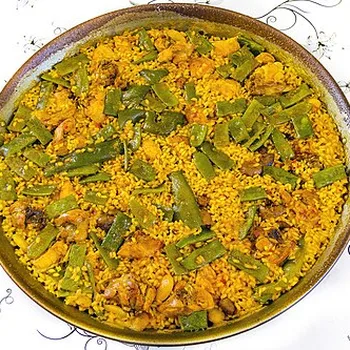
Spanish Seafood Paella
Spanish paella is the queen of Valencia's popular dishes, combining rice seasoned with real saffron and a generous mix of seafood or poultry and vegetables. It has a medium glycemic index (clinically reviewed estimate ≈58) and a glycemic load that tends to be high because of the rice, so the secret to enjoying it lies in controlling the portion and focusing on the protein that comes with it.
Glycemic index
Glycemic load
Calories
Protein
💡 Smart Nutritional Guidance
Consumption advice
Start your meal with a green salad dressed with olive oil, eat the seafood, protein pieces and vegetables on your plate first, and keep the rice to about half a cup.
Best preparation methods
Make paella with plenty of vegetables and seafood and less rice, and avoid hydrogenated fats; the saffron and natural stock are enough to give it its royal flavour.
Important Nutritional Note
Natural saffron compounds (crocin and crocetin) have scientifically supported properties for improving mood, reducing inflammation and supporting eye health.
Nutrition facts
| Nutrient | Per 100 g | Per typical portion (250 g) |
|---|---|---|
| Calories | 215 kcal | 537.5 kcal |
| Protein | 12 g | 30 g |
| Carbohydrate | 28 g | 70 g |
| Available carbohydrate | 26 g | 65 g |
| Fat | 6 g | 15 g |
| Dietary fibre | 2 g | 5 g |
The typical portion is approximate, for comparison purposes.
Comparison & smarter alternatives
Among the foods in Spanish dishes with a glycemic index (6), it ranks 5 (lowest first).
Smart alternatives from the same family:
Frequently asked questions
Is Spanish paella suitable for people with diabetes?
Yes, in moderation: its glycemic index is medium (≈58), the fibre and protein of the seafood slow the absorption of the rice, and the key is keeping the portion to 150–200 g.
How many calories are in a typical 250 g portion of paella?
A full portion contains about 540 kcal, 30 g of protein and around 70 g of carbohydrate, depending on the amount of rice and protein used.
What is the crispy 'socarrat' layer at the bottom of paella?
It is the layer of rice toasted on the bottom of the pan; it is delicious, but take care not to burn it to avoid forming unwanted acrylamide.
Reviewed by the WiBo Health medical team · Last reviewed 13 October 2026
Disclaimer: This guidance is for nutritional lifestyle orientation and does not constitute a diagnostic medical device under EU Regulation MDR 2017/745.