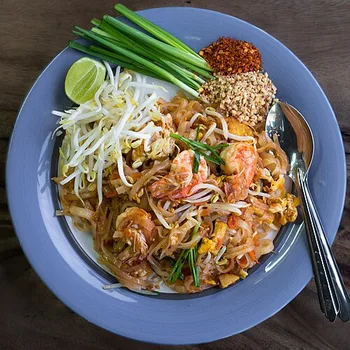
Pad Thai
The heartbeat of Thai street food in one cheerful dish: stir-fried rice noodles with egg, roasted peanuts and tofu or shrimp. Its flavour comes from the mix of sour and sweet, but ready-made tamarind sauce often contains added sugar, giving it a moderate glycemic index (≈52) and relatively quickly digested starch.
Glycemic index
Glycemic load
Calories
Protein
💡 Smart Nutritional Guidance
Consumption advice
Ask for it to be made with less sugar if possible, squeeze a whole lime over the dish, as its acidity slows starch breakdown, and mix in crunchy raw bean sprouts for extra fibre.
Best preparation methods
Go for more shrimp or tofu and egg and fewer rice noodles, and enjoy the crushed peanuts as a source of healthy fats that slow the digestion of carbohydrate.
Important Nutritional Note
Rice noodles are naturally gluten-free, but people with a wheat allergy or coeliac disease should check that the soy and fish sauces used are completely gluten-free.
Nutrition facts
| Nutrient | Per 100 g | Per typical portion (300 g) |
|---|---|---|
| Calories | 165 kcal | 495 kcal |
| Protein | 4.2 g | 12.6 g |
| Carbohydrate | 19.1 g | 57.3 g |
| Available carbohydrate | 17.9 g | 53.7 g |
| Fat | 7.5 g | 22.5 g |
| Dietary fibre | 1.2 g | 3.6 g |
The typical portion is approximate, for comparison purposes.
Comparison & smarter alternatives
Among the foods in Asian dishes with a glycemic index (14), it ranks 9 (lowest first).
Smart alternatives from the same family:
Frequently asked questions
Is Pad Thai good for weight loss?
It can fit a balanced plan with portion control: a 300 g portion gives 495 kcal, and what matters most is your total daily intake and the rest of the meal.
How does Pad Thai affect blood sugar?
Its glycemic index is 52 (Low), a clinically reviewed estimate rather than a laboratory measurement. A typical 300 g portion has a glycemic load of 27.9 (High), so it is best to reduce or split the portion and combine it with protein and fibre.
What is the nutritional value of a typical portion of Pad Thai?
A typical 300 g portion of Pad Thai provides about 495 kcal, 12.6 g protein, 57.3 g carbohydrate, 22.5 g fat and 3.6 g fibre.
Reviewed by the WiBo Health medical team · Last reviewed 13 October 2026
Disclaimer: This guidance is for nutritional lifestyle orientation and does not constitute a diagnostic medical device under EU Regulation MDR 2017/745.