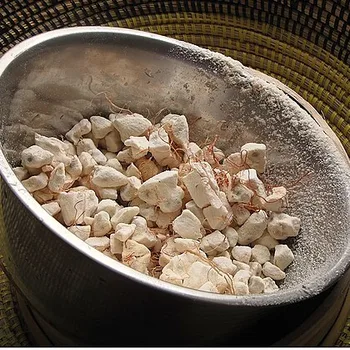
Organic Baobab Fruit Pulp Powder
The fruit of Africa’s legendary “tree of life”: it dries naturally on the branch in the sun without human intervention and is ground into a tangy, delicious powder packed with vitamin C and soluble prebiotic fibre.
Glycemic index
Glycemic load
Calories
Protein
💡 Smart Nutritional Guidance
Consumption advice
A tablespoon in drinking water or mixed into natural juices turns the drink into an antioxidant cocktail that supports radiant skin and iron absorption.
Best preparation methods
Great as a natural substitute for lemon juice in salad dressings, or stirred into breakfast yoghurt to feed beneficial gut bacteria.
Important Nutritional Note
About half its weight is soluble prebiotic fibre, which slows sugar absorption and prevents glucose spikes after meals; a usual portion (10 g) contains no more than 2.5 g available carbohydrate.
Nutrition facts
| Nutrient | Per 100 g | Per typical portion (10 g) |
|---|---|---|
| Calories | 239 kcal | 23.9 kcal |
| Protein | 3 g | 0.3 g |
| Carbohydrate | 70 g | 7 g |
| Available carbohydrate | 25 g | 2.5 g |
| Fat | 0.7 g | 0.1 g |
| Dietary fibre | 45 g | 4.5 g |
The typical portion is approximate, for comparison purposes.
Comparison & smarter alternatives
It has 239 kcal per 100 g, ranking 5 of 17 in Special ingredients & supplements (lowest first).
Related foods from the same family:
Frequently asked questions
How much vitamin C does baobab contain?
It contains about six times as much vitamin C as fresh oranges, making it an excellent immune shield and a natural boost for collagen production.
Is baobab good for diabetes and irritable bowel syndrome?
Its soluble fibre feeds beneficial gut bacteria, which produce short-chain fatty acids (SCFAs) that improve insulin sensitivity and calm gut inflammation.
What is the nutritional value of a spoonful (10 g)?
It contains only 24 kcal, 4.5 g soluble fibre and just 2.5 g available (net) carbohydrate.
Reviewed by the WiBo Health medical team · Last reviewed 13 October 2026
Disclaimer: This guidance is for nutritional lifestyle orientation and does not constitute a diagnostic medical device under EU Regulation MDR 2017/745.