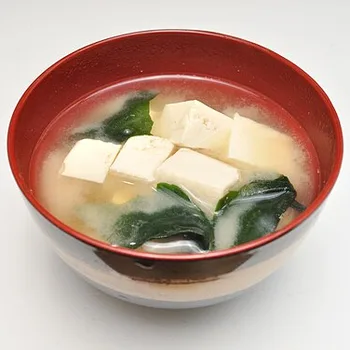
Miso Soup
The heartbeat of the traditional Japanese table: a light broth with fermented soybean paste, cubes of tofu and seaweed (wakame). A soup with practically no negative effect on blood sugar; its net carbohydrate is negligible and the glycemic index does not apply.
Glycemic index
Glycemic load
Calories
Protein
💡 Smart Nutritional Guidance
Consumption advice
An excellent soup to open any Asian meal; its warmth and fermented ingredients comfort the stomach and take up a lot of space, which helps prevent overeating and balance the rest of the meal.
Best preparation methods
Add the miso paste at the end of cooking, right after turning off the heat, and avoid boiling it hard; vigorous boiling destroys the live beneficial bacteria (probiotics) formed during months of natural fermentation.
Important Nutritional Note
Despite its benefits for the gut microbiome, miso soup is high in natural sodium from salt fermentation, so one small bowl a day is enough if you have high blood pressure.
Nutrition facts
| Nutrient | Per 100 g | Per typical portion (250 g) |
|---|---|---|
| Calories | 40 kcal | 100 kcal |
| Protein | 2.2 g | 5.5 g |
| Carbohydrate | 5.5 g | 13.8 g |
| Available carbohydrate | 4.5 g | 11.2 g |
| Fat | 1.2 g | 3 g |
| Dietary fibre | 1 g | 2.5 g |
The typical portion is approximate, for comparison purposes.
Comparison & smarter alternatives
It has 40 kcal per 100 g, ranking 2 of 18 in Asian dishes (lowest first).
Related foods from the same family:
Frequently asked questions
Is Miso Soup good for weight loss?
Yes. Miso Soup is very low in calories (40 kcal per 100 g), so you can eat a generous amount to add volume and fullness to a meal without many calories.
How does Miso Soup affect blood sugar?
Miso Soup contains only 4.5 g of available carbohydrate per 100 g, so the glycemic index does not apply and its direct effect on blood sugar is minimal. The meal’s effect depends on what you eat with it, such as bread, rice or sweetened sauces.
What is the nutritional value of a typical portion of Miso Soup?
A typical 250 g portion of Miso Soup provides about 100 kcal, 5.5 g protein, 13.8 g carbohydrate, 3 g fat and 2.5 g fibre.
Reviewed by the WiBo Health medical team · Last reviewed 13 October 2026
Disclaimer: This guidance is for nutritional lifestyle orientation and does not constitute a diagnostic medical device under EU Regulation MDR 2017/745.