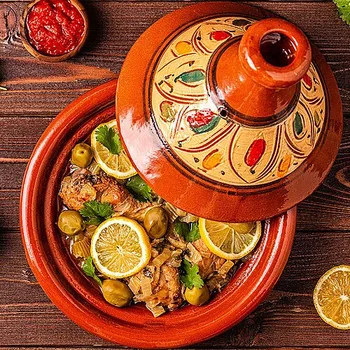
Lamb Tajine with Prunes & Toasted Almonds
Lamb tajine with honeyed prunes and apricots is the king of Moroccan feasts: lamb slow-cooked in a clay pot with saffron and ginger and finished with prunes and crunchy almonds. It has a low glycemic index (clinically reviewed estimate ≈45), thanks to the generous meat protein and the fibre of the dried fruit.
Glycemic index
Glycemic load
Calories
Protein
💡 Smart Nutritional Guidance
Consumption advice
Focus on the tender pieces of meat with one prune and toasted almonds, and avoid dipping a lot of white bread in the sauce.
Best preparation methods
Cook the meat in a clay tajine over gentle heat, and caramelise the prunes with orange-blossom water, cinnamon and very little honey instead of lots of sugar.
Important Nutritional Note
Prunes are rich in pectin fibre and sorbitol, which are excellent against constipation, but people with diabetes should limit them because of their concentrated sweetness.
Nutrition facts
| Nutrient | Per 100 g | Per typical portion (300 g) |
|---|---|---|
| Calories | 147 kcal | 441 kcal |
| Protein | 10.7 g | 32.1 g |
| Carbohydrate | 8.7 g | 26.1 g |
| Available carbohydrate | 7.1 g | 21.3 g |
| Fat | 7.3 g | 21.9 g |
| Dietary fibre | 1.6 g | 4.8 g |
The typical portion is approximate, for comparison purposes.
Comparison & smarter alternatives
Among the foods in Moroccan dishes with a glycemic index (5), it ranks 2 (lowest first).
Smart alternatives from the same family:
Frequently asked questions
Is lamb tajine with prunes suitable for people with diabetes?
Yes, in moderation: its glycemic index is low (≈45) because the meal is mostly protein and fat; keep to one or two prunes and avoid white bread.
What is the nutritional value of a typical portion of lamb tajine with prunes (300 g)?
The portion contains about 440 kcal, 32 g of excellent protein, 22 g of fat and around 26 g of carbohydrate from the dried fruit.
What is the secret of cooking in a clay tajine?
Its conical lid condenses the steam and returns it to the meat continuously, so it cooks in its own juices, very tender and with minimal fat.
Reviewed by the WiBo Health medical team · Last reviewed 13 October 2026
Disclaimer: This guidance is for nutritional lifestyle orientation and does not constitute a diagnostic medical device under EU Regulation MDR 2017/745.