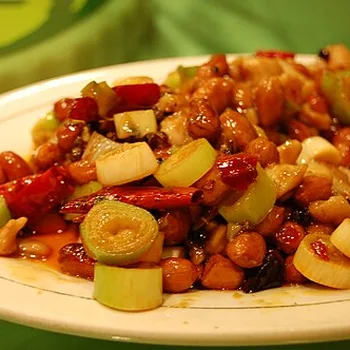
Kung Pao Chicken with Peanuts & Chilies
The king of spicy Sichuan cooking: a lively classic that tosses tender chicken pieces with roasted peanuts and the tingle of Sichuan pepper, which leaves the mouth warm and refreshed. A meal that brings energy and plenty of protein without piling on starch.
Glycemic index
Glycemic load
Calories
Protein
💡 Smart Nutritional Guidance
Consumption advice
A complete meal on its own; serve it with a crisp green salad or a fist-sized portion of boiled basmati rice instead of oily fried rice.
Best preparation methods
Cook it in a wok using the quick stir-fry method with just one spoon of sesame oil, and avoid too much cornstarch in the marinade or any refined sugar.
Important Nutritional Note
Its glycemic index is low (45) and its glycemic load is low (8 per 200 g portion), making it excellent for building muscle and keeping blood sugar steady; people with high blood pressure should watch the sodium from the soy sauce.
Nutrition facts
| Nutrient | Per 100 g | Per typical portion (200 g) |
|---|---|---|
| Calories | 240 kcal | 480 kcal |
| Protein | 22 g | 44 g |
| Carbohydrate | 11 g | 22 g |
| Available carbohydrate | 8.9 g | 17.8 g |
| Fat | 12 g | 24 g |
| Dietary fibre | 2.1 g | 4.2 g |
The typical portion is approximate, for comparison purposes.
Comparison & smarter alternatives
Among the foods in Asian dishes with a glycemic index (24), it ranks 11 (lowest first).
Smart alternatives from the same family:
Frequently asked questions
How many calories are in a plate of Kung Pao chicken?
A 200 g home-made portion cooked with little oil has about 480 kcal and is very rich in lean protein (44 g).
Is it suitable for keto and insulin resistance?
Yes, very much so, as long as it is made without added sugar or honey in the sauce, because it relies on the healthy fat of peanuts and the protein of chicken.
How do the peanuts in the dish affect blood sugar?
The healthy fat and fibre in peanuts slow down the digestion of the meal considerably, protecting against sudden sugar dips and keeping you full for hours.
Reviewed by the WiBo Health medical team · Last reviewed 13 October 2026
Disclaimer: This guidance is for nutritional lifestyle orientation and does not constitute a diagnostic medical device under EU Regulation MDR 2017/745.