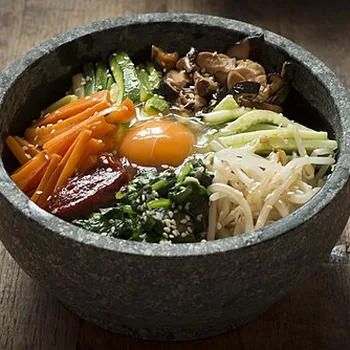
Korean Bibimbap with Egg, Beef & Vegetables
A colourful work of art in a hot stone bowl: one of the best-known dishes of Korean cuisine, combining rice with seasoned vegetables (carrot, spinach, courgette, bean sprouts) and beef, with a fried egg in the centre and delicious spicy gochujang sauce.
Glycemic index
Glycemic load
Calories
Protein
💡 Smart Nutritional Guidance
Consumption advice
Mix all the ingredients with a quick circular motion before eating so the meat juices blend with the hot egg and the sauce; the wide range of colours gives you a broad spectrum of vitamins and minerals.
Best preparation methods
Order it or cook it at home with brown rice instead of white, and add fermented vegetables (kimchi) to support healthy gut bacteria.
Important Nutritional Note
The dish is rich in fibre and protein and its glycemic index is low (52), but a full portion (300 g) contains a good amount of rice (GL 39); people with diabetes should halve the rice and double the vegetables and egg.
Nutrition facts
| Nutrient | Per 100 g | Per typical portion (300 g) |
|---|---|---|
| Calories | 195 kcal | 585 kcal |
| Protein | 9.5 g | 28.5 g |
| Carbohydrate | 28 g | 84 g |
| Available carbohydrate | 25.2 g | 75.6 g |
| Fat | 5.2 g | 15.6 g |
| Dietary fibre | 2.8 g | 8.4 g |
The typical portion is approximate, for comparison purposes.
Comparison & smarter alternatives
Among the foods in Asian dishes with a glycemic index (24), it ranks 18 (lowest first).
Smart alternatives from the same family:
Frequently asked questions
Is bibimbap a healthy, balanced meal?
It is one of the smartest and most balanced Asian dishes, because it contains every element: complete protein from the meat and egg, fibre and antioxidants from five kinds of vegetables, and starch for energy.
How many calories are in a bowl of bibimbap?
A filling 300 g bowl contains about 585 kcal and 28.5 g protein, and keeps you genuinely full for many hours.
How do the kimchi and vegetables in bibimbap affect digestion?
Fermented vegetables supply the gut with natural probiotics and fermentable fibre, which improves digestion, prevents bloating and supports immunity.
Reviewed by the WiBo Health medical team · Last reviewed 13 October 2026
Disclaimer: This guidance is for nutritional lifestyle orientation and does not constitute a diagnostic medical device under EU Regulation MDR 2017/745.