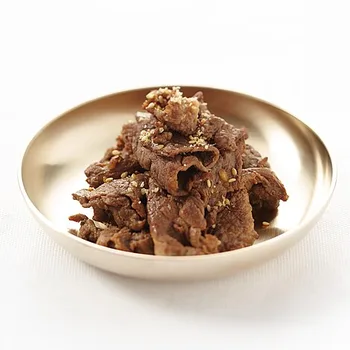
Korean Beef Bulgogi Marinated Slices
The world’s best-known ambassador of Korean barbecue: thin, tender slices of beef that melt in the mouth, marinated in a delightful blend of grated Asian pear with the warmth of sesame oil, soy sauce and garlic. A meal that leaves you truly full and gives muscle energy that lasts for hours.
Glycemic index
Glycemic load
Calories
Protein
💡 Smart Nutritional Guidance
Consumption advice
Wrap the grilled slices in large lettuce leaves with a slice of fresh garlic and a teaspoon of kimchi; this traditional Korean way reduces your need for bread and adds a refreshing crunch.
Best preparation methods
Rely on the natural sweetness of grated pear to tenderise the meat fibres and avoid refined white sugar in the marinade; grill quickly over high heat so the juices stay inside.
Important Nutritional Note
Its glycemic index is very low (25) and its glycemic load almost nil (2.4); a great choice for people with diabetes and for athletes, thanks to its high protein (36 g per portion).
Nutrition facts
| Nutrient | Per 100 g | Per typical portion (150 g) |
|---|---|---|
| Calories | 215 kcal | 322.5 kcal |
| Protein | 24 g | 36 g |
| Carbohydrate | 6.8 g | 10.2 g |
| Available carbohydrate | 6.3 g | 9.4 g |
| Fat | 10.5 g | 15.8 g |
| Dietary fibre | 0.5 g | 0.8 g |
The typical portion is approximate, for comparison purposes.
Comparison & smarter alternatives
Among the foods in Asian dishes with a glycemic index (24), it ranks 3 (lowest first).
Smart alternatives from the same family:
Frequently asked questions
Is beef bulgogi suitable for keto and low-carb diets?
Yes, perfectly, as long as it is made at home without added sugar or the corn syrup some restaurants use.
How many calories are in a portion of grilled bulgogi?
A 150 g portion contains about 322 kcal and is very rich in iron, zinc and vitamin B12.
Does the pear marinade raise blood sugar?
Only a small amount of pear is used, for its meat-tenderising enzymes, and the high protein and the healthy fat of sesame prevent any sudden rise in glucose.
Reviewed by the WiBo Health medical team · Last reviewed 13 October 2026
Disclaimer: This guidance is for nutritional lifestyle orientation and does not constitute a diagnostic medical device under EU Regulation MDR 2017/745.